Sipi Falls in Uganda: Hiking, Waterfalls, Coffee, and Culture
Ask someone who knows Uganda well about Sipi Falls, and the waterfalls will probably be the first thing they mention. Fair enough. That is where the name comes from, after all. But to be honest, the waterfalls are not what we find most interesting about Sipi. What we like most is everything around them. You walk through a deep green landscape filled with coffee farms, banana plantations, clear streams, colorful flowers, and chameleons. Along the way, you pass through small communities, see how people live and work here, and, on clear days, look out across eastern Uganda. And after an active morning, you can just as easily do nothing for the rest of the afternoon. That fits well with how we prefer to plan a safari in Uganda: not just sitting in a car from one highlight to the next, but getting out occasionally. Walking. Looking around. Meeting people. Taking your time. Sipi Falls is a very nice place for that.
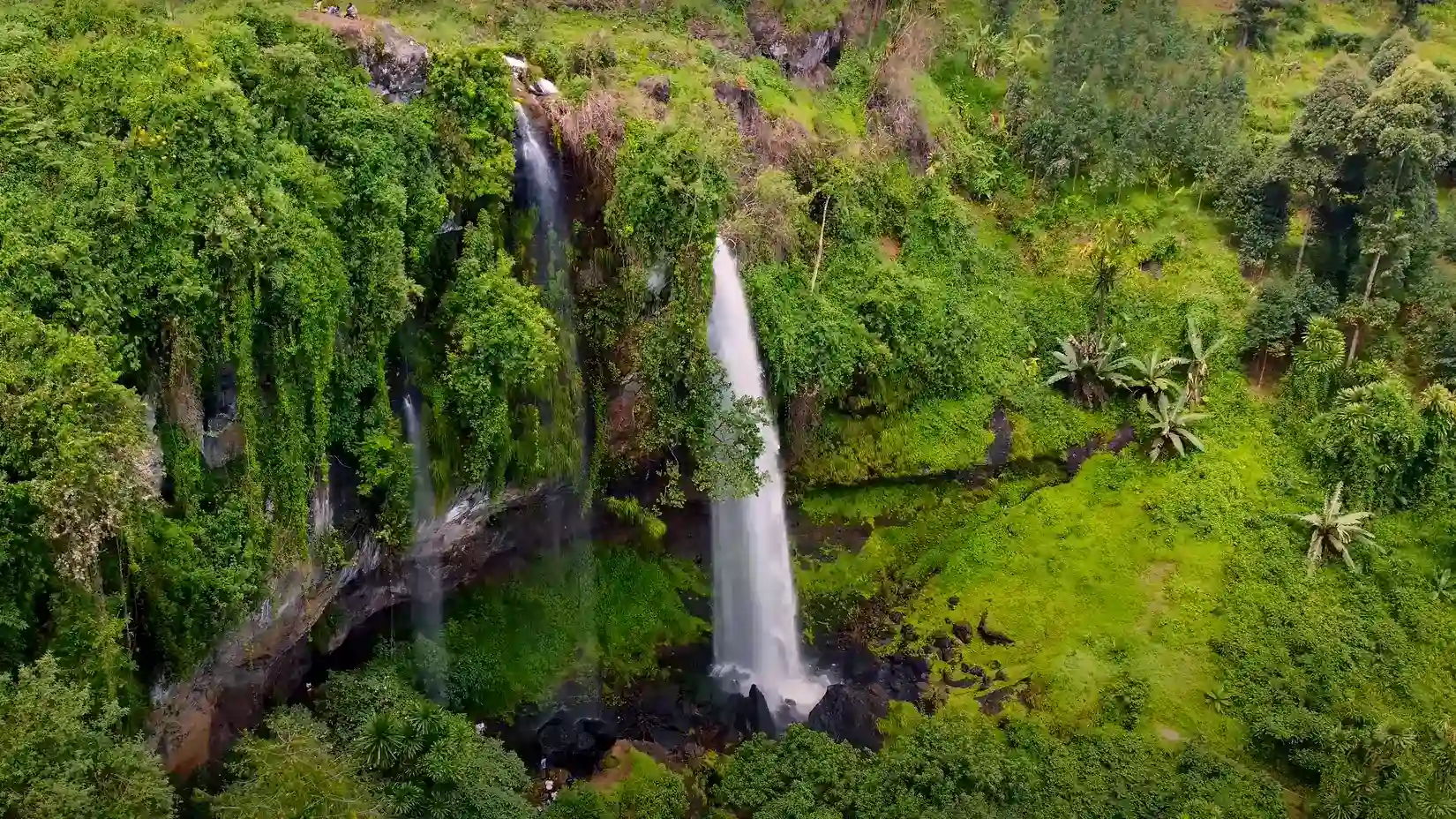
Where is Sipi Falls located?
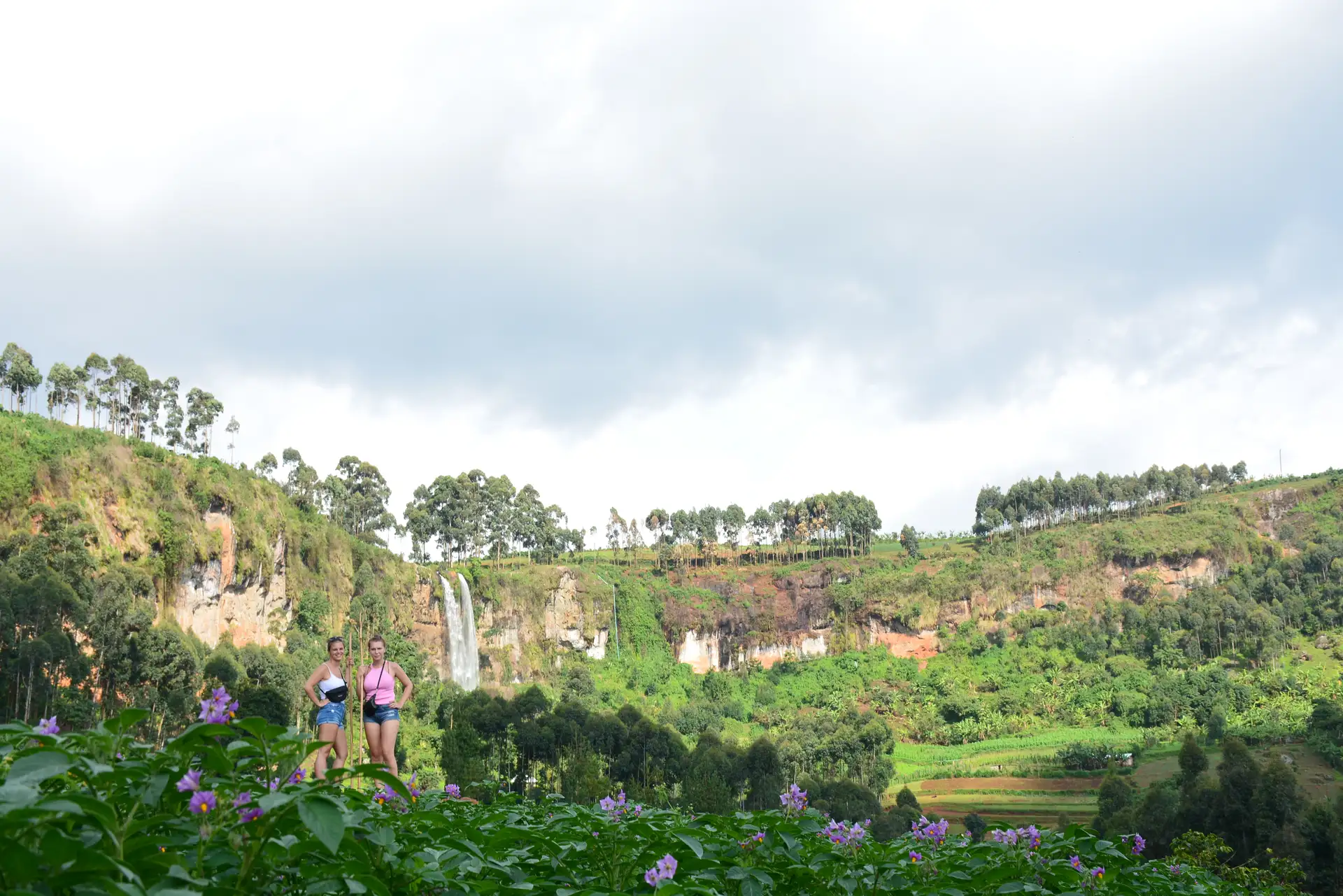
Sipi Falls is in eastern Uganda, on the slopes of Mount Elgon. The mountain sits on the border with Kenya, and the landscape around it is green, hilly and very different from the savannah areas you may visit on a typical Uganda safari. Sipi Falls itself consists of three waterfalls at different heights.
So, a visit is not simply about parking the car, looking at a waterfall and moving on.
You can easily spend half a day walking between the different falls. Along the way, you pass coffee and banana plantations and get a chance to see a little of everyday life in this part of Uganda.
Why do we think Sipi Falls is worth visiting?
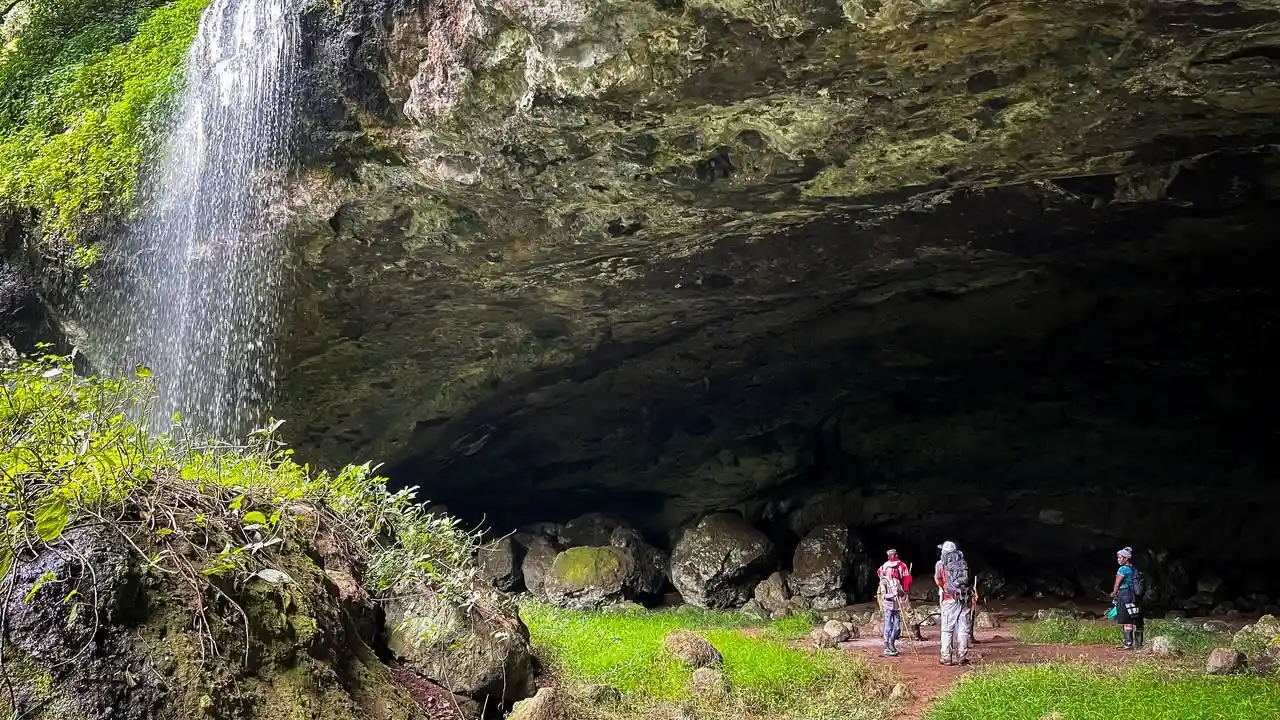
Are the Sipi Falls the waterfalls you absolutely have to fly to Uganda to see? No.
And we don’t think they need to be.
What makes Sipi interesting to us is the way several sides of Uganda come together here. Nature, hiking, agriculture, and local life all sit side by side. You don’t come here to tick off wild animals or be ready at five in the morning for a game drive. You simply put on your hiking boots and head out. It creates a completely different rhythm from a safari.
If you only have a short time in Uganda, we wouldn’t automatically include Sipi in every itinerary. Uganda has so much to offer, and we think it is a shame to cram too many places into one trip. But if you have more time, enjoy active travel, or are heading towards the east and northeast of the country, Sipi can be a very worthwhile addition.
On our culture and nature tours, for example, we combine a hike at Sipi with other places in eastern and northeastern Uganda. That way, Sipi becomes part of the journey rather than a separate detour just to see a waterfall.
The three waterfalls of Sipi
Sipi Falls is not just one waterfall. The area is made up of three waterfalls, which you can visit together on a hike. The highest waterfall drops about 100 metres. But to be honest, we think it would be a shame to spend the whole hike simply looking forward to reaching the three waterfalls.
Look around you along the way. You walk through a landscape where coffee and bananas are grown.
You pass farmland and small communities. One moment, you are standing close to the water; a little later, you are looking out over the surrounding countryside from higher up. That is exactly what makes hiking in Uganda so enjoyable. You see a lot from the car. On foot, you notice the details.
Hiking at Sipi Falls
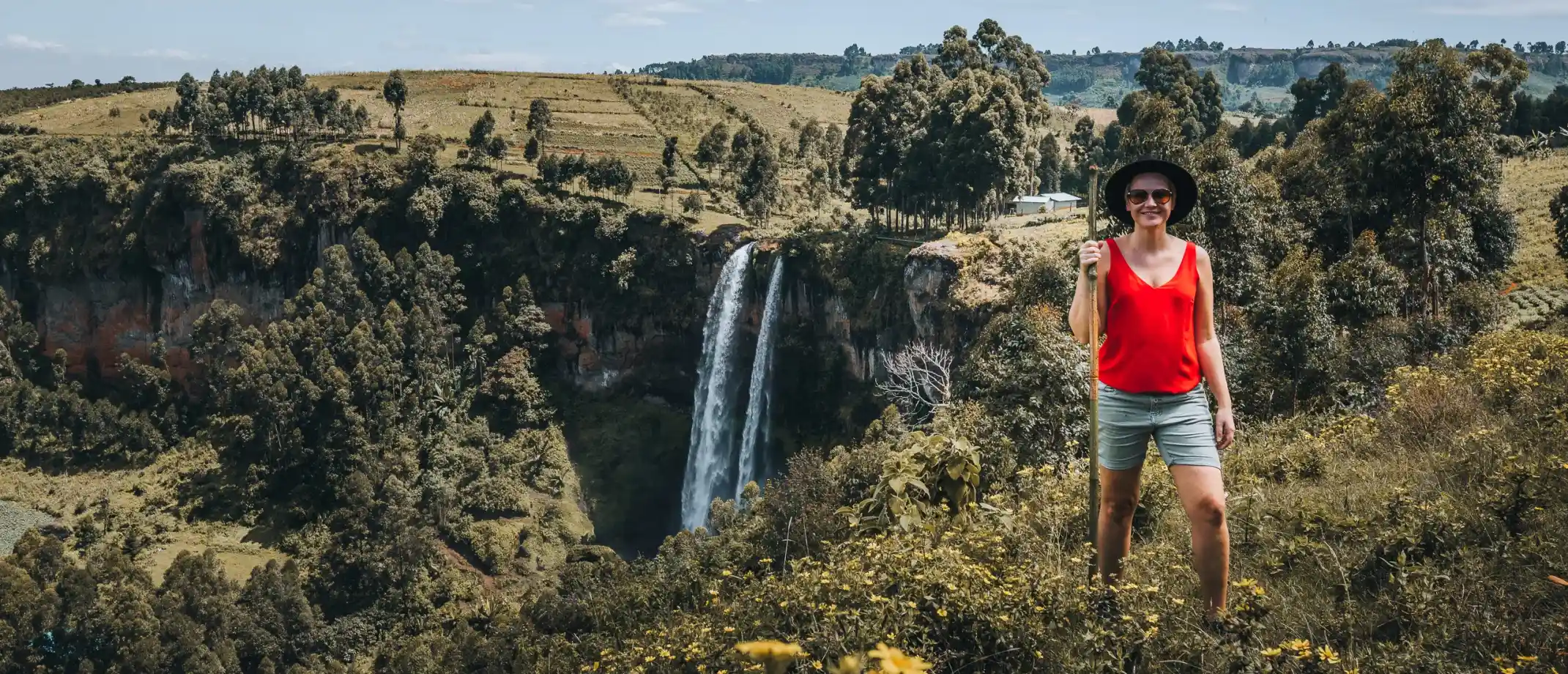
If you are comfortable walking, we would absolutely leave the car behind in Sipi. A full hike around the three Sipi waterfalls takes about half a day.
You follow local paths through the hilly landscape, visiting each of the waterfalls along the way. If you don’t want to do the full route, the hike can be shortened to suit you.
The complete route is about 7 to 8 kilometres. There is around 250 to 300 metres of elevation gain, with some steeper sections both uphill and downhill.
You don’t need to be an experienced hiker. A normal to good level of fitness is enough, but you should be comfortable walking on uneven ground. After rain, some sections can become muddy and slippery, which makes the walk more demanding.
We recommend sturdy hiking boots or trail shoes with a good grip. You don’t need heavy mountain boots. Walking poles are not essential either, although they can be useful on the steeper sections, especially when the ground is wet.
Do you need a guide at Sipi Falls?
We would always recommend that you go with a local guide.
Not just because they know the paths and because parts of the walk take you across private land. More importantly, a good guide helps you understand what you are walking through. Who grows the coffee here? How do families around Sipi live? What are the crops along the path? And how important is agriculture to the local community?
There is also the simple fact that working with a local guide means that some of your tourism spending stays in the community. Without a guide, you see a beautiful landscape. With a good guide, you understand a little more about the place.
For us, that makes the walk much more interesting.
In Sipi, we work with several local guides who were born and raised in the area. They know the communities, the trails and the landscape well. Many of them are also involved in farming, including coffee growing, often working alongside their families.
Our tour guides stay in direct contact with these local guides and usually let them know ahead of time when we are bringing travelers to Sipi. This gives them time to arrange a guide they know and trust.
We prefer this direct approach. We are not working through an intermediary. We are working with people from Sipi itself, and that means your visit can also support people who live and work in the area.
Coffee in Sipi: look beyond your cappuccino
Walk through Sipi and you will see coffee growing all around you.
If you drink coffee every day without giving much thought to where it comes from, it is quite something to see how much happens before those beans eventually end up in your cup.
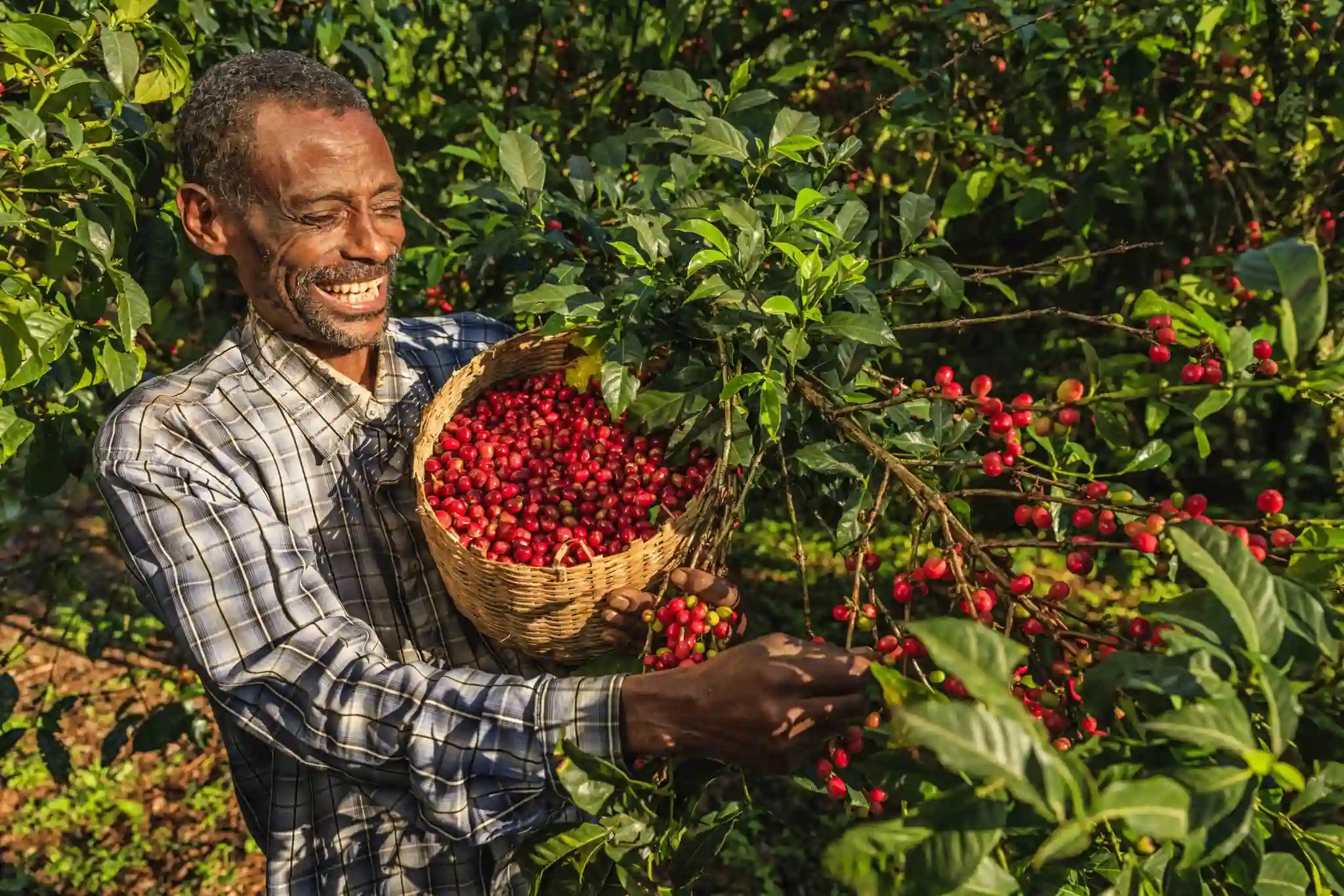
During a coffee tour, you visit a local coffee farmer or family and learn about the process from start to finish. You see the coffee plant and cherries, and learn what happens during harvesting, drying, processing and roasting before finally brewing the coffee.
What we like about coffee experiences in Sipi is that they don’t feel like a separate tourist activity. You are standing in the middle of the plantations, surrounded by the people and farms that make coffee part of everyday life here.
Coffee is not just something you drink in Sipi. It is part of the landscape and part of local life.
Local encounters around Sipi
You will naturally come across local life when you walk through Sipi.
The farms and villages are not there as a backdrop for visitors. People live and work here every day. That is why we think these encounters are best kept simple and respectful.
This is also how we approach cultural experiences elsewhere in Uganda. We are not interested in staged shows put on because a group of tourists happens to be passing through. We would rather meet people in smaller settings, where they can talk about their own work, their families and everyday life.
One of the people you can meet in Sipi is Joel Kaburu.
He was born and raised here and still lives in Sipi with his family and relatives. After working for several years as a ranger with the Uganda Wildlife Authority (UWA), he decided to return home. He continued working on his family’s small coffee farm and also became a local guide.
With Joel, you can explore the waterfalls and surrounding area, but you can also visit his coffee farm. He takes you through the whole process, from growing and picking the coffee to processing, roasting and finally tasting it. And you don’t just stand and watch. You get involved yourself.
The visit takes place at Joel’s home, so you will often meet some of his family and relatives too. And honestly, they are usually just as curious about you as you are about them.
Abseiling at Sipi Falls
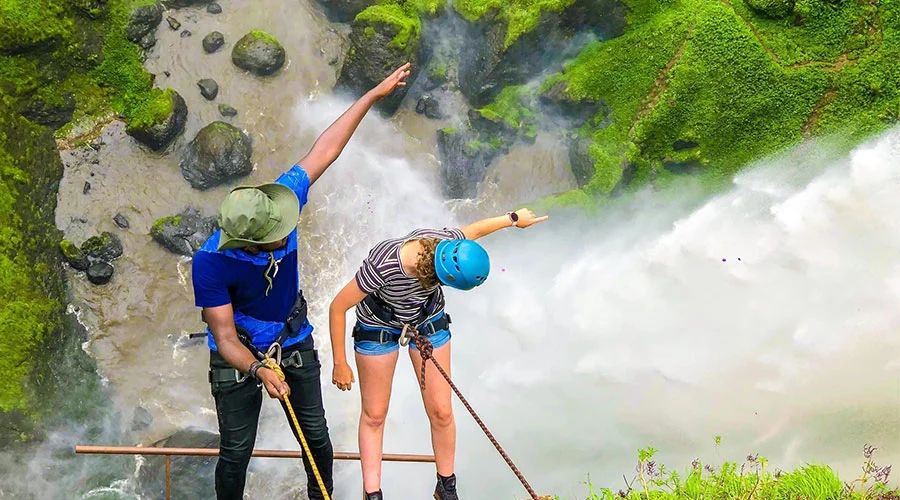
If you want a bit more adrenaline after your hike, you can also go abseiling at Sipi Falls.
You don’t need to be an experienced climber to do it. You will, however, be dealing with height, ropes and climbing equipment, so we think it is important to know who is running the activity and how the safety arrangements are handled.
We would therefore rather not simply tell you that it is “completely safe.” For activities like this, we pay attention to the people operating them, the equipment they use and the way the activity is supervised.
The abseil takes place beside the highest of the three Sipi Falls and descends about 100 metres down the rock face. Before you start, you receive a safety briefing and are fitted with a helmet, climbing harness and the necessary equipment. During the descent, you are also secured with a second safety line.
Doing nothing for a while is also part of it
As far as we are concerned, a safari in Uganda does not have to be packed from early morning until late evening every day. Sipi is actually a place where it is nice to leave some room in your schedule.
Have a shower after your walk, enjoy some lunch, and then sit on the veranda for a few hours. Have a coffee. Read a book. Look out at the view. That’s it.
It might not sound like an activity. That is exactly the point.
Too many travellers try to fit as much as possible into one trip. We prefer to do a little less and give ourselves time to properly experience the places we visit.
How many nights do you need in Sipi Falls?
In most cases, we would recommend two nights.
You can certainly see Sipi in one night, but the stay can quickly become a case of arriving, doing an activity, sleeping and leaving again.
With two nights, there is more room to enjoy the place. You have time for the hike, a coffee experience or local encounter, and perhaps even some abseiling. But just as importantly, you have time to slow down at your accommodation and enjoy the surroundings.
And for us, that last part can be just as important on a Uganda tour.
This is how we would spend two nights in Sipi:
Day 1: Arrive in Sipi, settle into your accommodation and, later, perhaps do a short activity or simply enjoy the views.
Day 2: Walk around the three Sipi Falls, followed later by a coffee tour or some free time.
Day 3: Have a leisurely breakfast and then continue with the rest of your Uganda trip.
Does Sipi Falls fit into every tour in Uganda?
No. And we think it is important to say that.
Uganda is too big and too diverse to try to fit every beautiful place into one trip.
If you are short on time and gorillas, chimpanzees and wildlife are at the top of your list, there are itineraries where we would leave Sipi out. Not because it isn’t worth visiting, but because a good trip also needs a sensible pace and some time to breathe.
If you have more time, enjoy hiking, or want to experience more of everyday life in Uganda beyond wildlife, then Sipi makes much more sense.
Sipi also works particularly well as part of a journey through eastern and northeastern Uganda. For example, you can combine it with Kidepo Valley National Park and Murchison Falls, allowing you to experience very different landscapes and sides of the country along the way.
If you want to combine Sipi with the Big Five, chimpanzees in the west and gorillas in the southwest, we would generally recommend at least 14 days. On a shorter trip, adding Sipi can mean spending too much time on the road and not enough time enjoying the places you have come to see.
But if you are deliberately travelling through eastern and northeastern Uganda, Sipi can fit very well into a shorter itinerary, especially when combined with Kidepo.
Because we put together tailor-made Uganda safaris, there is no fixed answer. It really comes down to what you want to see, how you like to travel and how much time you have.
Is Sipi Falls suitable for children?
It can be, but we would not simply answer “yes” to this.
The age of the children, how used they are to walking, and the conditions on the trails all make a difference. A family with active teenagers is quite different from a family travelling with children aged four and six.
Sipi is particularly enjoyable for active travellers who like walking and discovering the local area along the way. It can also be a good place to visit with children, especially if they are already used to longer walks at home.
For the full hike around the three waterfalls, we would not necessarily set a strict minimum age. In our view, hiking experience and fitness are more important. We would not recommend the full route for very young children who are not used to walking long distances. Fortunately, the hikes are flexible and can be shortened, for example by visiting only one or two of the waterfalls.
Some sections of the trail are steep, and after rain, they can become muddy and slippery. This means you need to take a little extra care with children. A good local guide can adjust the pace and route along the way if the full hike turns out to be too much.
What is the best time to visit Sipi Falls?
You can visit Sipi Falls throughout the year. The drier periods generally run from June to September and from December to February. During the wetter months, the landscape becomes especially green, although the trails can also be muddier and more slippery.
So, for Sipi, we would not say that one season is automatically best for everyone. If you mainly want comfortable hiking, the drier months may suit you better. If you enjoy lush green landscapes and don’t mind a little more mud, the wetter months have their own appeal.
The waterfalls can also look particularly impressive after rainfall, when there is more water flowing over the cliffs. In the end, the best time depends on what you want to get out of your visit.
Include Sipi Falls in your Uganda safari?
Sipi Falls is not the kind of place we would tell every traveller they absolutely have to visit. And honestly, we think that is part of its appeal.
For the right trip, Sipi is a lovely change of pace. A few days without long game drives. Walking through coffee and banana plantations. A local guide who can tell you things you would never learn from a travel book. And afterwards, simply sitting and enjoying the landscape. Whether Sipi fits into your trip depends on how much time you have and what you want to experience in Uganda.
That is what we look at first at Greenway Nature Tours Africa.
We are Ugandans and tailor every trip around the traveller. There is no standard route that we simply add a few extra days to. We prefer to build a journey that makes sense, with enough variety and enough time to actually enjoy the places you visit.
Would you like to know if Sipi Falls makes sense for your Uganda safari? Get in touch with us, and we will put together a free, tailor-made proposal for you.
Curious about other hikes? Check out our blog about hiking and nature walks in Uganda here
You May Also Like

Greenway nature tours
We are a fully licensed tour company accredited by the Uganda Tourism Board. We design and operate safaris in Uganda and East Africa. Our operations are based in Kampala, Uganda, the heart of our safari planning and coordination. Though our company was officially established in 2025, our team brings deep, hands-on knowledge of East Africa.
Destinations
Favourite Tours
Help & Info
- About us
- Travel Blog
- Travel FAQS
- Gorilla Permits Bookings
- Contact Us
- Pay Online