Chimpanzee Trekking in Uganda
Chimpanzee trekking In Uganda
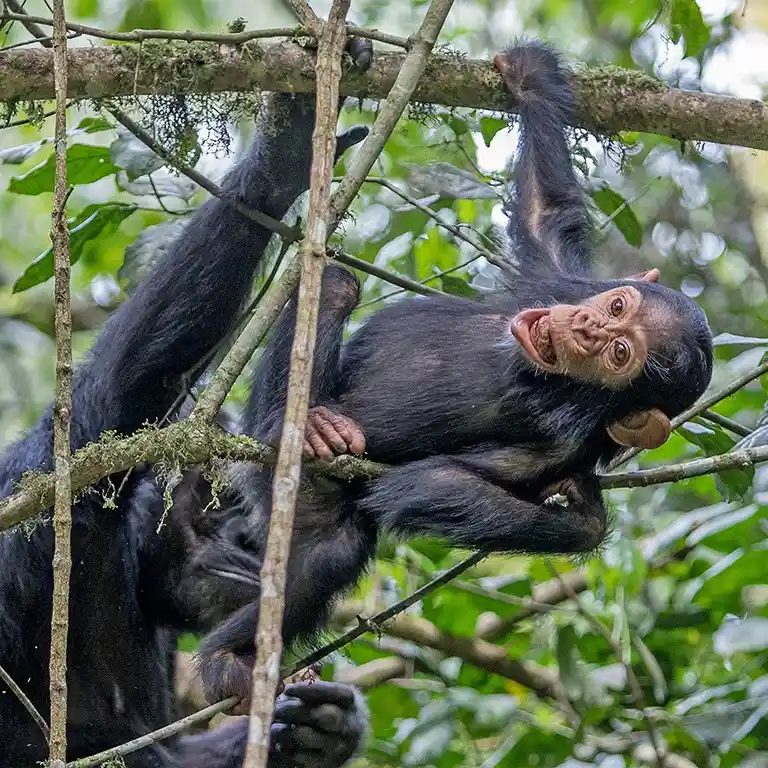
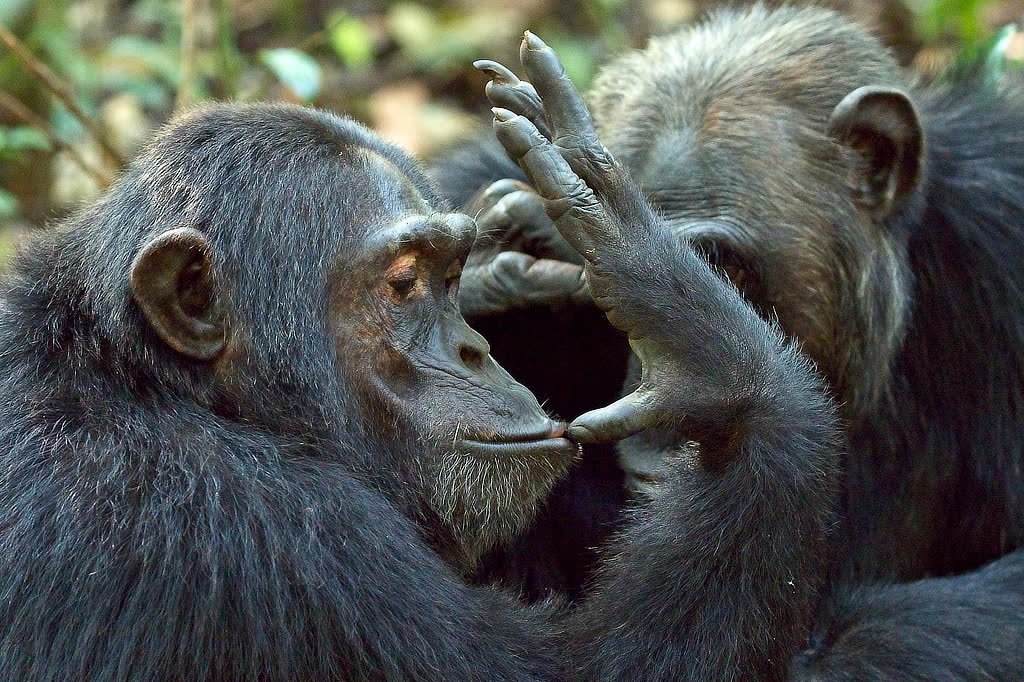
Chimpanzee trekking in Uganda is one of the most dynamic nature experiences in East Africa. Over 5000 wild chimpanzees live in the pristine jungles of Kibale Forest, Budongo Forest, Bugoma Forest, Kalinzu Forest, and the deep canyon of Kyambura Gorge in Queen Elizabeth National Park. During a trek, you will hear calls, rustling, and sometimes a sudden shriek high in the trees. The energy of a chimpanzee community feels intense and lively. Chimpanzees resemble human so much. They are genetically closely related to us. The DNA code is very similar in many of the genes we can compare. Their faces, their hands – they are a copy of us. They are curious. They seek contact. Sometimes they sit right opposite you and look at you. Additionally, the interaction between chimpanzees is very beautiful to watch. They play. They groom each other.
Greenway Nature Tours
At Greenway Nature Tours we specialize in organizing private trips to Uganda. Our Uganda specialists know the trekking areas well and know which routes, lodges, and seasons best suit your trip. They are happy to assist you in choosing the right chimpanzee trekking tour, tailored to your pace and wishes.
chimpanzee trekking trips
The tour packages below have been selected by our specialists. Naturally, all trips can be fully customized to your wishes. For more information, please feel free to call or email us.
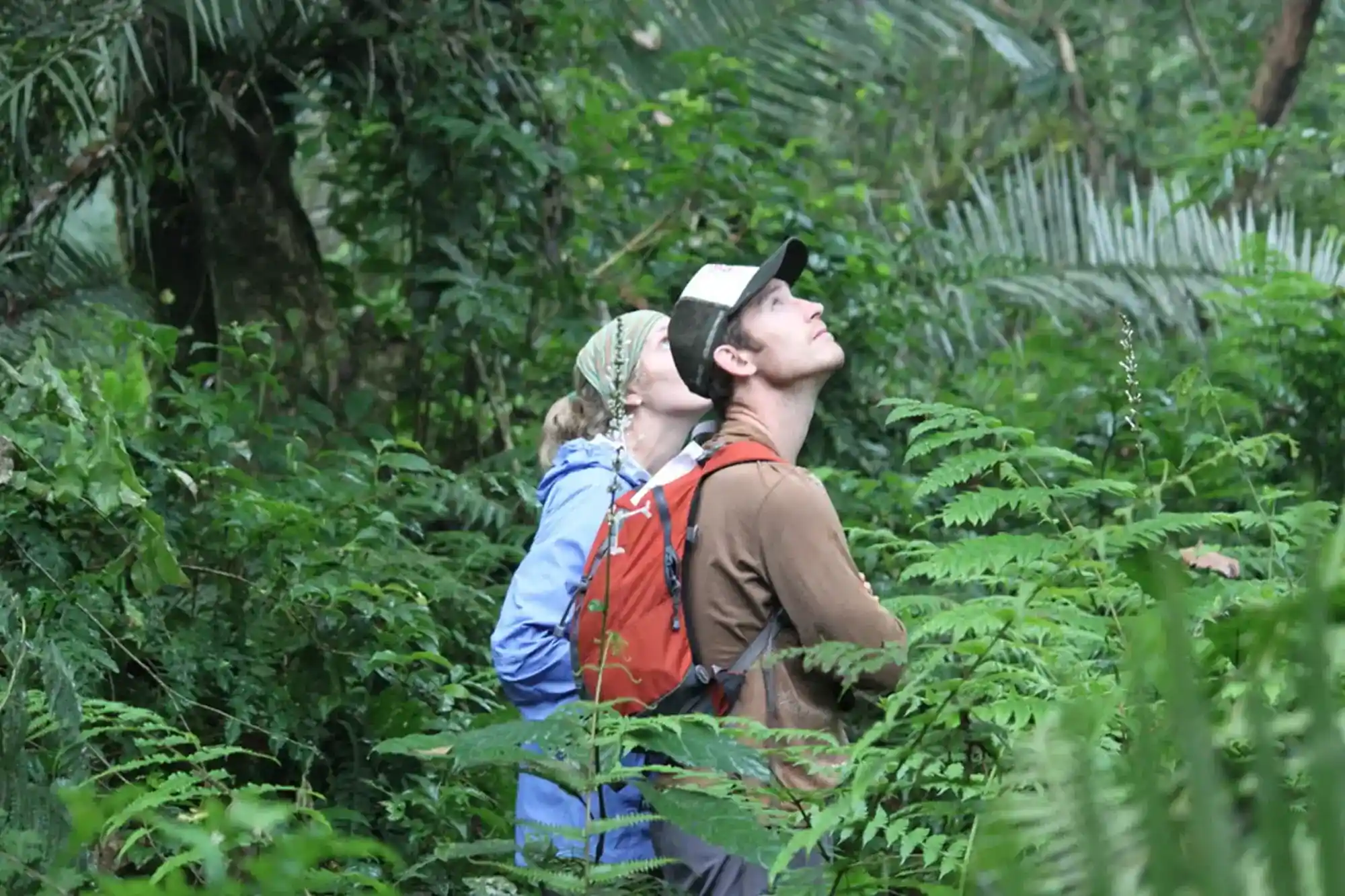
Chimpanzees in Kibale Forest
Kibale Forest National Park is the most famous area for watching wild chimpanzees in Uganda. Around 1,500 chimpanzees live here in the primary forest, clearings, and swamps full of papyrus. This 776km2 rainforest lies at an altitude of about 1,100 to 1,600 meters. It adjoins the northern edge of Queen Elizabeth National Park. The high canopy, sometimes exceeding 60 meters, forms a dense network of leaves and lianas. Colobus monkeys, olive baboons, blue monkeys, red-tailed monkeys, bush babies, forest elephants, colorful birds, and over 200 species of butterflies make the primary forest even more vibrant. The chance of seeing chimpanzees in Uganda is greatest here. Their behavior is noisy and dynamic. You hear short cries, drumming on tree trunks, or longer screams that carry through the forest. The moment you make eye contact is impressive. Chimpanzees display curiosity, social interaction, and sometimes a touch of playfulness.
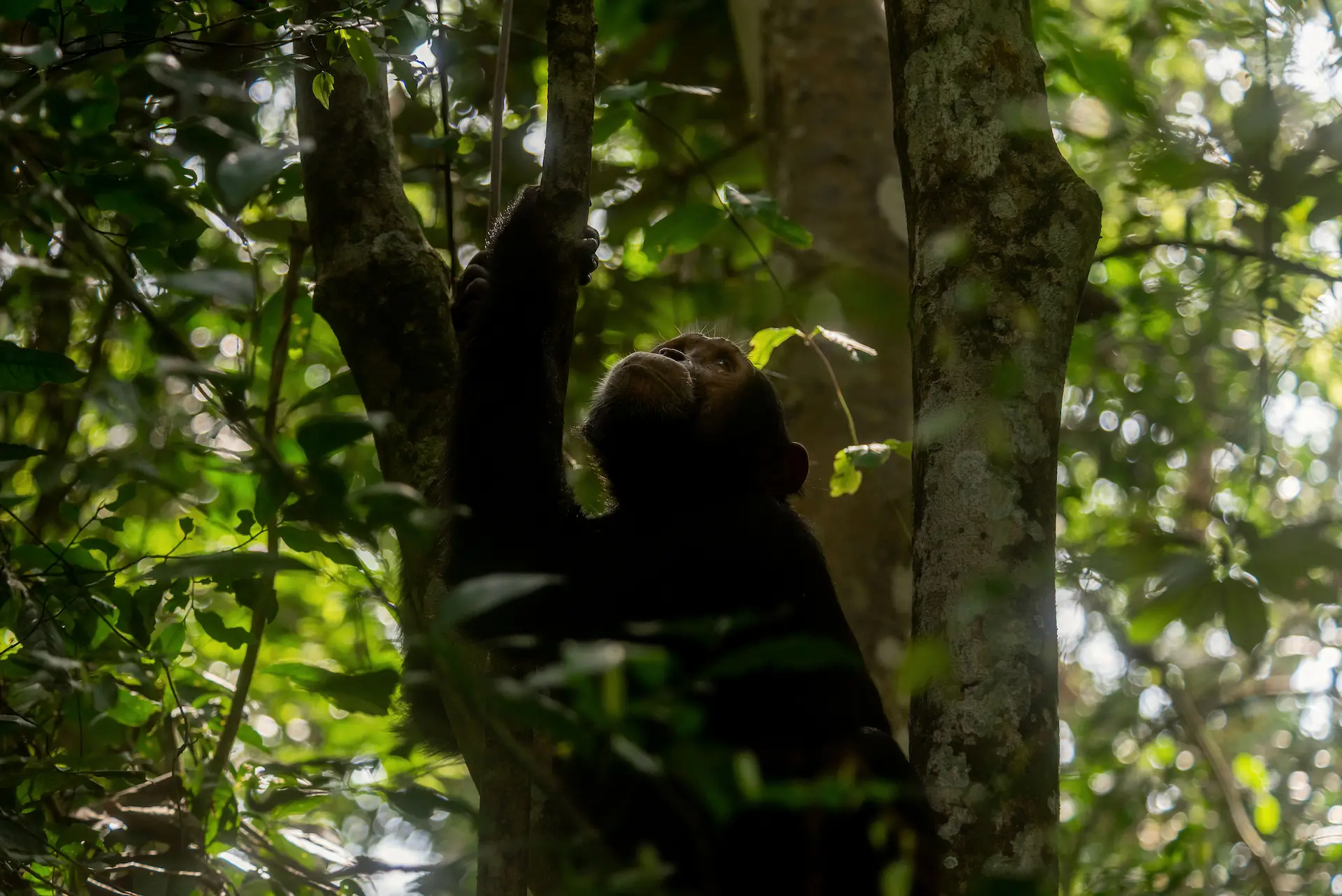
Activities in Kibale Forest
Chimpanzee trekking
Early in the morning or in afternoon, you head into the forest with an experienced ranger guide. The trek itself takes 2 to 4 hours. As soon as you hear the first sounds of chimps, the tension rises. Not long after, you stand at a respectful distance from a group of wild chimpanzees. You observe how they eat, communicate, and move through the trees with ease. Because the number of chimpanzee trekking permits is very limited, booking in advance via Greenway Nature Tours is essential especially in the high season months of June, July and August. Chimpanzees live in groups that split up and reunite, and are therefore nomadic within their habitat. This explains why treks vary in duration.
Chimpanzee Habituation Experience
If you would like to spend more time in the forest, the Chimpanzee Habituation Experience offers an enriching addition. In this case, you visit chimpanzees that are not yet fully habituated and spend a half day in the forest, from the first light of dawn until afternoon. In groups of up to 4 visitors, you follow the chimpanzees, learn about their behavior, and gain more insight into the ecology of Kibale Forest National Park. In addition to the chimpanzees, you will also see many other primates, numerous butterflies, and the structure of the ancient rainforest. This experience offers a more enriching and even more intense experience.
Stay overnight close to your starting point
The accommodations we recommend in Kibale Forest National Park are carefully selected for their peaceful locations close to the chimpanzee trekking starting points. This allows you to begin your day without long transfers while waking up to the sounds of the rainforest. Whenever possible, we book lodges close to the park. However, depending on availability or your travel route, a lodge slightly farther away may sometimes be the better option. We offer accommodation for every budget, from comfortable budget lodges and mid-range properties to semi-luxury, luxury, and exclusive forest retreats. Each lodge blends naturally into its surroundings and offers warm hospitality, excellent comfort, and beautiful views that immediately immerse you in the atmosphere of Kibale Forest.
Other Chimpanzee Trekking Areas In Uganda
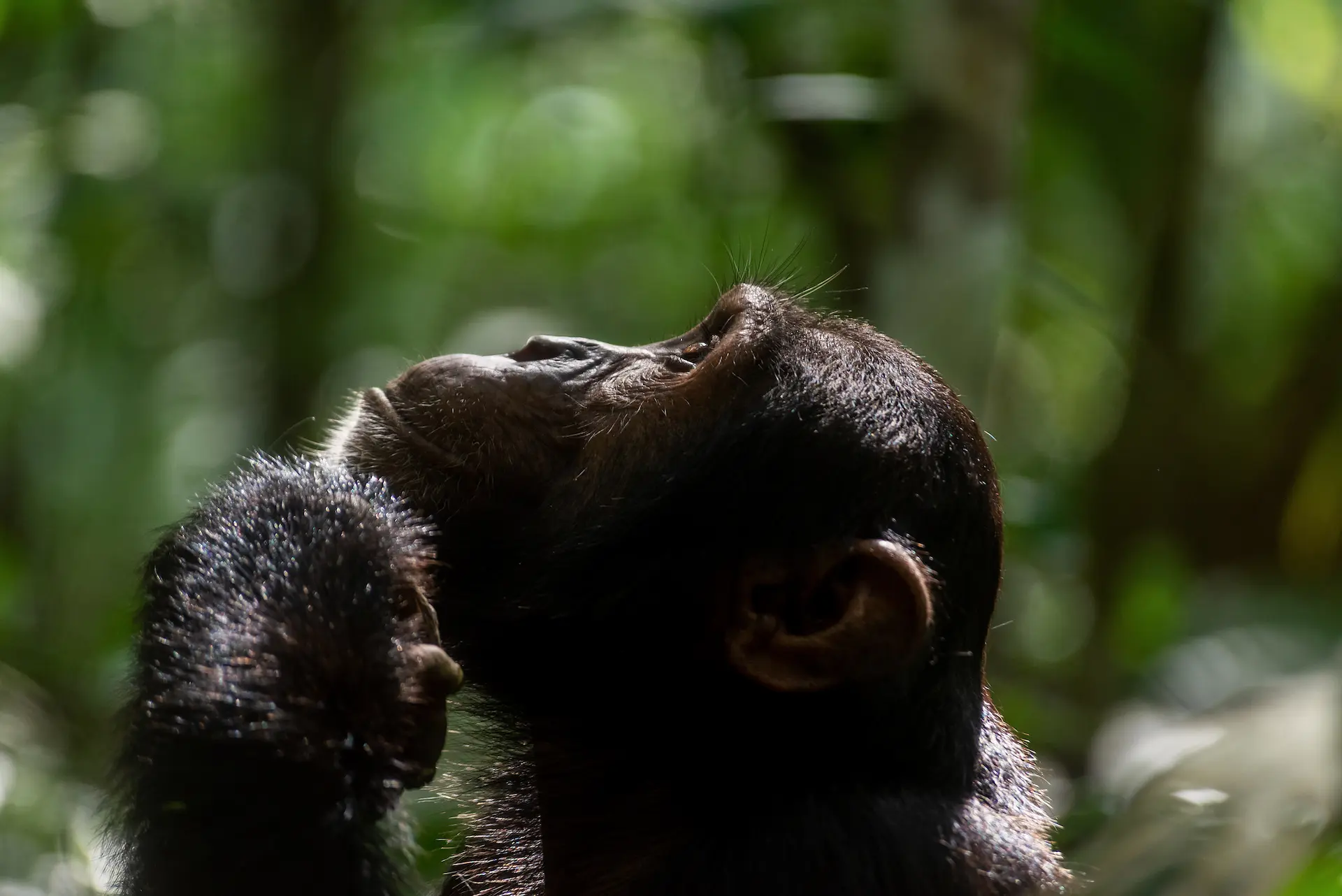
Budongo Forest
Budongo borders the southern side of Murchison Falls National Park in northwestern Uganda. It is known for its tall mahogany trees and quite paths. Comprising some 790 square kilometers of medium-altitude rainforest on the edge of the Albertine Rift, this vast reserve is home to a diverse assemblage of forest monkeys, butterflies, birds and over 800 wild chimpanzees. The chimps roam through spacious territories here, which can make your day feel a bit longer at times. The surrounding are quite and natural.
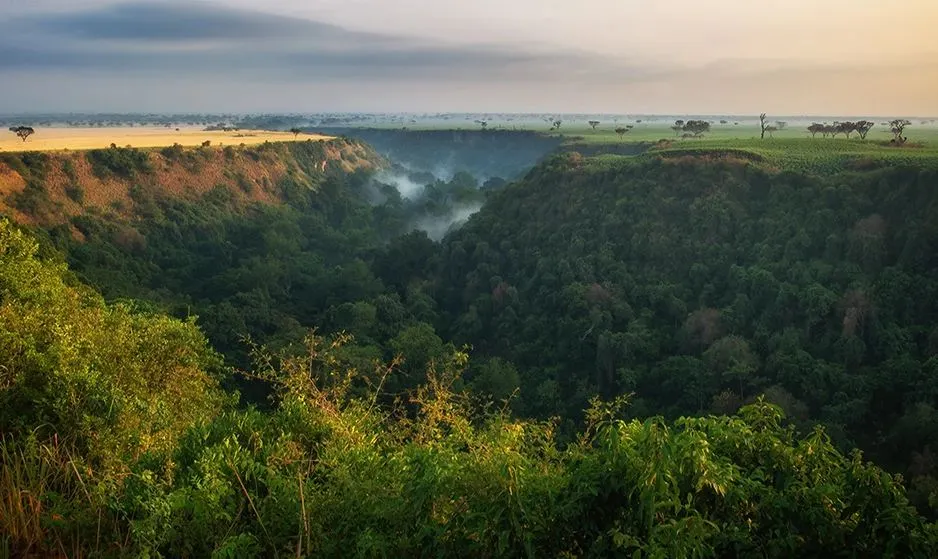
Kyambura Gorge
Kyambura Gorge a 100 meters deep crack in the Earth’s crust running straight through the savannah of Queen Elizabeth National Park. The gorge is an 11 km long. Hidden within the gorge lies a beautiful stretch of tropical rainforest, situated along the banks of the Kyambura River. This rainforest is home to chimpanzees, and other animal species. Rangers make it a sport to spot the chimpanzees, but the chance of seeing them is about 50%. Therefore, above all, enjoy the hike itself, as it is one of the most beautiful hikes you can take in Uganda. It is an adventurous hike involving scrambling and climbing.
Kalinzu Forest
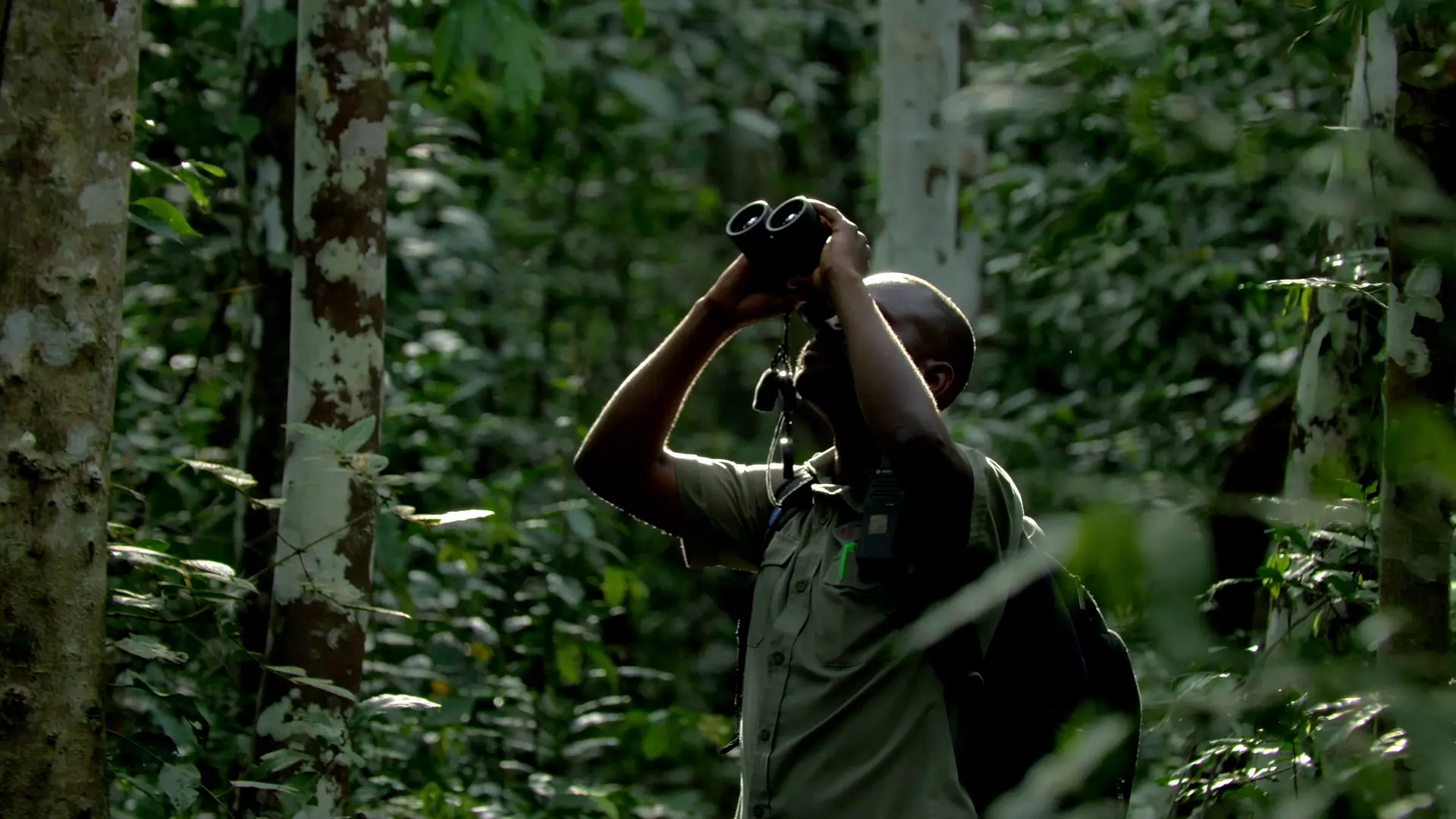
Located on the western edge of Queen Elizabeth National Park, the 141 km² Kalinzu Forest is a beautiful tropical rainforest stretching from the Rift Valley floor to the Kichwamba Escarpment. More than 300 wild chimpanzees live in this lush forest, with two habituated communities—one for research and the other open to visitors. Kalinzu Forest is less publicized than other chimp-watching venues, but it is a great addition to safari tours, thanks to its combination of relatively low prices, ready accessibility and high success rate.

Bugoma Forest
Bugoma Forest, created in 1932, is one of Uganda’s oldest but most neglected protected areas. A key migratory corridor between Murchison Falls National Park and the Semliki Valley, it is home to two habituated groups of chimpanzees (an important but lesser-known population). Each group consists of more than 70–100 individuals, totaling over 200 habituated chimpanzees. In recent years, Bugoma has been at the center of a conservation battle between developers seeking to clear parts of the forest for sugarcane plantations and environmentalists working to protect it. It was therefore encouraging to see Bugoma officially open for chimpanzee trekking in 2024, creating new opportunities for both conservation and sustainable tourism.
Permits and preparation
The costs of for the four locations where you can go on a chimpanzee trek vary. As of July 2, 2026, the costs are as follows. Kibale Forest National Park $250. Bugoma Forest $ 200. Kyambura Gorge $100. Budongo Forest: $120 in the high season. $110 in the low season and Kalinzu Forest: $150.
A trek requires some preparation. We advise you to bring the following:
- Make sure you have sturdy, broken-in hiking boots/shoes.
- A lightweight and breathable raincoat; it is still the rainforest, after all.
- Always put on long pants during your trek.
- Come with long socks that you can pull over your trouser legs so that insects don’t climb up your pants.
- Use plenty of insect repellent.
- If you have some difficulty walking: bring an extendable walking stick. That will help you during the hike.
- Fill your water bottle before you start the trek.
The minimum age for participation is 12 years. Basic fitness is recommended, as chimpanzees can move quickly and you will sometimes traverse hilly terrain. The duration of the trek varies by day and by chimpanzee group. Sometimes you will find the animals after an hour, sometimes it takes longer.
How a chimpanzee trek works
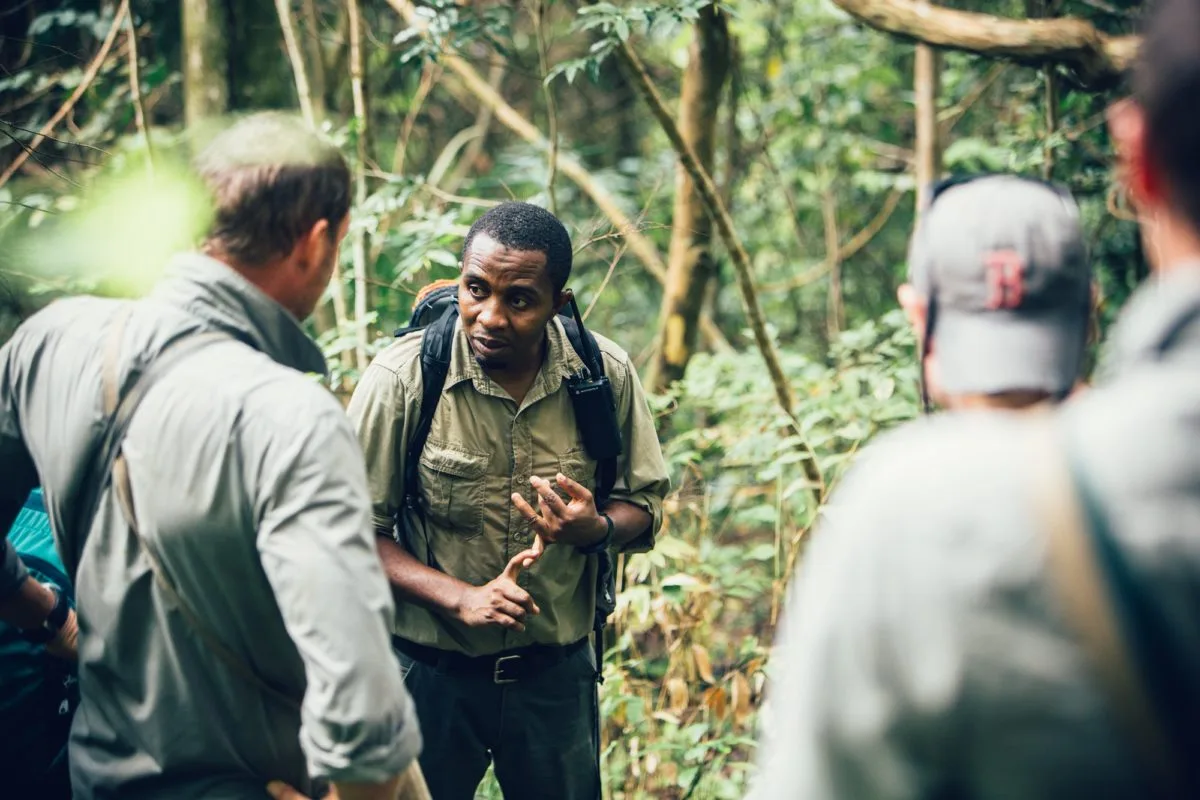
Your chimpanzee trekking adventure begins with a short briefing at the park headquarters. An experienced ranger guide explains the activity and what you will do. You are given clear do’s and don’ts. You then head into the forest in a small group, guided by one or two rangers. Chimpanzees are wild animals, so every trek is different. Sometimes they are found within an hour. On other days, it may take 2 or 3 hours. The search through the forest is part of the excitement.
Once the chimpanzees are found, you spend one hour observing them in their natural habitat. You watch them feed, groom, play, communicate, and move through the trees. It is a unique glimpse into the lives of our closest relatives. Your ranger guide helps you understand what you see. They know the chimpanzee families well. They can identify individuals, explain relationships, describe behavior, and share facts about diet, communication, and daily life. You learn a great deal about chimpanzee behavior.
Best time to travel for chimpanzee trekking in Uganda
Dry periods: The months of June to September and December to February usually bring more stable weather and easier paths. As a result, treks in Kibale Forest National Park are often more predictable. This period also works well for combining visits to several nature reserves.
Rainy periods: During the other months, the forest becomes greener and quieter. The paths may be muddy, but the soft light and peaceful atmosphere are ideal for photography. In addition, chimpanzees are often found lower in the forest during this time, which can make treks shorter.
The vocal behavior of chimpanzees
Chimpanzees are highly vocal animals. They use a wide range of sounds to communicate with each other. Unlike gorillas, which are mostly quiet, chimpanzees are much more expressive. Their best-known calls are pant hoots. These can travel long distances through the forest. They help the group stay connected and move together. Short calls are also used. They share information about food or warn of danger. Chimpanzees also drum on tree trunks and roots. This creates loud, rhythmic sounds. It strengthens their messages and can be heard far away. During a trek, you often hear them before you see them. The forest fills with echoes, calls, and drumming. It gives a strong sense of their social life. It also shows how they stay in contact and move as a group.
Frequently asked questions
About Chimpanzee Trekking in Uganda
A chimpanzee trekking safari in Uganda is no ordinary trip. We understand that you might have so many questions. We have already answered the most important questions for you below. Do you have another question? Feel free to ask it via the chat.
Is a chimpanzee trek suitable for everyone?
Chimpanzee trekking is generally less demanding than gorilla trekking. It is suitable for most travelers with a reasonable level of fitness. In Kibale Forest National Park, the trails are mostly gentle and fairly flat. This makes it one of the easier trekking locations. Some areas are more challenging. Kyambura Gorge, for example, involves steep climbs in and out of the gorge. It is better suited for active travelers. Budongo Forest offers easier terrain. It is a good choice for a more relaxed hike. The minimum age for chimpanzee trekking in Uganda is 12 years. This rule is set for safety and due to the physical nature of the activity.
How does chimp trekking in Uganda compare to other countries?
Chimp trekking is available in several African countries, but it is most popular in Uganda. Many visitors include it in their itinerary at least once. The activity is easy to combine with other safari experiences across the country.
The best-known destination is Kibale National Park. Sightings are generally very reliable, but visitor numbers can be high. For a quieter experience, there are strong alternatives. These include Kyambura Gorge in Queen Elizabeth National Park, the community-managed Kalinzu Forest Reserve, and the large Budongo Forest near Murchison Falls National Park.
Tanzania also offers excellent chimp trekking in Gombe and Mahale Mountains National Parks along Lake Tanganyika. The experience there is very special and remote. However, access is expensive and time-consuming. This makes it less commonly visited.
In Rwanda, Nyungwe National Park is another option. It is a beautiful high-altitude forest with rich biodiversity. The park is easy to access and home to many primates. Chimp trekking here is rewarding, but sightings are less predictable compared to Uganda or Tanzania.
How do a chimp trek and a gorilla trek in Uganda compare?
Chimp trekking is often considered underrated compared to gorilla trekking. This is partly because gorillas are larger and more physically impressive. Their presence can feel overwhelming and unforgettable.
The overall experience is similar. In both activities, you start with a briefing from a ranger. You then head into the forest in a small group. Once the primates are found, you spend one hour observing them.
The main difference is behavior. Gorillas are generally calmer and less active. They mostly feed or rest, while the young ones may play. Gorilla families also stay closely together as one stable group.
Chimpanzees are more dynamic. Their communities are fluid and often split into smaller subgroups. These groups move apart and reunite later. There is always activity in a chimp community. You may see social tension, play, territorial patrols, or even hunting.
This makes chimp viewing more exciting, but also more challenging. Chimps move quickly and can be hard to follow. They also spend more time high in the trees, which can limit visibility.
Guides work hard to keep up and ensure good sightings and photo opportunities.
Finally, there is a price difference. Chimp trekking permits generally range from US$120 to US$300, which is significantly lower than gorilla trekking permits.
What fitness level is required?
A reasonable level of fitness is needed for chimpanzee trekking. However, the difficulty can vary from day to day.
Chimpanzees have large territories. Some days you may find them within 30 minutes. On other days, it can take up to three hours. The experience is also unpredictable once you meet them. They may be resting, feeding, or moving quickly through the forest.
Unlike gorillas, chimpanzees move very fast through the undergrowth. Keeping up with them can be challenging.
This unpredictability is part of the adventure. Most visitors still find the experience highly rewarding.
Proper gear is important. Good hiking shoes are essential. A lightweight rain jacket and long trousers are also recommended. A walking stick can help on slippery slopes.
If you are unsure about your fitness, you can hire a porter. They can carry your bag with water, snacks, and a camera. They also help you move more comfortably through difficult terrain.
Can children do chimp trekking?
The minimum age for chimp trekking is 12 years. There is no maximum age.
Is chimpanzee trekking in Uganda safe?
Chimpanzee trekking in Uganda is very safe. The chimpanzees are well habituated and used to human presence. They do not see people as a threat.
Before the trek begins, you receive a safety briefing. One key rule is to keep a distance of at least 8 meters (26 feet) from the chimpanzees. As long as you follow your guide’s instructions, there is nothing to worry about.
Uganda is also generally a safe travel destination. Incidents in national parks and reserves are very rare. Like in many countries, cities can have some crime, but this is usually avoidable with normal precautions.
Booking with a reputable tour operator adds an extra layer of safety and reassurance.
What does a chimp trek trip cost?
Chimp trekking fees vary by location. In Kibale National Park, the permit costs US$250. In Kyambura Gorge, it is US$100. In Kalinzu Forest Reserve and Budongo Forest, it is US$150.
When you book your tour with Greenway Nature Tours, these permit fees are usually included in the total price.
A 3-day trip that includes chimp trekking in Kibale starts from about US$950 per person. A longer 10-day Uganda highlights tour, which may include chimp and gorilla trekking plus safaris in Queen Elizabeth and Murchison Falls National Parks, starts at around US$3,000 per person.
These prices are only guidelines and depend on the level of accommodation you choose. Budget, mid-range, and luxury options are all available.
Shared camping tours are the cheapest. Budget private tours are also available. Mid-range stays range from simple guesthouses to tented camps. Luxury lodges are also found across the country for a more comfortable experience.
Are chimpanzee sightings guaranteed?
Although the chimpanzees are habituated to humans, they remain completely wild. They move daily in search of food. They also build a new nest each night. This makes their movements unpredictable.
Compared to gorillas, chimps are more mobile and harder to track. As a result, sightings can vary. In Kibale National Park, the chances are very high, often above 95%. Guides and researchers regularly track the groups, which improves accuracy.
Kalinzu Forest is also quite reliable, with strong chances of sightings. Kyambura Gorge and Budongo Forest are slightly less predictable. However, success rates are still above 80%. When you do find them, the experience is equally rewarding.
How do I book a chimpanzee trekking permit?
Chimpanzee trekking permits are issued by the Uganda Wildlife Authority. They manage all official bookings and allocations. Our team handles the booking for you. Our team will secure your chimp trekking permit in advance, confirm availability, and include it in your travel arrangements.
Have more questions?
Contact us. Our team of experts are here to help! Whether you’re curious about the best time to travel, want to hear first-hand about an experience or need help planning your safari.
Greenway nature tours
We are a fully licensed tour company accredited by the Uganda Tourism Board. We design and operate safaris in Uganda and East Africa. Our operations are based in Kampala, Uganda, the heart of our safari planning and coordination. Though our company was officially established in 2025, our team brings deep, hands-on knowledge of East Africa.
Destinations
Favourite Tours
Help & Info
- About us
- Travel Blog
- Travel FAQS
- Gorilla Permits Bookings
- Contact Us
- Pay Online