Practical tips for your trip to Uganda: All you want to know
Your Uganda safari trip is drawing closer. Your itinerary is set, the flights are arranged, the accommodations are booked, and then the practical questions naturally arise. Can you just withdraw cash along the way? Will you have internet access throughout your trip? Do you need to bring US dollars? Do you really need hiking boots for the gorilla trekking? What type of plug do they use in Uganda? And how much clothing should you pack for a two- or three-week trip to Uganda? Logical questions. But when we sometimes see everything, people think they need for a Uganda tour, it seems as if they are setting off on an adventure to an uninhabited area.

We help you on your way
When you travel through Uganda with Greenway Nature Tours, you have your own Land Cruiser and private tour guide.
We arrange your activities, accommodation and meals, and provide drinking water along the way. Your guide knows more than just the route. He also knows where to stop for lunch, where to withdraw cash and how to help when something comes up during your journey.
Before you travel, we can also go through the practical details with you. From your Uganda visa and tipping to dietary requirements and other matters specific to your trip, we help you prepare. You do not have to figure everything out yourself or arrange every detail from home.
This guide covers the questions you may still have. Not just what is officially required or possible, but how things actually work when you travel around Uganda.
Internet in Uganda
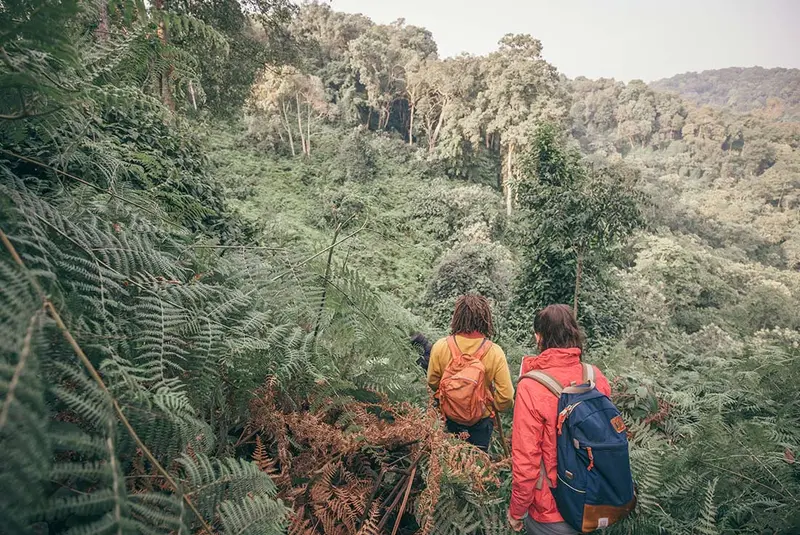
Will you be reachable while travelling in Uganda? Yes, in surprisingly many places, even.
In Entebbe, Kampala, and other larger towns in Uganda, the mobile network coverage is generally good. You will also have mobile data in several places during a tour. However, once you venture into remote national parks or deep into the rainforest, the signal may naturally become weaker or temporarily disappear completely.
All accommodations we work with have Wi-Fi, but the speed varies from one place to another. At some lodges, you may have no problem sending photos to friend and family back home. At others, especially in remote areas, you may sometimes need a bit more patience.
If you want to be independent of Wi-Fi while on the go, a local SIM card with a mobile data package is the easiest option.
A local SIM card: MTN or Airtel?
MTN and Airtel are Uganda’s two main mobile providers, and both are good options. Which provider offers better coverage sometimes varies by area.
Getting a local SIM card is easy. You will find the MTN and Airtel counters in the arrivals hall of Entebbe International Airport. You can register your SIM card and buy a data bundle as soon as you arrive. Just remember to bring your passport, as you will need it for registration.
Mobile data is cheap. Roughly, you can expect to pay around 6 to 11 USD for about 10 to 20 GB of data, depending on the provider and bundle. That is usually enough for WhatsApp, browsing the internet and sharing photos during your trip.
The exact bundles change regularly. Therefore, it makes little sense to figure out at home which bundle you will need in a few months.
Will Your WhatsApp continue to work with a Ugandan SIM card?
Yes. You can continue using WhatsApp with your usual number, even after inserting a Ugandan SIM card. Your existing chats and contacts will remain available, and people can continue messaging you on your usual WhatsApp number.
If your phone supports two SIM cards or supports eSIM, you can keep your own number active alongside it. However, do turn off data roaming on your SIM card. Otherwise, a cheap Ugandan data bundle could end up being an expensive affair.
And an eSIM?
That is an option too. The main advantage of an international eSIM is convenience: you can install it before leaving home and connect to the internet as soon as you arrive in Uganda.
But we do not consider it necessary. You can easily get a local SIM card from Airtel or MTN at the airport. It is usually cheaper, and both providers nowadays offer eSIM options.
And what if you are happy not to be online all the time during your trip? Then you do not need to arrange anything. Your accommodations have Wi-Fi, and your tour guide is your main point of contact along the way. Besides, being without signal for a few hours every now and then isn’t the end of the world either.
Money in Uganda: dollars, shillings, or just withdraw cash?
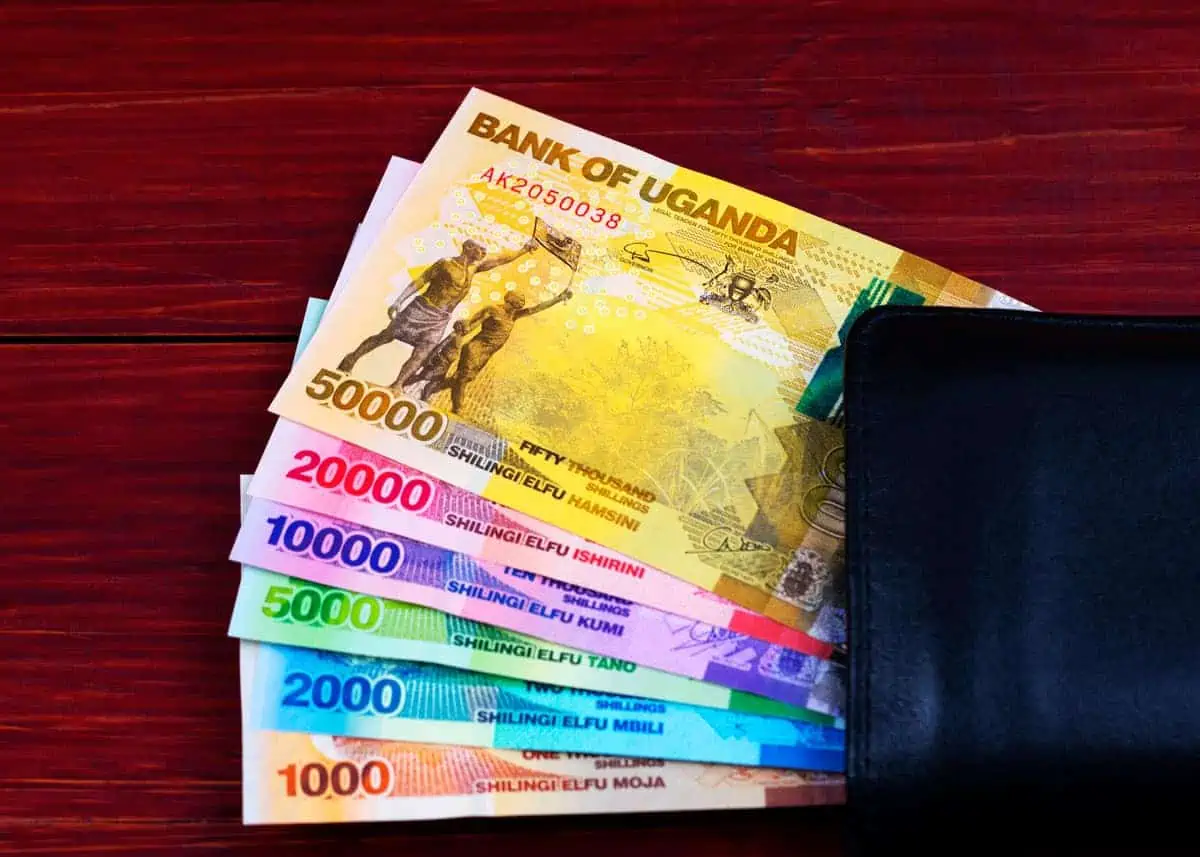
The Uganda’s official is the Ugandan shilling, which is abbreviated UGX.
When travelling with Greenway Nature Tours Africa, most of your main expenses are already taken care of. Your private transport, fuel, accommodations, meals as included in your program, and planned activities are arranged in advance.
So, how much money do you actually need along the way?
Most of your personal spending will be on drinks not included in your programme, tips, souvenirs and optional activities. You do not need to carry large amounts of cash throughout your trip.
The easiest option is to combine Ugandan shillings for everyday spending with a small amount of US dollars and a debit or credit card. That way, you have different ways to pay without carrying more cash than you need.
Do you need to take dollars to Uganda?
Yes, it is worth bringing some US dollars, particularly for tips and certain optional activities. But there is no need to arrive with a thick envelope of cash.
For everyday spending, Ugandan shillings are far more useful. You can withdraw them from ATMs in Uganda, so there is no reason to come with a huge stack of dollars from home.
If you bring US dollars, make sure the notes are recent, clean and undamaged. Older, marked or torn bills may be refused or exchanged at a less favourable rate. Smaller denominations are also handy when tipping.
You can exchange euros in Uganda too, but you generally cannot use them directly in shops or restaurants. The simplest solution is to bring a modest amount of dollars, use shillings for daily expenses and withdraw more money if you need it.
Can you withdraw money in Uganda?
Yes.
You can get Ugandan shillings from ATMs in Entebbe, Kampala and many larger towns during your tour. Your guide knows the route and knows where it is easiest to do so along the way. One thing to sort out before travelling is your bank card. Check with your bank that you can use it in Uganda.
Also, remember that ATMs usually limit how much you can withdraw at once.
And both the local bank and your own bank can charge fees. Withdrawing a small amount every day is therefore not very efficient.
Can you pay with a debit card or credit card?
Increasingly often, but still far from everywhere.
You can pay with Visa or Mastercard at many lodges and hotels. For smaller businesses, markets, and local shops, cash remains very important.
Thus, do not rely totally on your card. Also, a credit card as a backup is handy, and if possible do not keep all your cards in the same place.
Tipping in Uganda: is it customary?
Yes, tipping has become customary in tourism in Uganda. But for us, a tip should chiefly remain what it was originally intended for: a token of appreciation. Not something you feel obliged to do.
Many lodges have a communal tip box. This allows the money to be shared among all staff members. Not only the person serving your dinner, but also the people in housekeeping, kitchen staff, and other colleagues behind the scenes share in it.
You can tip rangers and local guides directly if you are pleased with their service. In addition, there is of course your own tour guide, with whom you often travel for a large part of the trip.
You don’t need to guess what is appropriate on your own. Before departure, we can share our tipping guidelines with you so you know roughly what is customary.
Which plug do you need in Uganda?
In Uganda, we use British Type G sockets which has three rectangular pins. A simple British travel adapter is therefore enough.
You can charge your phone, camera, and other devices at the accommodations. Some lodges we use run completely or partially on solar energy. Therefore, the power supply may sometimes be slightly different than what you are used to at home.
Furthermore, we can offer you a safari Landcruiser which is are equipped with charging points. So, even during longer travel days, you can charge your phone, camera, or power bank.
If you have a lot of equipment with you, a compact USB charger with multiple ports is handy.
Camera and binoculars: are they really useful?
Nowadays, you can take admirable travel photos with a modern phone. If you have little interest in photography, definitely do not suddenly buy a complete camera setup just for Uganda.
However, if you are enthusiastic about photography, Uganda is a great destination for a photo safari. A telephoto lens is perfect for wildlife. But for landscapes, villages, lodges, and people, you actually want a bit of a wider field of view.
Come with enough memory cards plus at least one spare battery. And always carry expensive camera equipment in your hand luggage.
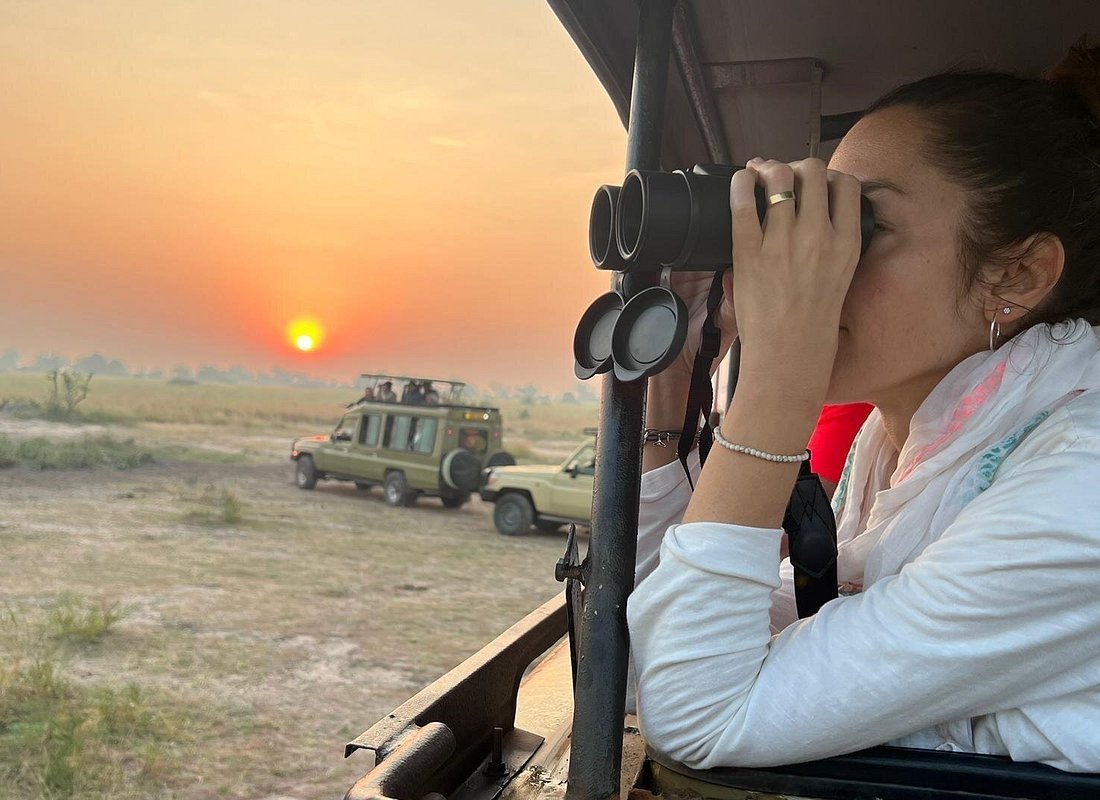
Regarding binoculars, if you have a good pair lying around at home, be sure to bring them along. On game drives, safaris and boat trips in Uganda, it is very nice to be able to see clearly yourself.
If you don’t have any and expect never to look through binoculars again after Uganda, then you really don’t need to buy an expensive pair for this one trip.
What kind of clothes do you take to Uganda?
There is no need to buy a totally new safari wardrobe for a Uganda safari.
The most important thing is comfortable, airy clothing. Neutral and quite colors are practical during tours. But you really don’t have to walk around in khaki and beige for two weeks.
Come with a long and short clothing. Long trousers are comfortable during nature walks and treks and also help keep out mosquitoes in the evening.
And bring something warm.
Yes, Uganda is located on the equator. But large parts of our country are situated at a considerable altitude. On an early morning game drive, in mountainous areas, and in the evening, it can be surprisingly chilly. A fleece, light sweater, or jacket is thus not an unnecessary luxury.
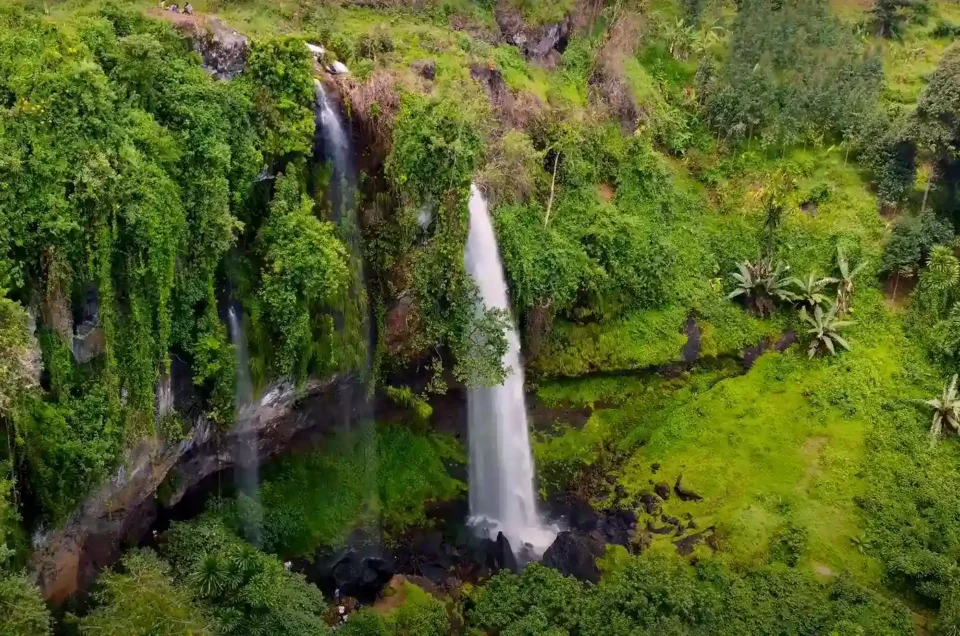
A raincoat which is light should also be in your bag too. Even outside the official rainy season months such June, July, August, and February, it can shower. Especially in green areas like Bwindi Impenetrable Forest, Kibale Forest National Park, and Sipi.
Do you want to know more about the climate and the seasons? Then also read our guide on the best time to travel to Uganda.
What do you wear during gorilla trekking?
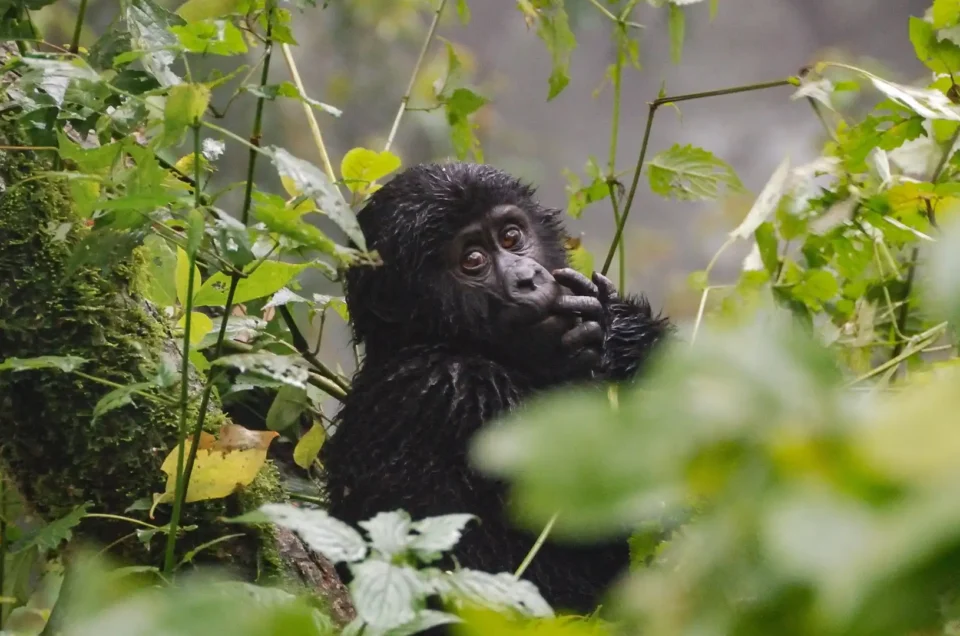
Come with clothes you move easily in. And don’t mind getting dirty. Bring long trousers and sturdy hiking or trail shoes with sufficient tread. The trails can be muddy and slippery. And while trekking gorillas, you sometimes walk off-path through denser vegetation.
Don’t forget a lightweight raincoat belongs. This is because you will be walking through tropical rainforest, and all that lush, greenery grow there because it rains often.
When you search online, you will see that gaiters are often recommended. These keep insects and dirt out of your trouser legs. For us, you don’t need to buy them specifically for this trip. A pair of long socks pulled over your trouser legs works just fine in practice.
Come with a pair of simple gardening or work gloves. These can be nice when you need to hold on to vegetation.
Do you want to know exactly how such a trip goes? Then read our extensive page about gorilla trekking.
Do you need real hiking boots?
They are not need for most Uganda tours.
On regular travel days and game drives, you can wear comfortable sneakers. If you are going to trek gorillas, chimpanzees, or planning a long nature walk, you will mainly need shoes with sufficient tread.
Most travellers find good hiking or trail shoes are enough. Don’t focus on the label too much. What is important is shoes that can fit well and that you have walked in them a few times before departure.
Wearing brand new hiking boots for the first time on the morning of your gorilla trekking adventure is not really a brilliant plan.
Sun, mosquitoes and other insects
Uganda is located on the Equator. The sun is strong. Most travellers don’t always notice that immediately, particularly when it is cloudy or they are at a higher altitude.
We advise you to come with sunscreen with a good protection factor. Also bring sunglasses. A hat or cap can also be pleasant as you enjoy game drives and boat tours. When the roof of the Land Cruiser open, you sometimes sit in the sun longer than you realize.
Uganda is a tropical country, so we have mosquitoes and other insects. You can come with good mosquito repellent spray. Also come with long, airy clothing is especially pleasant in the late evening.
All accommodations we use during our Uganda safari tours are equipped with mosquito nets. Therefore, there is no need to bring your own mosquito net.
Vaccinations and malaria: what do you need to arrange?
Health is one of the practical matters worth looking into well before your trip to Uganda.
As of October 2026, vaccination against yellow fever is no longer mandatory for travel to Uganda. You also no longer need to upload your yellow fever vaccination certificate when applying for a Ugandan visa.
Other vaccinations may still be recommended, and you may also need to consider malaria prevention.
For personal medical advice, speak with your doctor or a specialised travel clinic. The vaccinations and medication that are right for you depend on factors such as your health and travel plans, so it is important to get advice suited to your situation.
Do not leave this until a few weeks before departure. Start looking into your travel health requirements well in advance, so you have enough time to get professional advice and arrange any vaccinations or medication you may need.
The Uganda Visa
Most travellers need a visa to visit Uganda. The standard single-entry tourist visa costs USD 50 and must be applied for online before departure through the official Ugandan immigration website. Your passport must be valid for at least six months upon arrival.
If you need help with the application, we are happy to guide you through the process and explain which documents you need. Make sure you use the official immigration website. Several commercial websites offer to arrange the visa on your behalf, often charging additional fees for a service you can complete yourself.
Insurance
Good travel insurance with worldwide coverage is important. This involves not only lost luggage, but primarily adequate coverage for medical expenses and the activities included during your trip. If you already have continuous travel insurance, it is wise not to automatically assume that everything is covered. The same applies to cancellation insurance. A tour in Uganda is a significant investment. With continuous cancellation insurance, the maximum amount per person or per trip may be lower than the actual cost of the trip.
What do you put in your hand luggage?
You should put in your most important things.
That sounds quite logical. But on an international flight, checked baggage can arrive delayed. It is usually is delivered quickly later, but it is very annoying when everything you need is in that one suitcase. So, medicines you need daily should always be in your hand luggage.
The same applies to important travel documents as well as expensive camera equipment, and other items that are difficult to replace. A clean T-shirt, underwear, and a few small toiletries for the first day wouldn’t hurt either.
There is no need to pack a complete emergency kit in your hand luggage. The main idea is that you get through the first day without any problems if your checked baggage decides to stay an extra day at the airport.
Food and drink during your tour
During a tour with Greenway Nature Tours, most meals are already included in your tour.
All accommodations we work with are used to international travelers. They pay a lot of attention to food. At the same time, don’t leave Uganda without trying something local.
For example, a Rolex. Despite the name, you don’t get a Swiss watch. You will get chapati with egg and often some vegetables. Cheap, simple and perhaps the most famous Uganda street food. You can as well try matoke, one of the country’s most well-known dishes.
Are you a vegetarian? Do you have an allergy or other dietary requirements? Let us know about this before departure. We will make sure that the accommodations during your tour are aware of this so that you don’t have to tell the same story at every lodge.
Don worry about drinking water either. During the tour through Uganda, we provide safe drinking water in the car, and safe drinking water is also available at the accommodations. Bringing your own reusable water bottle is, however, a good idea.

Can you have clothes washed on the way?
Most lodges offer free laundry services.
Therefore, don’t pack a new outfit for every day of a two-week tour.
If your trip is long, it is very easy to have some clothes washed somewhere halfway through.
In Uganda, clothes are often air-dried in Uganda. When the weather is wet, it can thus take a little longer to get everything back.
Due to local customs, underwear is not washed at some accommodations. Come with a small amount of hand wash detergent is therefore handy.
Suitcase or travel bag?
We recommend a soft travel bag. A hard suitcase is not prohibited. But travel bags are easier to fit in a car. Particularly when traveling with 4 or more people. It makes stacking luggage much easier.
Also don’t forget a small daypack. You will use it during treks, hikes, and other activities for water, sunscreen, camera, and raincoat.
If your tour includes a domestic flight, the baggage limit is 15kg on the flight.
What does a day of travel through Uganda look like?
Aah, this is a more difficult question to answer in terms of kilometers or departure times. But is very important that you understand this beforehand.
You travel privately with Greenway Nature Tours. The car is yours, and you are traveling with a private tour guide. So, your travel day is not a bus itinerary where everyone has to be in seat 12B at 7:43 AM because otherwise 20 people will be standing around waiting.
Some activity starting times are fixed. Gorilla trekking, a boat trip, or other activity, for example, has an agreed-upon start time. However, on other day, you can have much more flexibility.
Are you interested in a stop en route to take a photo, enjoy a cup of coffee, buy some fruit, or there is something interesting happening by the roadside? That is usually perfectly fine.
For us, that is also part of tour through Uganda. The country is not located solely within the boundaries of the national parks. It is along the way that you see small towns, villages, agricultural areas, markets, tea plantations, coffee farms, and daily life. Sometimes an unexpected stop ultimately yields more memories than something that was on the itinerary months earlier.
Long travel days are sometimes part of Uganda.
Uganda might not look big on the map, but kilometers don’t tell the whole story here. Road quality varies. A 250-kilometer drive can take considerably longer than you might expect. Traffic, roadworks, unpaved roads, and simply the route through the landscape all affect travel time.
So, when planning trips, we do not just look at distances. We focus on the pace of the entire tour. We also ensure a good balance between activities, travel days, and moments when you can take things a little easier.
However, during Uganda tour, you cannot always avoid a longer drive. We do not necessarily consider that a disadvantage. You see the landscape constantly changing along the way and experience much more of the country than if you were only flying from lodge to lodge.
How are the toilets along the way?
This quest is surprisingly asked by many people. It is actually a very logical question. When the travel days are longer, there are opportunities to use the restroom en route, for example at restaurants, gas stations, and other places where we stop. Your guide knows the route and knows where good stops are possible. However, don’t expect a motorway toilet at every stop. Particularly outside the larger towns, things can be a bit simpler.
Put a small pack of tissues and some hand gel in your daypack. And if you need to stop earlier than planned along the way? Just tell your tour guide. You really don’t have to bravely sit there for two hours for that.
Responsible travel
As you travel through Uganda, you will meet people along the way. They may be significantly less well-off financially than you are at home. Especially children may enthusiastically wave at car, come over to take a look out of curiosity, or seek contact.
Some travelers thus bring bags of candy, pens, notebooks, or small gifts from home to hand out en route. No matter how well-intentioned, we actually don’t recommend it.
If travellers hand out items from cars, children in places that are often visited by tourists quickly learn that it pays to wait for cars along the road or ask visitors for gifts or money. Well-intentioned behavior can thus unintentionally encourage begging.
Also, as a visitor, you cannot know which child receives something, who receives nothing, and which interpersonal relationships you influence as a result. Moreover, there is a very practical aspect to candy. You are handing out something that is bad for your teeth in an environment where good dental care is far from a given or affordable for every family.
In case you want to contribute during your trip, please discuss this with us or your tour guide. We know various local organizations and initiatives and how donations can be put to good use. That might be less spontaneous than handing out a bag of sweets from the Land Cruiser, but ultimately it is a lot more valuable.
What exactly do you not need to take with you to Uganda?
Search online and you will find that the packing list for Africa is quite impressive. But if you book a well-organized private tour, a significant portion of them is simply not necessary.
A sleeping bag is not needed. Don’t pack your own mosquito net. All the accommodations we use have them.
Heavy hiking boots are not necessary for most trips. Good walking or trail shoes are usually enough.
Don’t come with a water filter or purification tablets either. We will offer safe drinking water along the way.
The same applies to a half-pharmacy. Naturally, bring your personal medication and a standard travel first-aid kit. Don’t come prepared for every medical situation that could theoretically occur on the African continent.
As I have mentioned above: just leave those bags of candy, pens, and notebooks at home.
Do you need special apps in Uganda?
Not really.
You probably already use WhatsApp. And Google Maps can be fun to check where you are every now and then while on the go.
You actually don’t need much more during a well-organized tour.
You travel with a private and experienced local tour guide who knows the route, and your itinerary is organized well in advance. You don’t have to figure out for yourself every morning how to get from A to B, where to refuel, or which exit to take.
That is our job.
Travel to Uganda well-prepared
By the time you board your plane, the important preparations should already be taken care of. From your visa and dietary requirements to the latest details of your trip, you will know what needs to be arranged. For us, organising a private Uganda tour means more than booking accommodation and activities. It also means helping you prepare properly, so you know what to expect and what to arrange before you leave.
Have more questions?
Feel free to contact us. Our team of experts are here to help!
You May Also Like
Greenway nature tours
We are a fully licensed tour company accredited by the Uganda Tourism Board. We design and operate safaris in Uganda and East Africa. Our operations are based in Kampala, Uganda, the heart of our safari planning and coordination. Though our company was officially established in 2025, our team brings deep, hands-on knowledge of East Africa.
Destinations
Favourite Tours
Help & Info
- About us
- Travel Blog
- Travel FAQS
- Gorilla Permits Bookings
- Contact Us
- Pay Online