Drones on safari in Africa
We all know them;
The breathtaking aerial shots from nature documentaries, showing huge herds of animals moving across the African savanna.
Because compact drones now fit into almost any backpack, there is a great desire to capture one’s own safari adventure from a bird’s-eye view.
But before you pack your drone, there is something important to know:
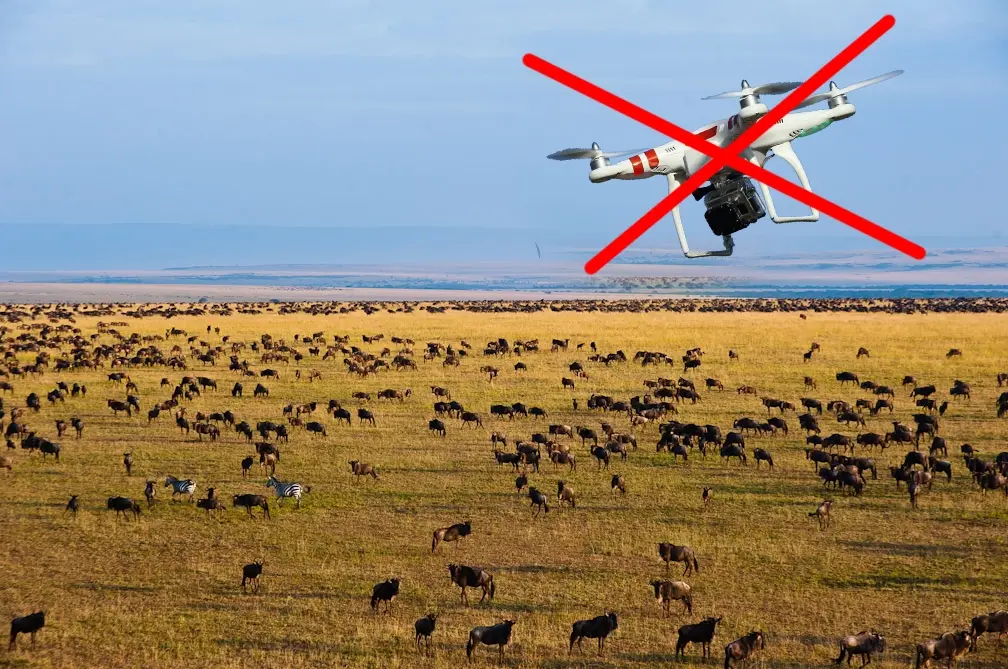
But beware:
What is often easily possible on domestic holidays is heavily regulated in Africa.
To protect animals and combat poaching, near all safari destinations in Africa have significantly tightened their laws in recent years.
If you are carrying a drone in your luggage without prior authorization, you risk not only immediate confiscation at the airport, but often also hefty fines.
For amateur filmmakers, our clear recommendation in most cases is: leave the drone at home. You can still enjoy the safari through the lens of your camera – or even better, with your own eyes.
If you are planning a professional film shoot and you not afraid of the bureaucracy, here’s the current overview of drone laws in our travel destinations:
Kenya
Kenya is considered by many to be the number 1 safari country in Africa – but when it comes to airspace, the country is very strict.
- Importing a drone: You should obtain the required authorisation from the Kenya Civil Aviation Authority (KCAA) before travelling with a drone. If you bringing one into the country without the necessary approval, it will be confiscated at customs (you will usually get it back upon departure for a fee).
- Flying drones in national parks: Drone flights in parks like Masai Mara are subject to additional restrictions. You also need a permit from the Kenya Wildlife Service (KWS) and a commercial filming license. This is expensive and hardly feasible for private individuals.
Uganda
Uganda is the land of endangered mountain gorillas, chimpanzees and various other wildlife species. Protecting these animals and their natural habitats is a priority, so drone use is subject to strict regulations.
- Importing a drone: An import permit from the Civil Aviation Authority (UCAA) is mandatory. Without it, the drone will remain at Entebbe International Airport (EBB). Do not assume you can simply pack it in your luggage and fly it on arrival.
- Flying in national parks: The Uganda Wildlife Authority (UWA) generally prohibits drone flights in the parks for tourists. Even professional film crews pay high fees and go through a lengthy accreditation process.
Tanzania
There are no exceptions at customs in Tanzania either – the controls at airports (e.g. Kilimanjaro International Airport or Zanzibar) are strict.
- Importing a drone: You need permission from the Civil Aviation Authority (TCAA) and clearance from the Department of Defense.
- Flying drones in National Parks: Flying in the Serengeti or the Ngorongoro Crater is strictly prohibited without an explicit, pre-paid special permit from the National Park Authority (TANAPA). Anyone caught violating the permit will be expelled from the park.
Overview of other safari destinations
Strict regulations on drone use also apply in other East and Southern African countries.
- Rwanda: Importing and registering a drone are strictly regulated. The process often needs to be handled with the help of a Rwandan citizen or local tour operator through the Rwanda Civil Aviation Authority (RCAA).
Botswana: Drone use is strictly prohibited in national parks and game reserves, including Chobe and the Okavango Delta. Importing a drone also involves complex permit requirements.
Namibia: Drone registration is handled through the Namibia Civil Aviation Authority (NCAA). Drones are strictly prohibited in national parks, such as Etosha. Exceptions are granted by the Ministry of Environment only for registered film productions.
- Zambia and Zimbabwe: Zimbabwe Both countries require permits from their respective aviation authorities. Flying drones in national parks, such as South Luangwa or around Victoria Falls, also requires additional permits from the park authorities, which can be expensive.
Why are the rules so strict?
If you are wondering why almost all of Africa has banned drones from its national parks and wildlife reserve, there are three very good reasons:
1. Anti-poaching: Drones can be (and have been) used by poachers to track rhinos or elephants. The national park rangers therefore react extremely sensitively to any unidentified flying object.
2. Animal welfare: The high-frequency buzzing of a drone causes stress for wild animals. It disrupts hunting sequences, panics herds, and massively interferes with their natural behavior.
3. Nature experience: An African safari is an intense nature experience. A buzzing drone in the sky destroys the magic of the wilderness – not only for the animals, but also for all other guests in the area.
If you have any further questions, we are of course happy to help.
You might also be interested in these articles:
Greenway nature tours
We are a fully licensed tour company accredited by the Uganda Tourism Board. We design and operate safaris in Uganda and East Africa. Our operations are based in Kampala, Uganda, the heart of our safari planning and coordination. Though our company was officially established in 2025, our team brings deep, hands-on knowledge of East Africa.
Destinations
Favourite Tours
Help & Info
- About us
- Travel Blog
- Travel FAQS
- Gorilla Permits Bookings
- Contact Us
- Pay Online