The Batwa People of Uganda
When you travel through southwestern Uganda on a gorilla trekking tour, you will sooner or later come across the name Batwa. Around Bwindi Impenetrable Forest National Park and Mgahinga Gorilla National Park, tour operators, guides, and many accommodations offer a Batwa Experience as a cultural activity.
However, a visit like this often raises some questions.
Who exactly are the Batwa People? Why do they live in this part of Uganda? What does the rainforest mean to their history and way of life? And how can you visit a Batwa community in an ethical and responsible way?
For us, that last question is perhaps the most important. After all, a Batwa Experience can be one of the most impressive cultural experiences of a Uganda safari. But only when you understand what lies behind the story.
Who are the Batwa People?
The Batwa, also known as the Twa people, are among the oldest inhabitants of the rainforests in Central Africa.
For thousands of years, they lived as hunter-gatherers in forests that are now part of nature reserves in Uganda, Rwanda, and Congo.
The rainforest was their home.
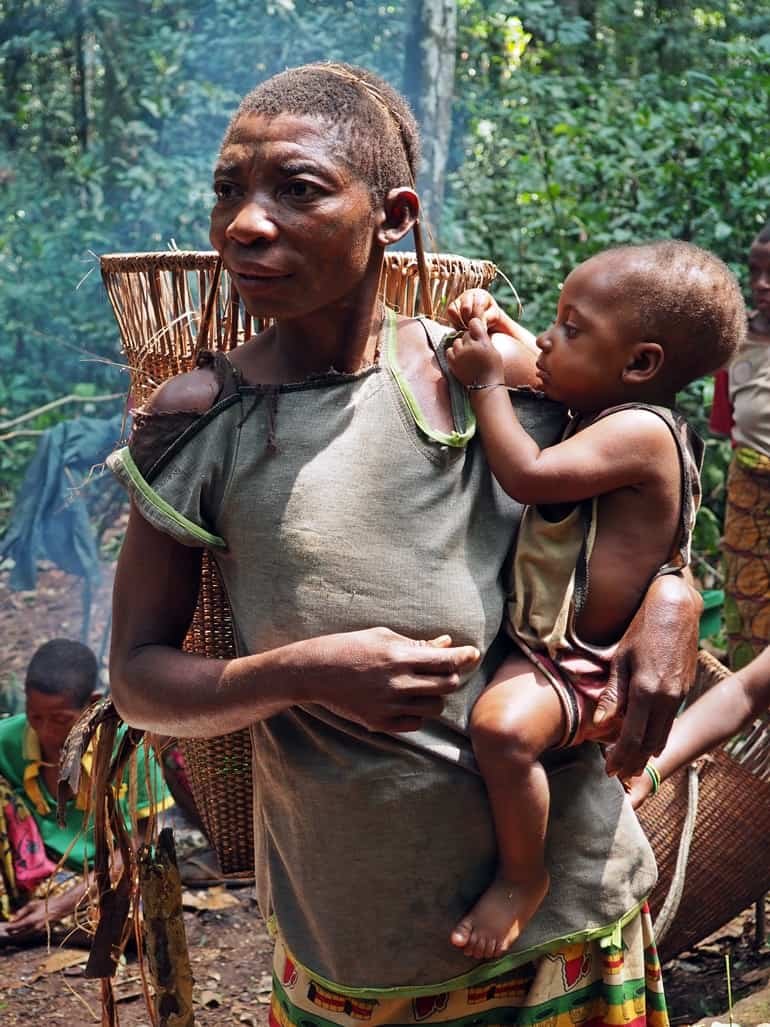
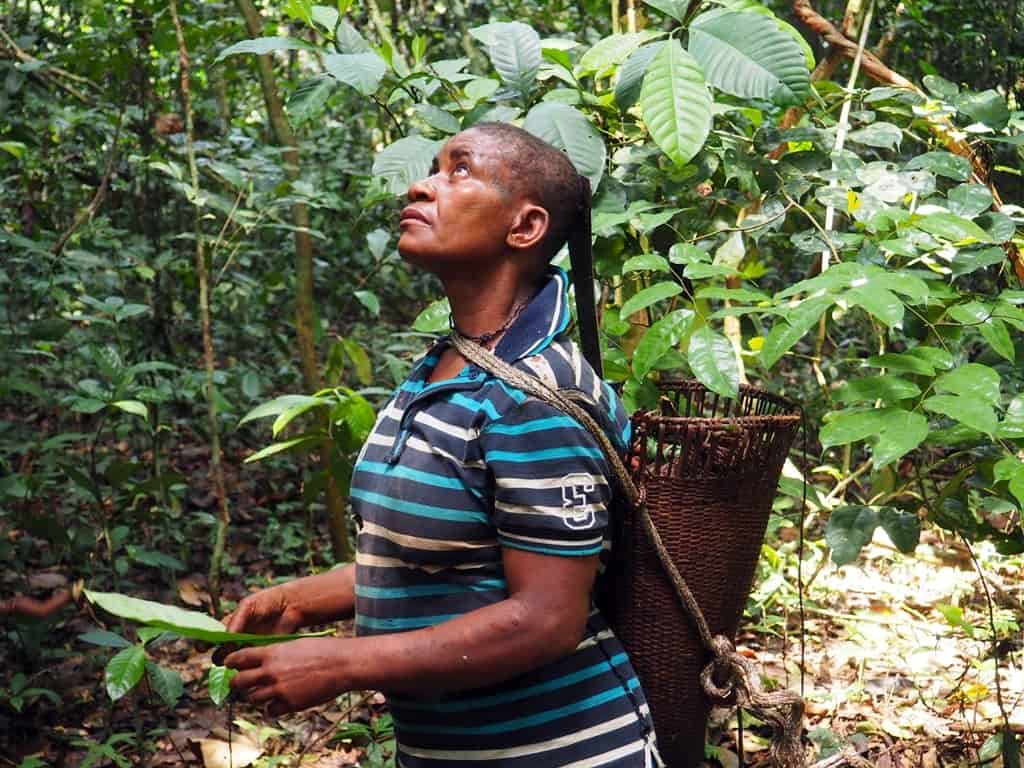
It was where they found food, medicine, shelter, and everything they needed to survive. Men practiced sustainable hunting using handmade spears, bows, and arrows, catching monkeys, birds, bush pigs, and other small forest animals. Women gathered wild honey, berries, fruits, and other foods from the forest.
Over generations, this way of life gave the Batwa a deep knowledge of the ecosystem in which they lived.
Their homes were simple huts made from branches and grasses, while animal hides were used to make clothing. In respects, their entire existence was shaped by, and depended on, the forest around them.
So, what changed for the Batwa People?
In the 1990s, large parts of the rainforest were placed under official protection.
The goal was to better safeguard the critically endangered mountain gorillas and the many other wild animals that call the forest home. That eventually led to the creation of, among others, Bwindi Impenetrable Forest National Park and Mgahinga Gorilla National Park.
From a nature conservation perspective, that was a very important step.
But for the Batwa, it was devastating.
They were forced to leave the forest, with nowhere to go and, in some cases, at risk of being thrown in jail if they returned. They lost access to the forest where their community had lived for centuries.
Traditionally, the Batwa were hunter-gatherers and were utterly dependent on the forest for survival. Outside the forest, they had few skills or means to adapt to modern life.
Many families ended up on the edges of the national parks without land, without income, and without the means to continue their traditional way of life.
They suffered terribly. And as tourism began to grow around the gorillas and the newly protected forests, many also became vulnerable to early forms of exploitative tourism.
That is precisely why the story of the Batwa is complex. It is not only about culture and traditions. It is also about nature conservation, land rights, poverty and the difficult social changes.
Why is this subject so sensitive?
When you book a Batwa Cultural Experience, you are not visiting a community that simply chose to turn its traditional way of life into a tourist attraction.
You are visiting a community whose way of life has been profoundly changed.
That is why it is important to look at both what conservation has achieved and what it has meant for the people who once lived in the forest.
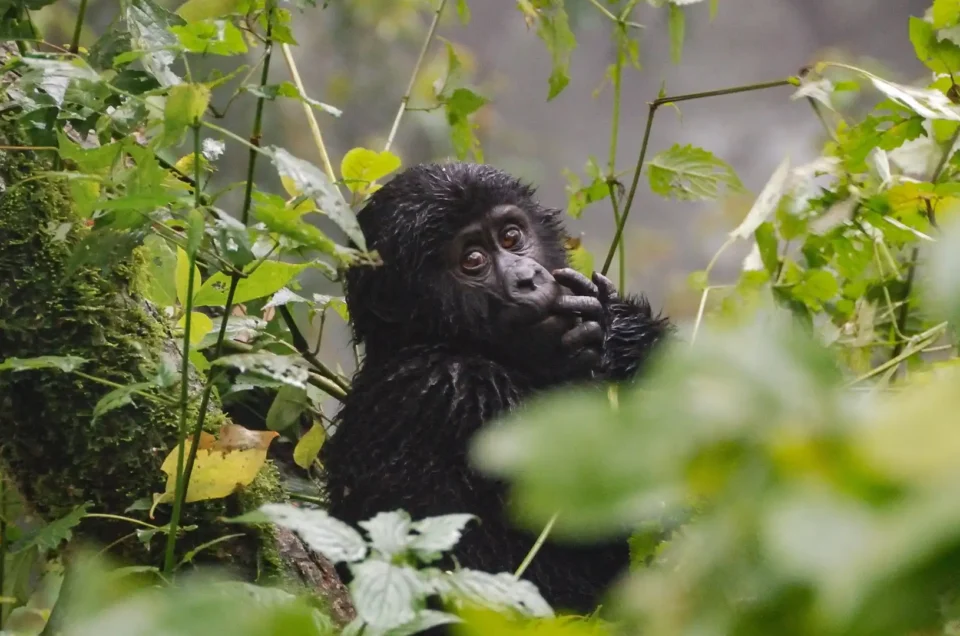
Nature conservation around the world often involves difficult choices. The protection of the mountain gorilla has undeniably brought remarkable results. In 1991, there were fewer than 300 mountain gorillas left. Today, there are more than 1,060. The mountain gorilla is now the only great ape whose population is increasing.
That is an extraordinary conservation success. But it has also come at a high price for some of the communities that once lived in and around these forests.
That does not mean that gorilla tourism is wrong.
It does mean, however, that both stories exist side by side. The gorillas have benefited from protection, while the Batwa have experienced profound loss and change.
This is precisely why many travelers find a visit to a Batwa community so valuable. It shows that destinations often have more layers than you see at first glance.
What does a Batwa Experience entail?
The Batwa Trail
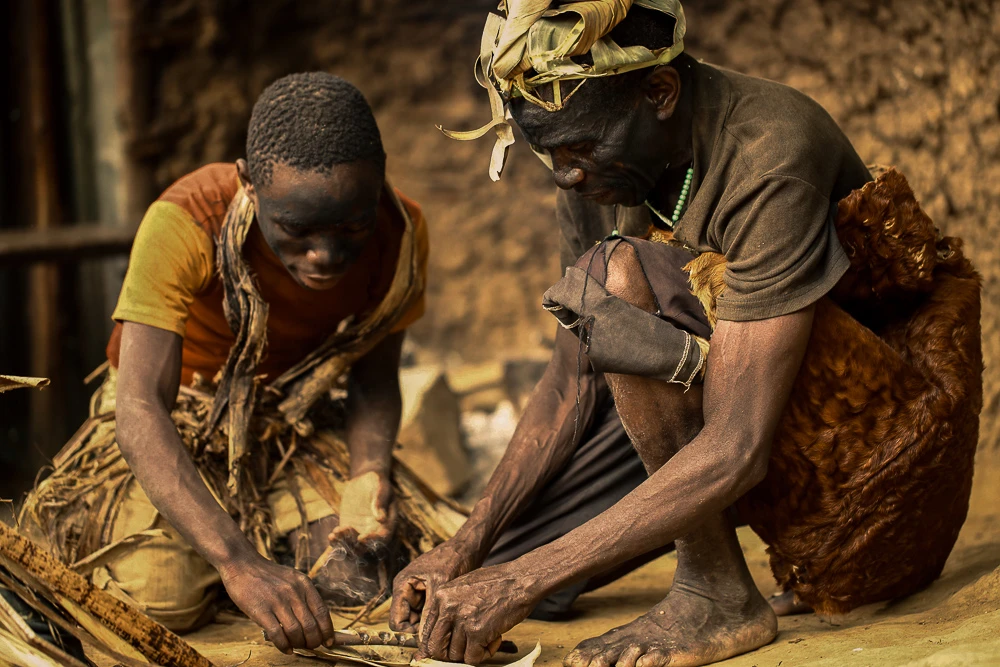
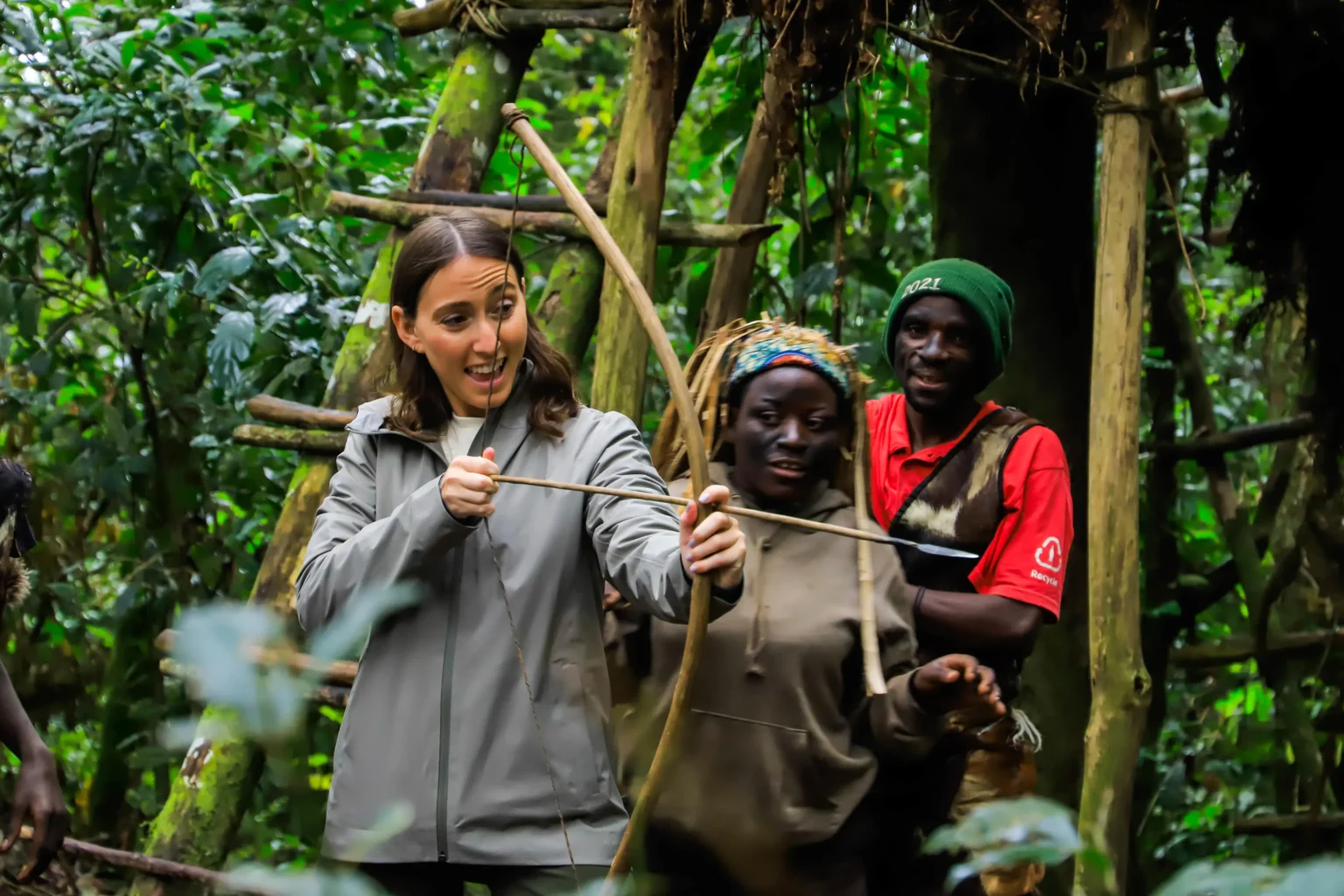
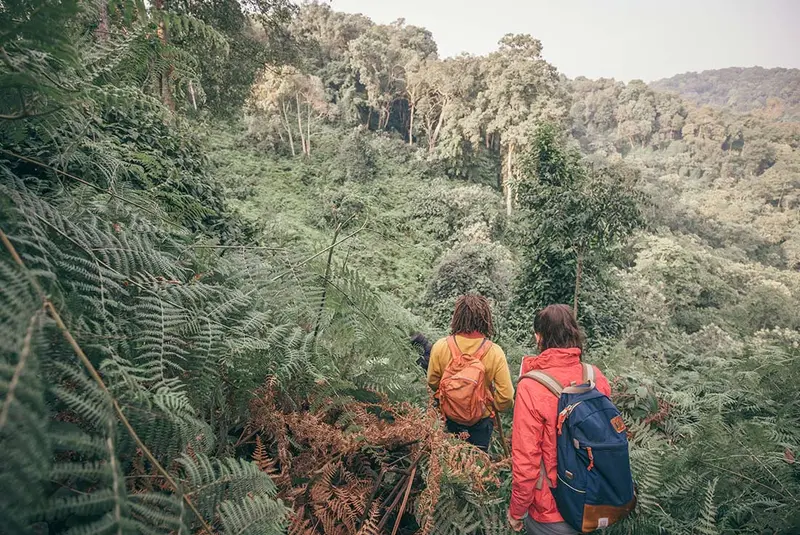
One of the best-known ways to learn about Batwa culture is the Batwa Trail in the Mgahinga area and the Buniga Forest Walk in the Nkuringo Sector of Bwindi. The experiences are led by Batwa guides, who take you through the forest and share stories of how their community once lived here. Along the way, they introduce you to the knowledge and traditions that shaped everyday life in the forest. You will learn:
- How food was gathered and prepared.
- Which plants were used as medicine and how they were used.
- How traditional hunting techniques worked.
- How to start a fire using a dry stick.
- What role caves played in the community.
- How the forest provided materials for everyday life.
- How knowledge and traditions were passed down from one generation to the next.
What makes the experience special is that these stories and demonstrations come directly from Batwa themselves. They are sharing the knowledge, traditions and memories of their own community.
Cultural visits
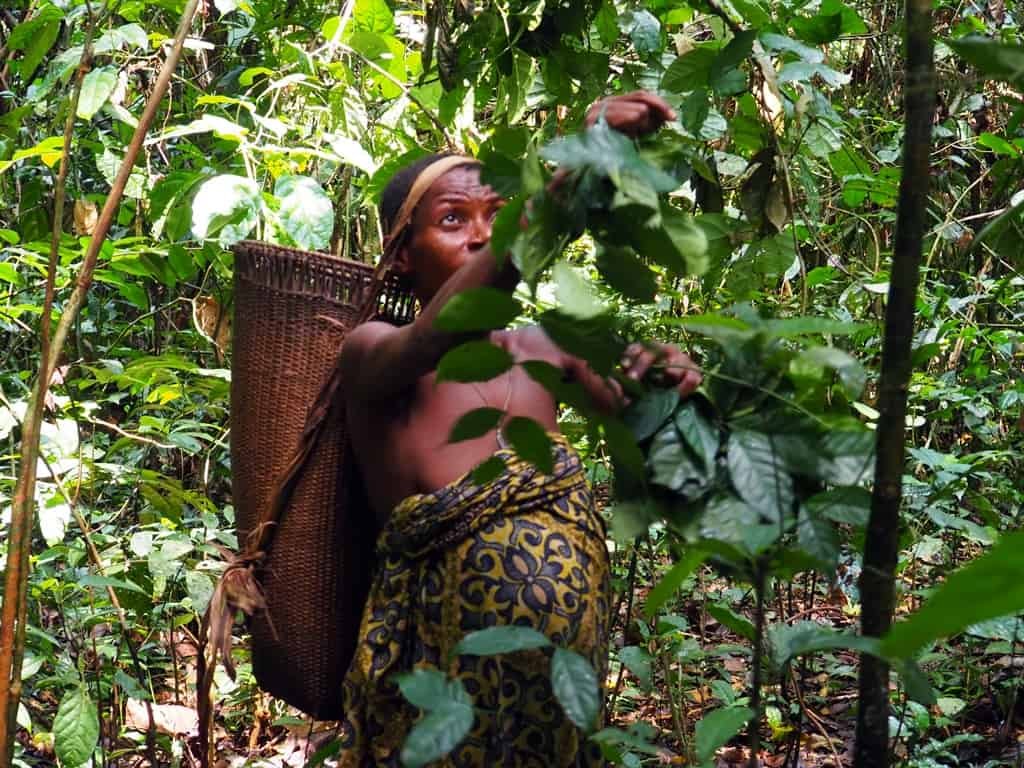
In addition, you will find several community initiatives around Bwindi that offer a closer look at Batwa culture and life today. Depending on where you go, the experience may include music and dance, traditional stories, crafts, or time spent with Batwa families.
The quality and setup vary from one project to another. This makes the choice of experience important. Look for initiatives where Batwa people are directly involved and where the income from visitors contributes to the community.
At Greenway Nature Tours, we recommend combining the Buniga Forest Walk in Nkuringo with a visit to the Batwa settlement in Sanuriiro. Some Batwa families live here today, a long way from the forest life their communities once knew.
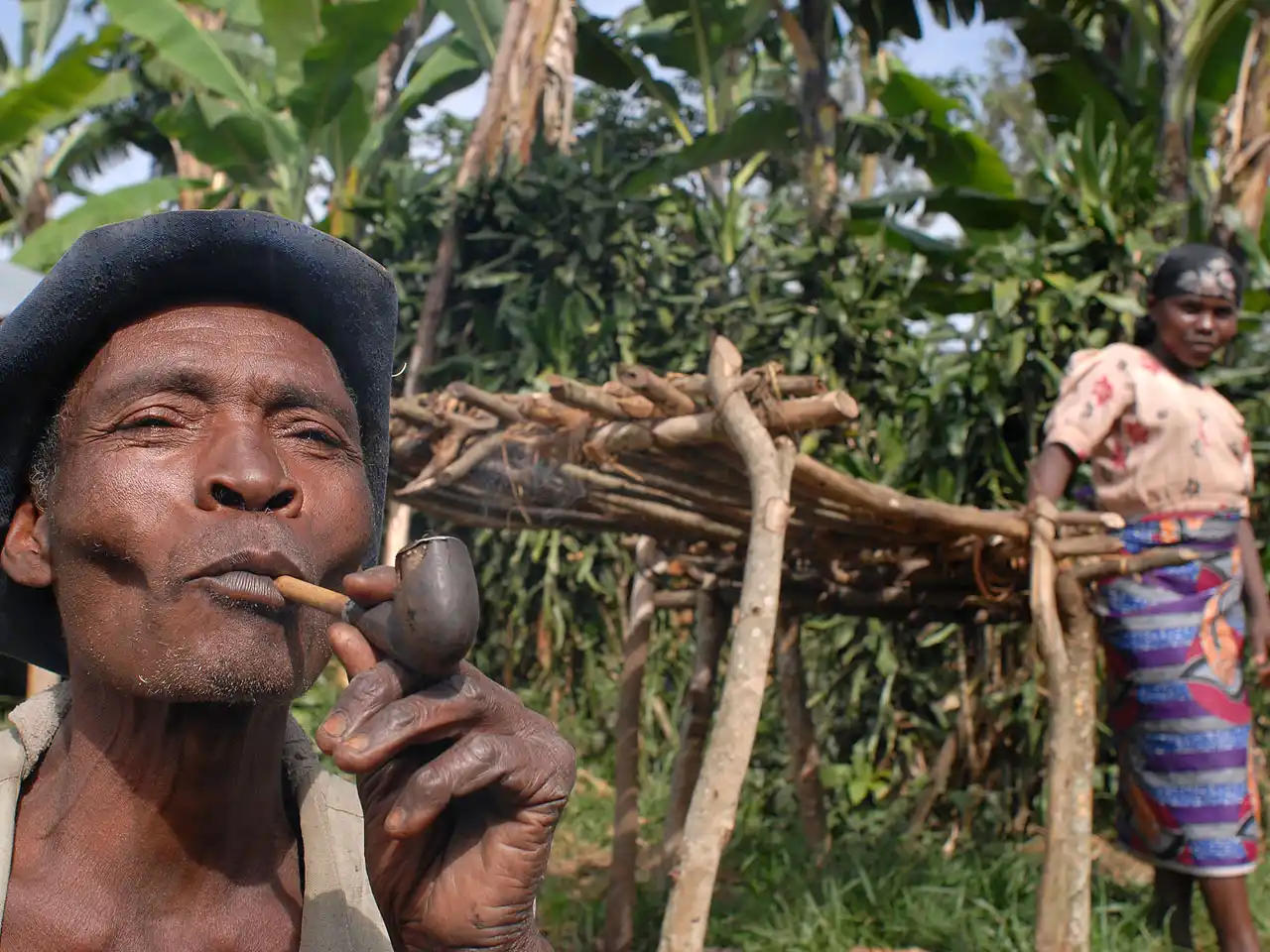
Their lives have changed in many ways. Through community programmes, some families in Sanuriiro have received support to build homes and create new opportunities. Still, finding a new way of life after leaving the forest has not always been easy.
Meeting the Batwa gives you the opportunity to hear about these changes from the people who have lived through them. You may meet women weaving traditional baskets from natural fibres and using natural dyes. You may also see men practising modern beekeeping, finding a new use for knowledge that has long been connected to the forest.
The visit brings the two parts of their story closer together. The Batwa guides who speak about their former life in the forest can also tell you about their lives today. It is a chance to understand not only where they came from, but also how they are adapting to where they are now.
What can you expect from a Batwa Experience?
When we suggest a Batwa Experience to travellers planning a gorilla trek, some are unsure what to expect. Some worry that they will end up at a staged show for tourists.
A good Batwa Experience is not about that.
The real value lies in meeting people and talking with them.
You hear about their former life in the forest. You also hear about the realities they face today.
The conversations may touch on education.
On employment.
On family life.
And on the challenge of keeping traditions alive while creating opportunities for younger generations.
That often makes the experience much more personal and meaningful than travellers expect.
Is a Batwa Experience ethically responsible?
This is probably one of the most important questions to ask.
The honest answer is that it depends on who is running the experience and how it is organised.
Not every Batwa visit is the same. A responsible experience should give the community a genuine role and make sure that tourism does more than simply bring visitors into the community.
We believe a good Batwa Experience should meet a number of conditions:
- The community determines its own role.
- A substantial portion of the revenue stays within the community.
- The visit focuses on meeting people, sharing knowledge and learning.
- People are not presented as a tourist attraction.
- There is room for the Batwa to tell their own story and share their own perspective.
When these conditions are met, tourism can do more than provide an interesting experience for visitors. It can contribute to employment, education and the preservation of cultural heritage.
Please remember that it is very important to be careful about who you book with. Around Bwindi, you may come across people offering informal visits to Batwa villages. It may not be clear who they represent or how the money is shared. We recommend arranging your visit through your hotel, a recognised Batwa community organisation or a responsible local tour operator.
What makes a visit special for travelers?
During a Uganda safari adventure, many experiences revolve around nature.
A gorilla trekking is all about seeing gorillas in the wild.
A safari revolves around animals or wildlife.
A Batwa Experience shifts the focus to people.
That change of perspective is something many travellers appreciate.
It gives you a better understanding of the place you are travelling through and shows how nature, history and local communities are closely connected.
For many people, that adds another meaningful dimension to their time in Bwindi or Mgahinga.
How do you combine a Batwa Experience with gorilla trekking?
A Batwa Experience fits naturally into a gorilla trekking itinerary.
Most travellers choose to visit the Batwa:
- In the afternoon after their gorilla trek.
- On the day before the trek.
- During an extra night in the region.
Since gorilla trekking takes place on a fixed permit date, a cultural encounter often offers a nice way to fill the remaining time. Moreover, it helps to get to know the region from a different perspective.
Visiting respectfully: a few tips
- Come with an open mind: Do not arrive expecting to see a perfect picture of the past. The Batwa experience is about real people and a way of life that has changed greatly. Be open to hearing the story as it is.
- Ask questions: Batwa guides often have a great deal of knowledge to share. Ask about the forest, their traditions, their former way of life and life today. A respectful question can make the experience much more meaningful.
- Ask before taking photos: Always ask for permission before photographing people. A camera may be part of your travel experience, but not everyone will want to be in your pictures.
- Listen more than you talk: Give the guides and community members space to tell their stories in their own words. Sometimes the most valuable part of a Batwa Experience is simply taking the time to listen.
Why we believe this experience provides context to a visit to Bwindi
Many travelers leave Uganda with unforgettable memories of wild gorillas.
Justifiably.
But those who also take the time to learn about the people who lived in these same forests for centuries, sharing this environment with the mountain gorillas, come away with a more complete picture of this special region. A Batwa Experience is not about guilt or deciding who was right.
It is about history, culture, change and resilience.
And that is precisely why the experience can stay with you long after you leave Bwindi.
Frequently Asked Questions
Are the Batwa still forest dwellers?
No. Most Batwa today live outside the national parks. They no longer have the free access to the forests where their communities once lived and depended on the forest for their way of life.
Is a Batwa Experience suitable for children?
Yes. Older children can find the stories, demonstrations and cultural activities fascinating. It can also be a good way for them to learn about Batwa culture and the history of the region.
Can I combine a Batwa Experience with gorilla trekking?
Absolutely. The two experiences fit well together and can easily be included in the same stay in Bwindi or Mgahinga. Many travellers visit the Batwa either before or after their gorilla trek.
Does my visit contribute financially to the Batwa community?
It depends on the organisation you book with. Not every initiative works in the same way. Look for experiences where the Batwa are directly involved and where the income from visitors clearly benefits the local community.
What is the difference between the Batwa and other population groups in Uganda?
The Batwa have a very different history from most of Uganda’s other population groups. Their story is closely tied to the rainforests of the Albertine Rift, particularly the forests around Bwindi and the Virunga Mountains. For generations, they lived in the forest as hunter-gatherers. Uganda is a culturally diverse country, with more than 56 tribes and ethnic groups. Each has its own history, language, customs and traditions. For example:
- Baganda: The largest ethnic group in Uganda, traditionally associated with the Kingdom of Buganda in central Uganda. The Baganda have a rich cultural heritage, with their own language, customs and royal traditions.
- Banyankole: Traditionally associated with southwestern Uganda, the Banyankole have a long history of cattle keeping. Cattle have played an important role in their culture, livelihoods and social traditions.
- Banyoro: The Banyoro come mainly from the Bunyoro region of western Uganda. Their history is closely connected to the Bunyoro-Kitara Kingdom and its long-standing cultural traditions.
- Acholi: Mainly found in northern Uganda, the Acholi have a rich cultural heritage expressed through storytelling, music, dance and community traditions.
- Karamojong: Mainly found in northeastern Uganda, the Karamojong have traditionally lived a pastoral way of life, with livestock playing an important role in their livelihoods and culture.
The Batwa Experience as part of your trip
The Batwa Experience is at its best when it isn’t a standalone visit, but an encounter that fits logically into your tour of Uganda. That is why, at Greenway Nature Tours, we look not only at what you want to see, but also at the pace of travel, the route, and how you wish to get to know local communities.
Because we are Ugandans with a professional experience in the tourism industry, we know which experiences are genuine and well-organized – and how to respectfully incorporate them into your trip. This way, it doesn’t remain just a matter of looking and moving on, but allows you to gain a deeper connection with the people, the history, and the Uganda of today. Curious how such an experience fits into your tour? Contact us.
You May Also Like
Greenway nature tours
We are a fully licensed tour company accredited by the Uganda Tourism Board. We design and operate safaris in Uganda and East Africa. Our operations are based in Kampala, Uganda, the heart of our safari planning and coordination. Though our company was officially established in 2025, our team brings deep, hands-on knowledge of East Africa.
Destinations
Favourite Tours
Help & Info
- About us
- Travel Blog
- Travel FAQS
- Gorilla Permits Bookings
- Contact Us
- Pay Online