A First-timer's Guide to Visiting Ngorongoro Crater in Tanzania
The first glimpse of Ngorongoro Crater from the crater rim leaves every traveler speechless.
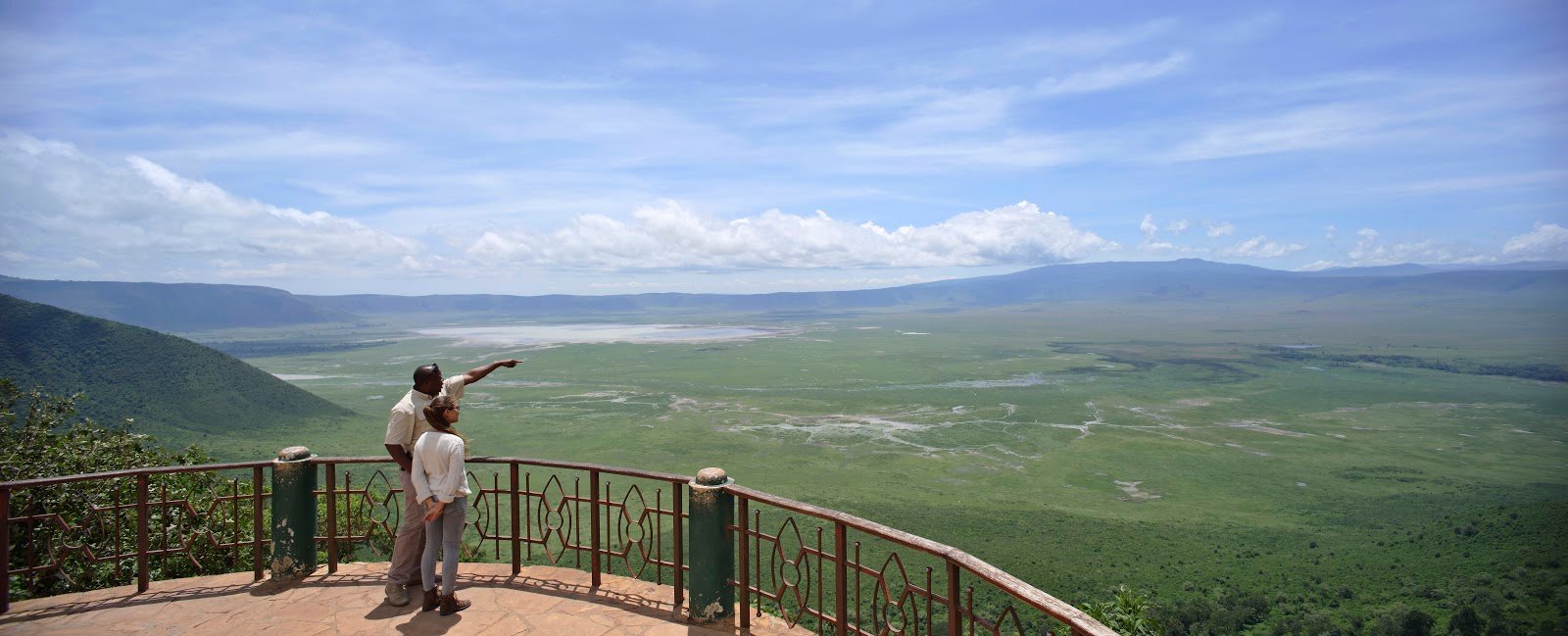
As the morning mist lifts, you gaze 600 meters down onto an emerald-green plain that seems frozen in time. Ngorongoro is often called the “eighth wonder of the world.” Geologically speaking, it truly is. Millions of years ago, a huge volcano, roughly the size ofKilimanjaro, stood here before a massive eruption caused it to collapse in on itself, creating this gigantic natural arena.
The name Ngorongoro is closely linked to the local Maasai people and their traditions. It is an onomatopoeic word (sound painting) of the Maasai. It imitates the sound of a cowbell, ngoro ngoro, ringing rhythmically as the cattle herds move across the hills. It is a reminder that this land belongs not only to wild animals but also to the Maasai pastoralists who have lived here for generations. Inside the crater, the law of the wild reigns supreme in concentrated form.
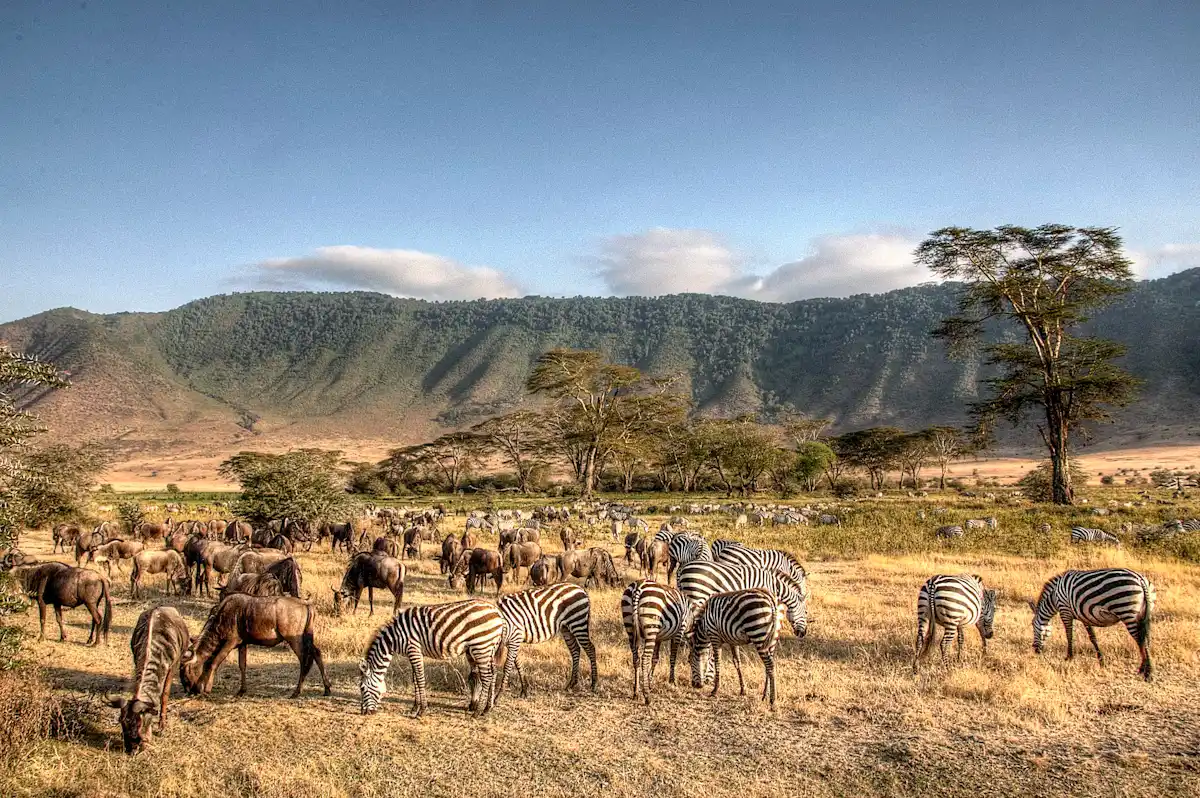
Because the 600-meter-high walls form a natural barrier, most animals are resident here. For safaris, this translates to a success rate unrivaled anywhere else. It is not uncommon to spot all of the “Big 5 animals” before lunch.
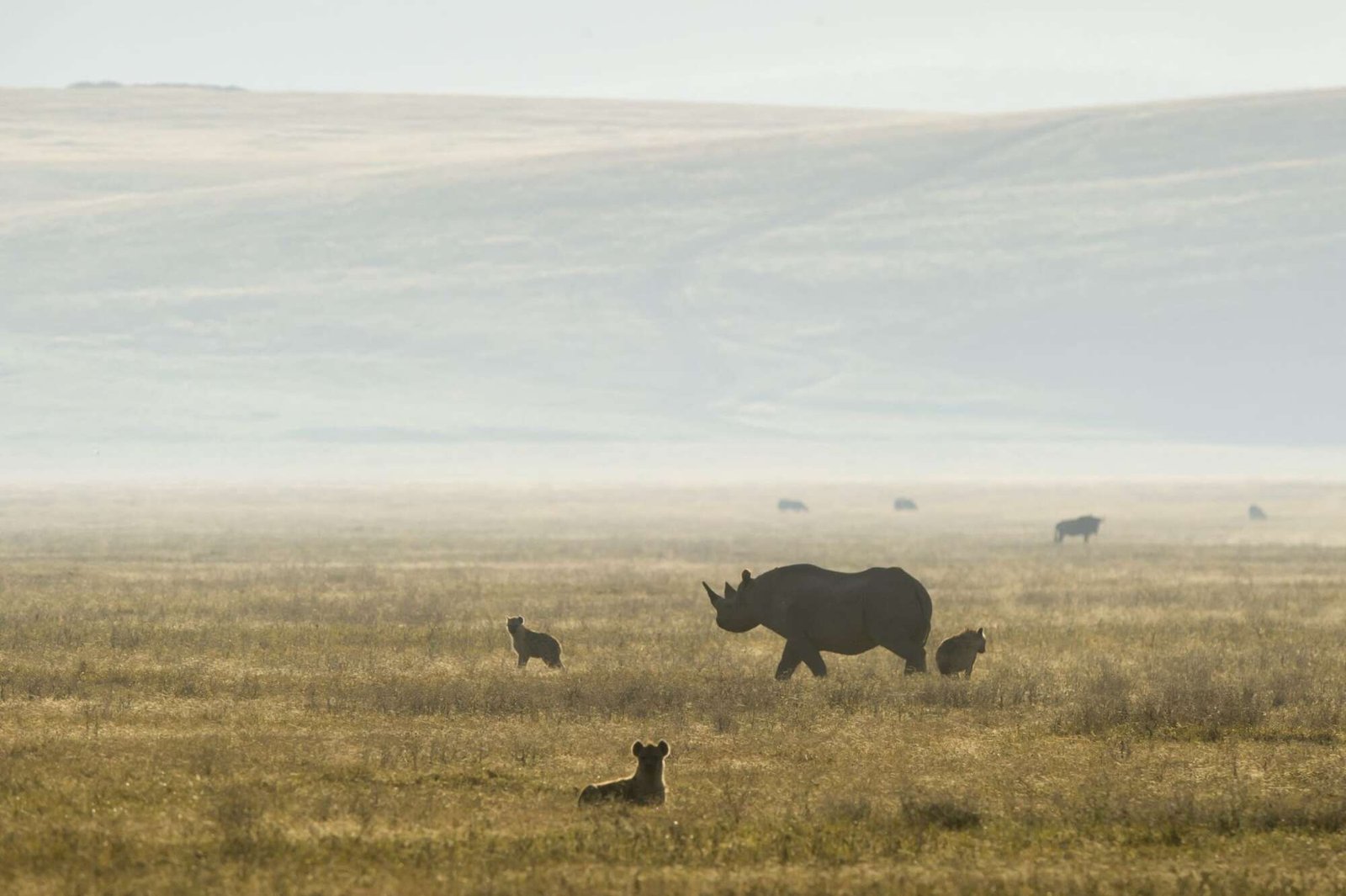
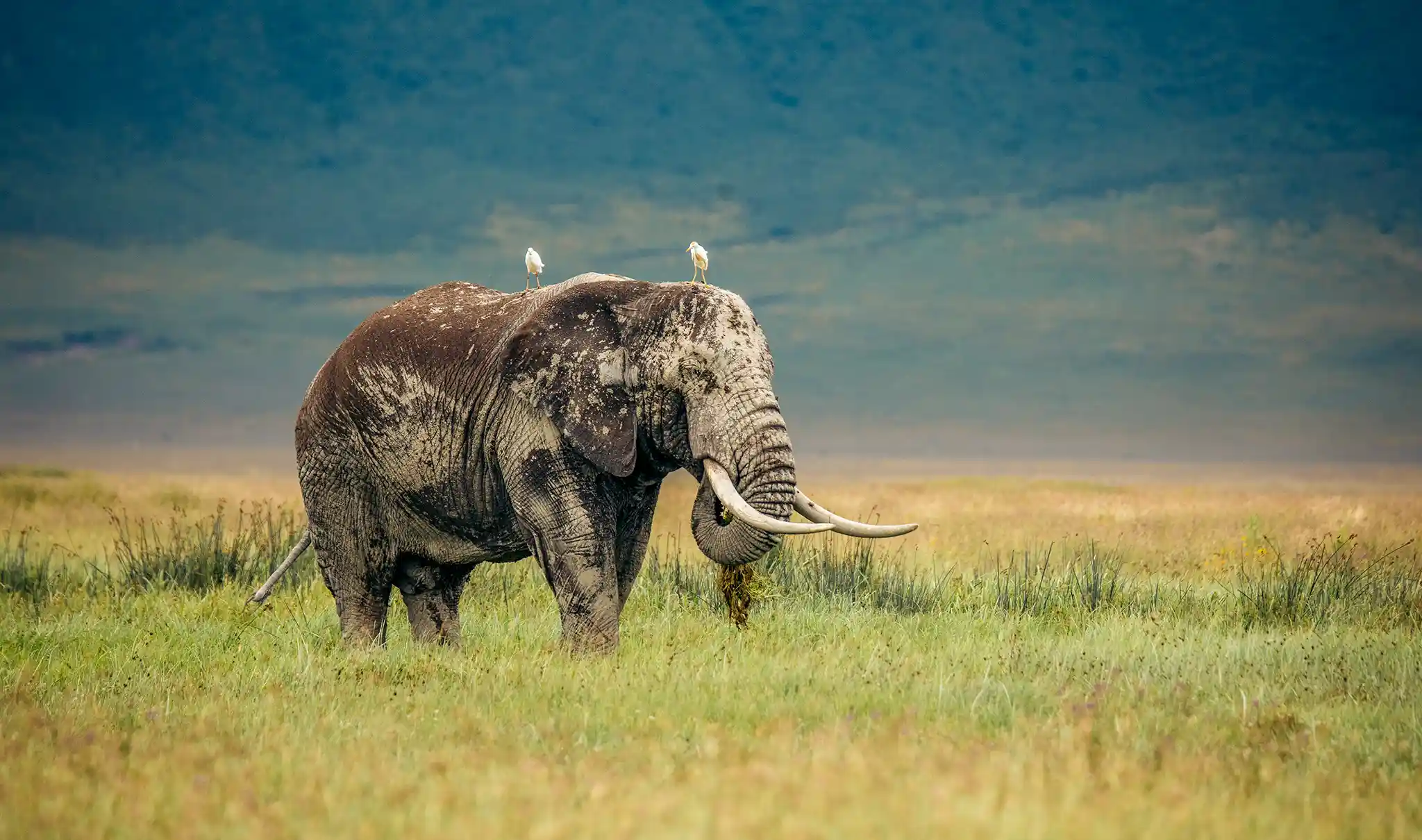
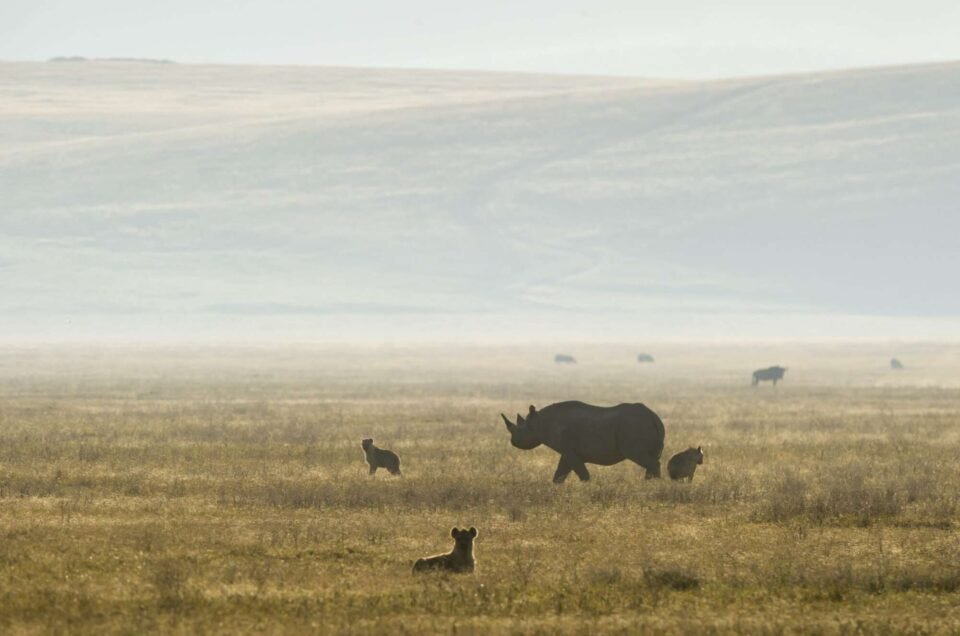
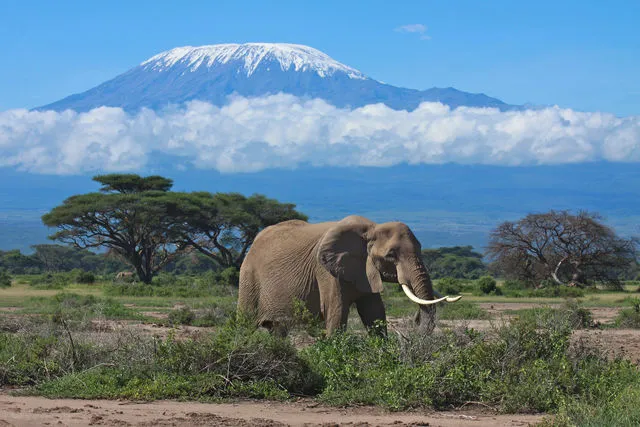
Especially memorable is the sight of huge elephant bulls with their impressive tusks, majestically walking through the mystical Lerai forest, or the silhouette of a black rhinoceros shimmering in the heat haze.
What Makes Ngorongoro Crater So Special?
There is something about Ngorongoro that stays with you. Many destinations offer beautiful scenery. Others are famous for their outstanding wildlife. Ngorongoro brings the two together in an extraordinary setting: a wild world enclosed within the walls of an ancient volcano.
Everything you see is completely wild. Yet the crater’s natural boundaries keep most of its wildlife within a defined and easy-to-explore area. With water and food available throughout the year, animals have little reason to leave. For visitors, this makes wildlife viewing exceptionally rewarding.
The crater floor is about 19km/11.8mi across. Its steep walls rise between 400m/1,300ft and 600m/1,970ft above the floor. Together, they form a vast natural amphitheatre of astonishing beauty. And down there, the drama never really stops. Lions and hyenas stalk wildebeest, buffalo and zebra. A hunt can turn into a struggle over a kill.
Elephants pass quietly through Lerai Forest, almost like cloud shadows. Hippos gather in the waters of Hippo Pool. The black rhino is another reason Ngorongoro is so important. For this endangered animal, the crater provides a precious refuge from a world where its survival remains under threat.
As human settlements increasingly crowd Africa’s wild spaces, Ngorongoro Crater feels like safari as it once was. Every night, the people leave the crater. The animals are left in peace. They roam freely, away from the complications of sharing their land with us. For black rhinos, Ngorongoro is a precious refuge. It offers protection in a world where their survival remains under threat.
Where Is Ngorongoro Crater Located?
Ngorongoro Crater has another irresistible appeal: its location. It lies in northern Tanzania, in an area known as the Crater Highlands. This is a landscape of volcanoes, high mountains and ancient calderas (collapsed volcanoes). The region was shaped by the geological forces that saw Africa’s Great Rift Valley form and threaten to tear the continent apart.
Much of the highlands, including Ngorongoro Crater, lies within the 8,292km²/3,202mi² Ngorongoro Conservation Area. The area is managed by the Tanzanian government alongside local Maasai communities. Ngorongoro also sits along Tanzania’s Northern Safari Circuit.
The route begins in Arusha and connects some of the country’s most visited safari destinations. Ngorongoro lies between Tarangire National Park, Lake Manyara National Park, and Serengeti National Park, making it an easy and natural stop on a northern Tanzania safari.
How to Get to Ngorongoro Crater?
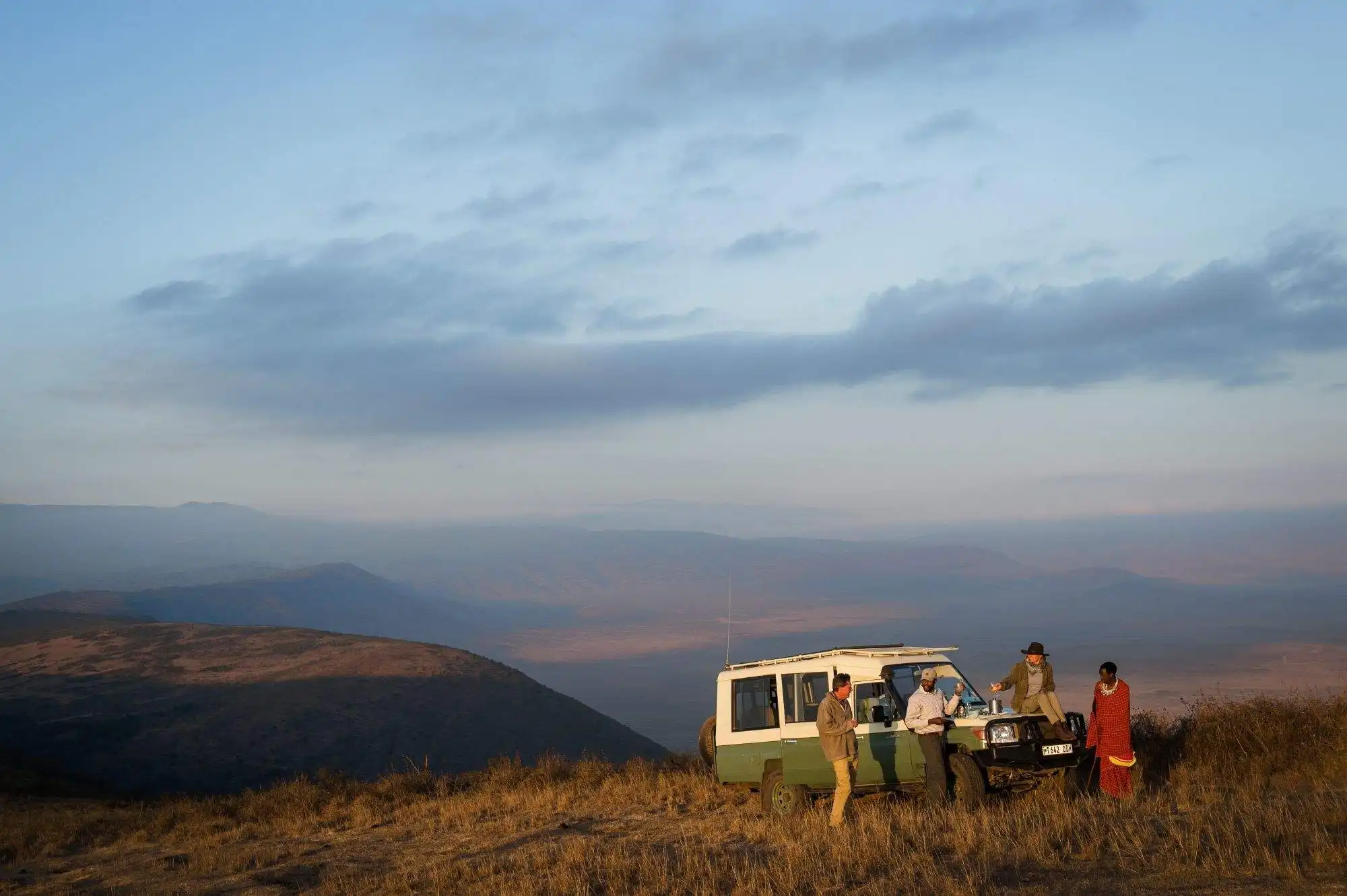
Most travelers arrive in Tanzania through Kilimanjaro International Airport (JRO) near Arusha. From Arusha, Ngorongoro Crater is about a 3-hour drive. The distance is roughly 180 kilometers (112 miles), along a paved road. Most visitors include Ngorongoro as part of a safari through Tanzania’s Northern Safari Circuit. You can also fly from Arusha Airport (ARK) to an airstrip in Serengeti National Park. From there, you can continue to Ngorongoro by road or connect by air.
How Do I Get Around Ngorongoro Crater?
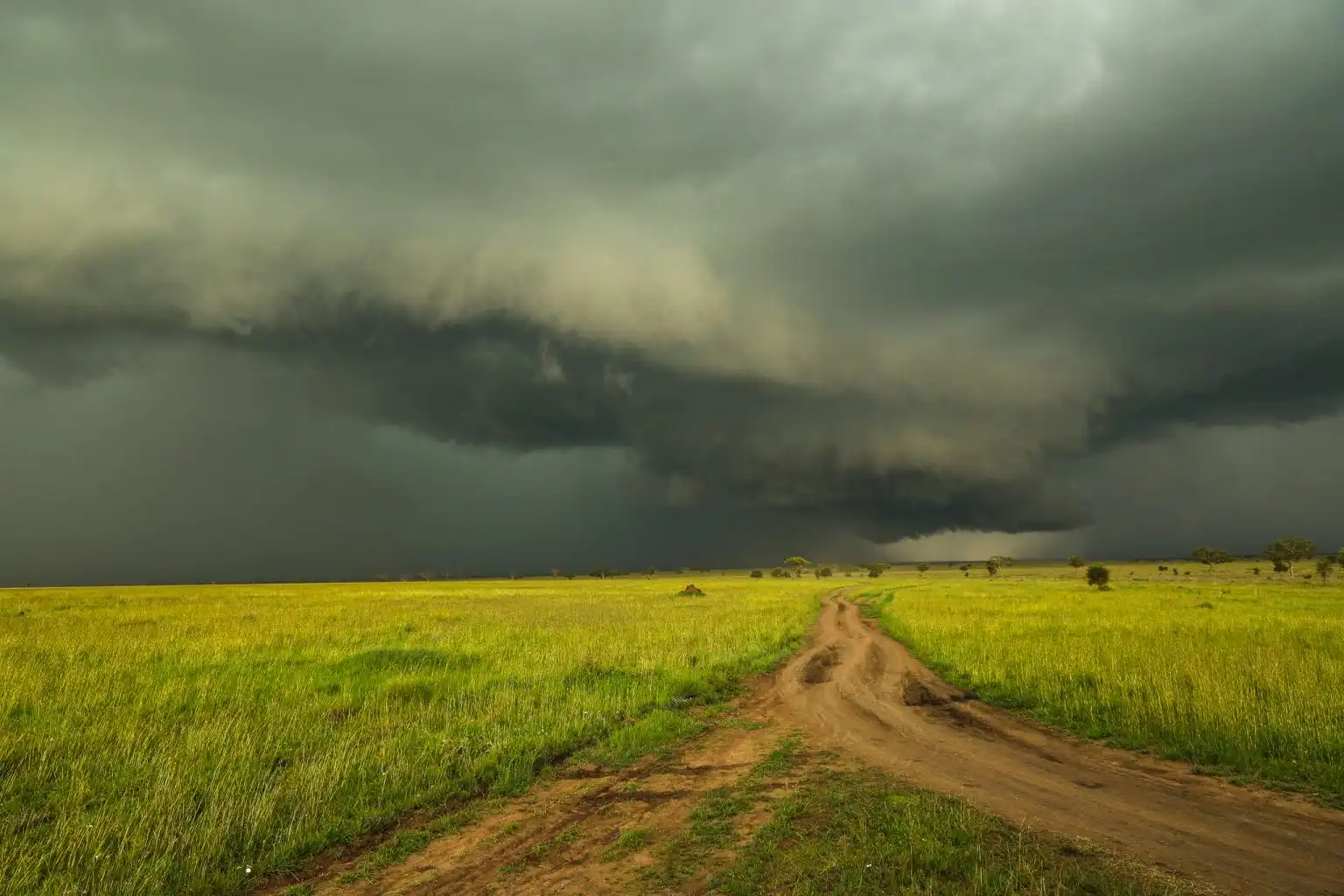
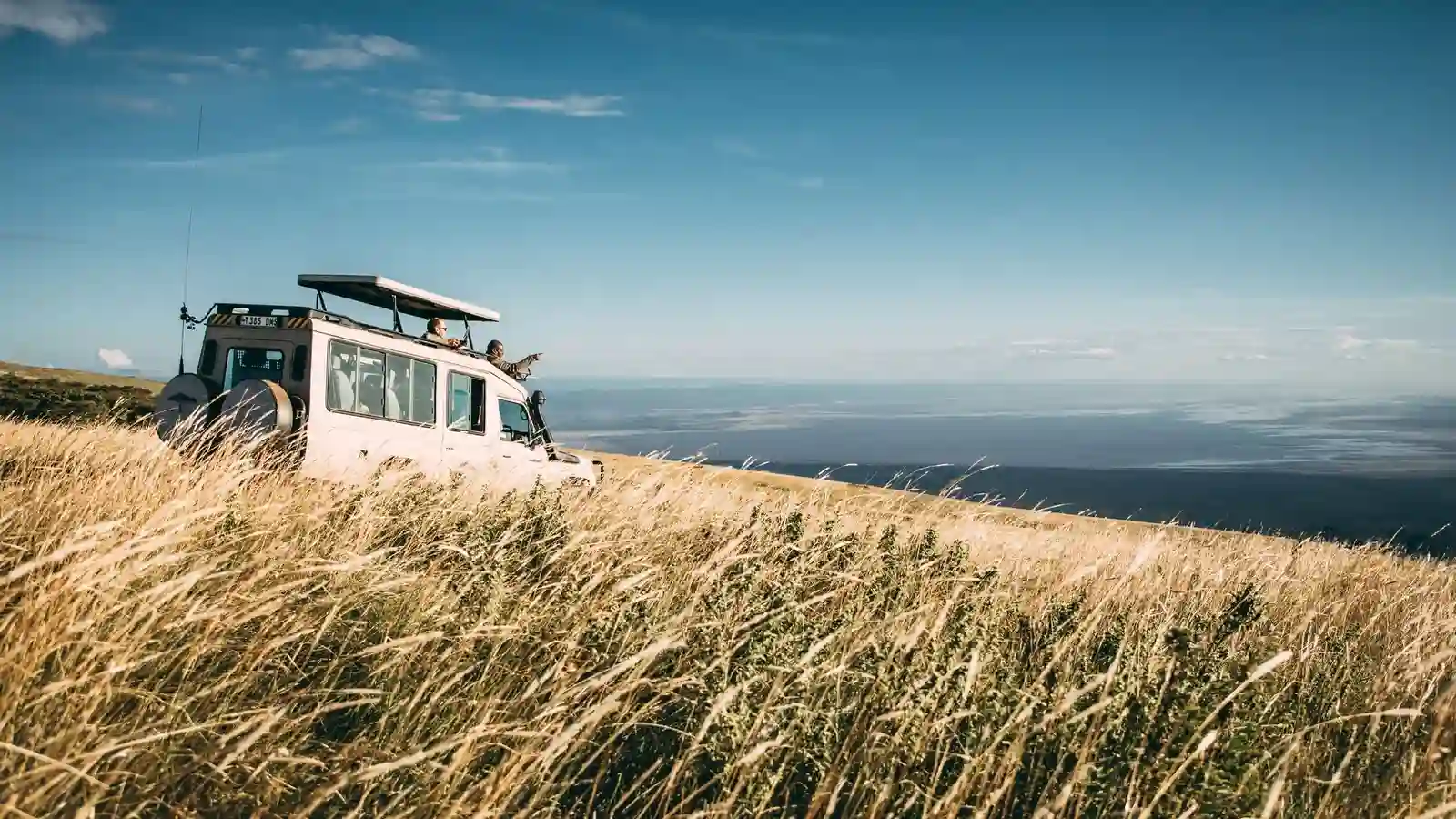
There are two main areas to explore at Ngorongoro. Both are an important part of the experience. Public transport is not a practical option. You will need your own private vehicle or join a safari.
The crater rim lies along the road between Lake Manyara National Park, or the town of Karatu, and Serengeti National Park. After entering the Ngorongoro Conservation Area through Loduare Gate, most travelers continue towards the crater on this route.
The road climbs steeply through dense high-altitude rainforest. Then, almost suddenly, the forest opens up. You reach the crater viewpoint and the vast landscape unfolds below. The rim is also where you find hotels, tented camps, government campsites and Maasai villages.
Wildlife is present too. Buffalo and leopard can be seen here, although many animals stay hidden because of the human activity.
The crater floor feels like another world. There are no accommodations or Maasai villages down here. Most mornings, clouds rise from the crater floor and spill over the rim like waves breaking across an ocean. Around sunrise, safari vehicles begin their descent. They follow narrow dirt roads into the crater and set out for the day. Most stop for lunch near Hippo Pool.
By mid-afternoon, the vehicles begin the climb back to the rim. By nightfall, the crater floor is empty again. The people are gone, and the wild falls quiet.
What Wildlife Can I Expect To See?
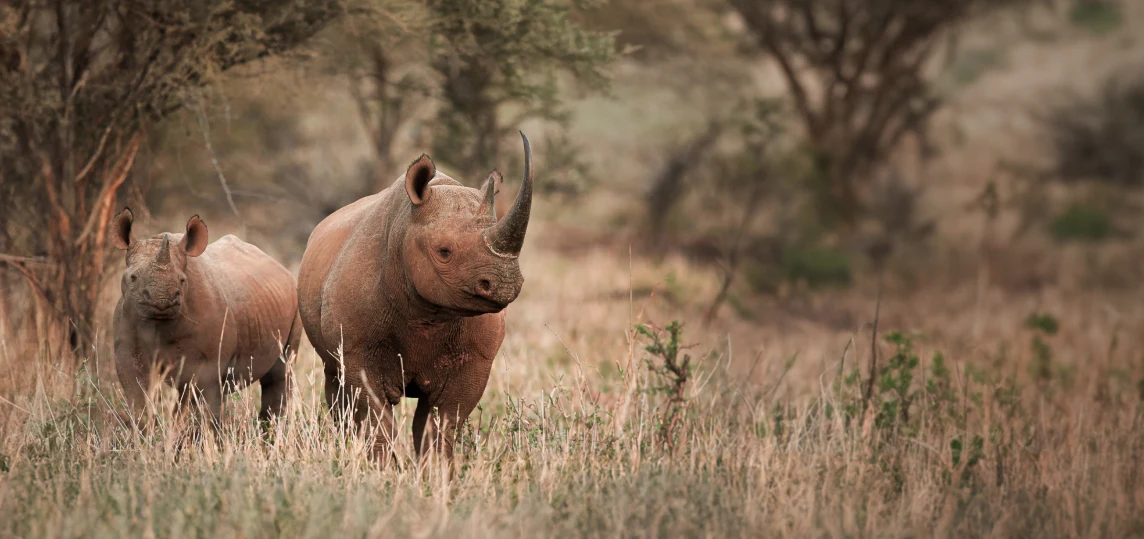
A safari in Ngorongoro rarely feels short of wildlife. Spotted hyenas, wildebeest, buffalo, zebra and hippos are regular sights on the crater floor. Lions are especially impressive here.
Ngorongoro has one of the highest concentrations of lions in Africa. It is also one of the best places in Tanzania to see black rhinos. Among the elephants are old bulls with enormous tusks. Leopards are more elusive, but they can also be seen. Together, these animals make Ngorongoro one of Tanzania’s best places to look for the Big Five: lion, leopard, elephant, buffalo and rhino.
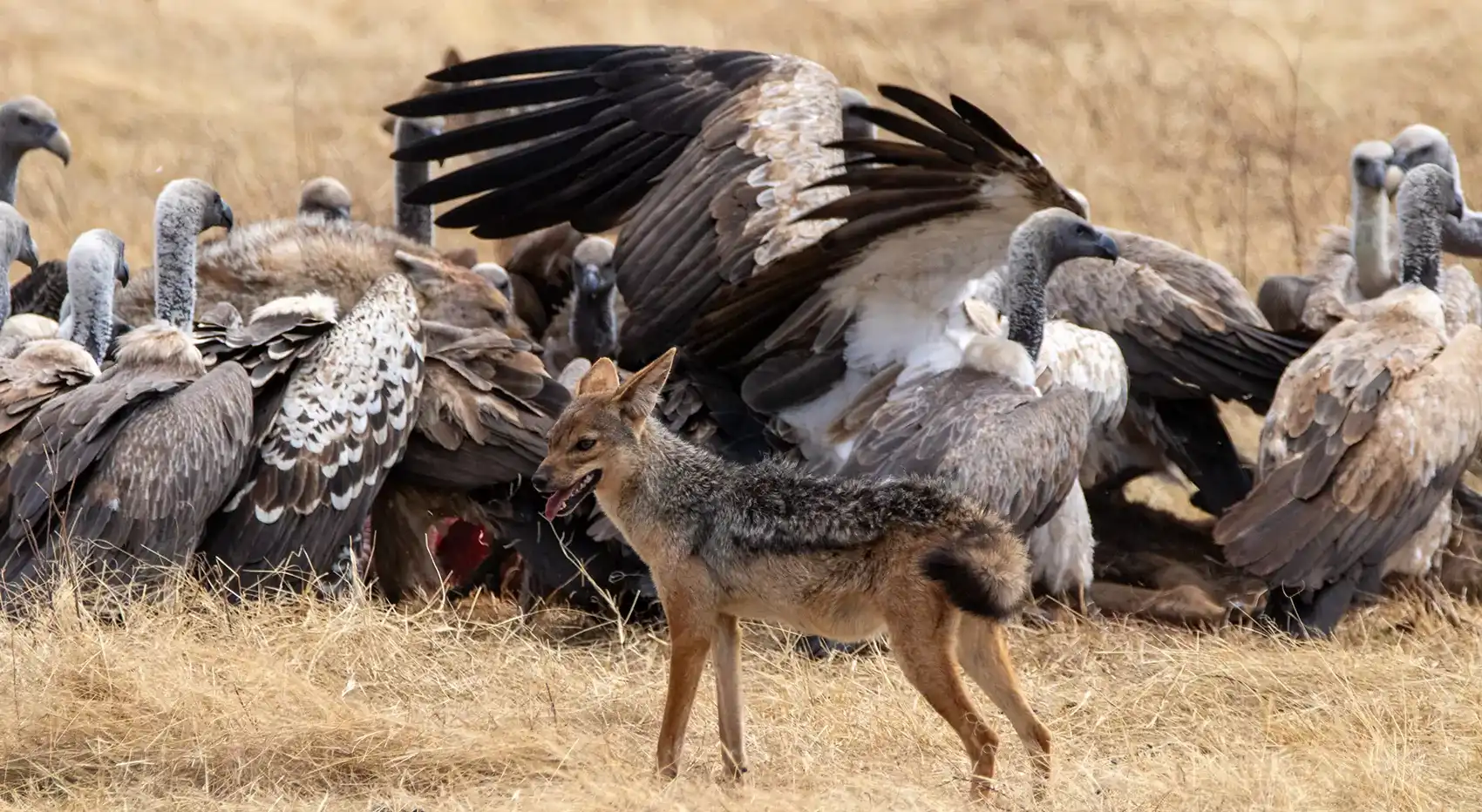
There are plenty of smaller surprises too. Black-backed jackals are common. Golden jackals are less familiar, but can also be seen. Bat-eared foxes and servals are among the other special sightings. They may be harder to find, but seeing one is always rewarding.
Birdlife adds another dimension to the crater. More than 500 species have been recorded here, including on the crater rim. At Lake Magadi, large groups of flamingos are a familiar sight. Their bright pink forms stand out against the white, salty surface of the lake. Around the shoreline, look for ducks, herons, storks and waders. Across the grasslands, keep an eye out for ostrich, grey crowned crane, kori bustard, secretary bird and rosy-throated longclaw.
When Is the Best Time To Visit?
There is no bad time to visit Ngorongoro. Each season simply offers a different experience. The most popular months are June to October. This is the Dry season and peak safari season across northern Tanzania. The crater can be busy, and accommodation prices are usually higher.
Still, it is a wonderful time to visit. The grass is shorter during these months. Animals are easier to spot. Skies are also more likely to be clear. But bring warm clothes.
The crater rim sits between 2,200m/7,200ft and 2,400m/7,900ft above sea level. Nights on the rim can be very cold. Early mornings on the crater floor can be cold too.
From November to May, rain is more likely. But these months have their own appeal. The crater turns lush and green. Migratory birds arrive, making this the best time for birding. Visitor numbers also tend to be lower. This is especially true in April and May, when accommodation prices are often at their lowest. So, when is the best time? It depends on what you want from your visit.
The Dry season offers easier wildlife viewing and clearer skies. The wetter months bring greener scenery, more birds and fewer visitors.
Can I Visit Ngorongoro Crater on a Self-Drive Safari?
Yes. You can visit Ngorongoro on a self-drive safari. You do not have to join an organized tour. There is one important rule. To drive down into the crater, you must be accompanied by an accredited guide.
If you are self-driving, you may need to arrange a guide at the Ngorongoro Conservation Area gate the day before. The guide will accompany you into the crater for your game drive. Many travelers, however, visit Ngorongoro as part of an organized safari along Tanzania’s Northern Safari Circuit. In this case, your tour company takes care of the necessary arrangements.
How Many Days Should I Stay?
Most travelers arrive in Ngorongoro the day before visiting the crater. This is the best way to start. You can spend the night on the rim and descend into the crater early the next morning.
In theory, visitors are allowed six hours on the crater floor. In practice, most vehicles stay for around seven or eight hours. After the game drive, you return to the crater rim. You can spend another night there if you wish. Or you can continue towards the Serengeti, Ndutu or Olduvai (Oldupai) Gorge.
Lake Manyara is another option. Because visiting the crater floor is expensive, most travelers spend just one day there. But you can visit for a second or even third day if you want more time in the crater.
Is Ngorongoro Crater Safe to Visit?
Ngorongoro is generally a safe destination. Crime is rare, and wildlife encounters are well managed. Follow your guide’s instructions and remain inside your vehicle while on the crater floor.
The elephants are accustomed to safari vehicles and are generally relaxed around them. There is one place where you can leave your vehicle. At Hippo Pool, a popular lunch stop, you can get out under the guidance of your safari team. Stay well away from the water’s edge. Hippos can be close by.
Keep an eye on your lunch too. Black kites are known to swoop down and snatch food straight from people’s hands. Mosquitoes are also less of a concern here. Ngorongoro’s high altitude and cooler temperatures mean you are unlikely to need mosquito repellent during your time in the crater.
How Can I Avoid the Crowds in Ngorongoro Crater?
Ngorongoro can be busy for much of the year.
There is no easy way to avoid other safari vehicles completely. The best approach is to start early. Be among the first vehicles heading down to the crater floor. For a while, you may enjoy a quieter crater. But the advantage usually lasts no more than an hour.
Another option is to visit during the low season, especially in April and May. Rain is more likely, but visitor numbers are generally lower. Even on busy days, though, Ngorongoro does not always feel crowded. Sightings of lions and rhinos can attract many vehicles.
What Are the Best Places To Stay?
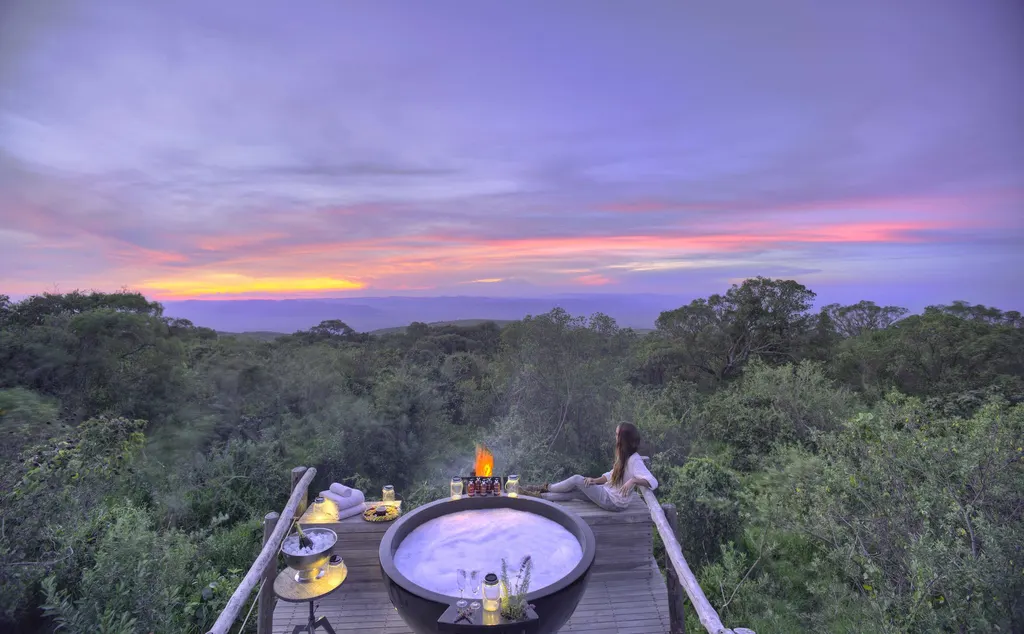
Some of the finest places to stay in Ngorongoro sit right on the crater rim. Many are luxurious five-star lodges with uninterrupted views across the crater. The combination of comfort and scenery is hard to beat anywhere in East Africa. Budget options are more limited. There are campsites and mobile campsites. A few more affordable places can also be found away from the rim.
Another option is Karatu, where accommodation is generally cheaper. The trade-off is an early start. To visit the crater from Karatu, you need to leave early enough to reach the gate when it opens at sunrise. You will also descend later than visitors staying on the rim. By then, the first vehicles from the crater rim will already be down on the crater floor.
What Facilities Are at Ngorongoro Crater?
Facilities inside the crater are very limited. The only toilets are the simple ones at Hippo Pool, where most visitors stop for a picnic lunch.
There are public toilets at Loduare Gate and at other entry points into the Ngorongoro Conservation Area. A few very basic shops on the crater rim sell drinks and snacks. For anything else, stock up in Karatu. Most other facilities are found at the lodges and camps.
There is also a filling station at the Ngorongoro Conservation Area headquarters, just beyond the crater rim. Otherwise, fill up in Karatu, about 16 kilometers (10 miles) from Loduare Gate. The next filling station is near the Serengeti entrance, almost 196 kilometers (122 miles) from the crater. Karatu is also the nearest place to find an ATM or currency exchange.
What Are the Costs of Visiting Ngorongoro Crater?
A visit to Ngorongoro Crater is not cheap. There are four main costs specific to Ngorongoro. These come on top of your safari, vehicle and accommodation costs. If you are traveling with a tour company, check which of these costs are already included in your safari price.
- Ngorongoro Conservation Area admission: US$70.80 per adult and US$23.60 per child, valid for 24 hours.
- Crater service fee: US$295 per vehicle per day to descend into the crater.
- Vehicle permit: US$10 per 24 hours for a Tanzania-registered vehicle, or US$47.20 for a foreign-registered vehicle.
- Camping fee: US$35–70 per person per night, payable in addition to the campsite fee.
You May Also Like
Greenway nature tours
We are a fully licensed tour company accredited by the Uganda Tourism Board. We design and operate safaris in Uganda and East Africa. Our operations are based in Kampala, Uganda, the heart of our safari planning and coordination. Though our company was officially established in 2025, our team brings deep, hands-on knowledge of East Africa.
Destinations
Favourite Tours
Help & Info
- About us
- Travel Blog
- Travel FAQS
- Gorilla Permits Bookings
- Contact Us
- Pay Online