This is what you need to know about malaria in East Africa
To get straight to the point: there is malaria in Uganda, Rwanda, Kenya, and Tanzania. But there is no reason to worry. You simply need to prepare well and take the right precautions. So, what exactly is malaria? How can you avoid getting it while traveling? In this blog, we explain everything you need to know about malaria in East Africa, so you can travel safely and enjoy your trip with complete peace of mind.
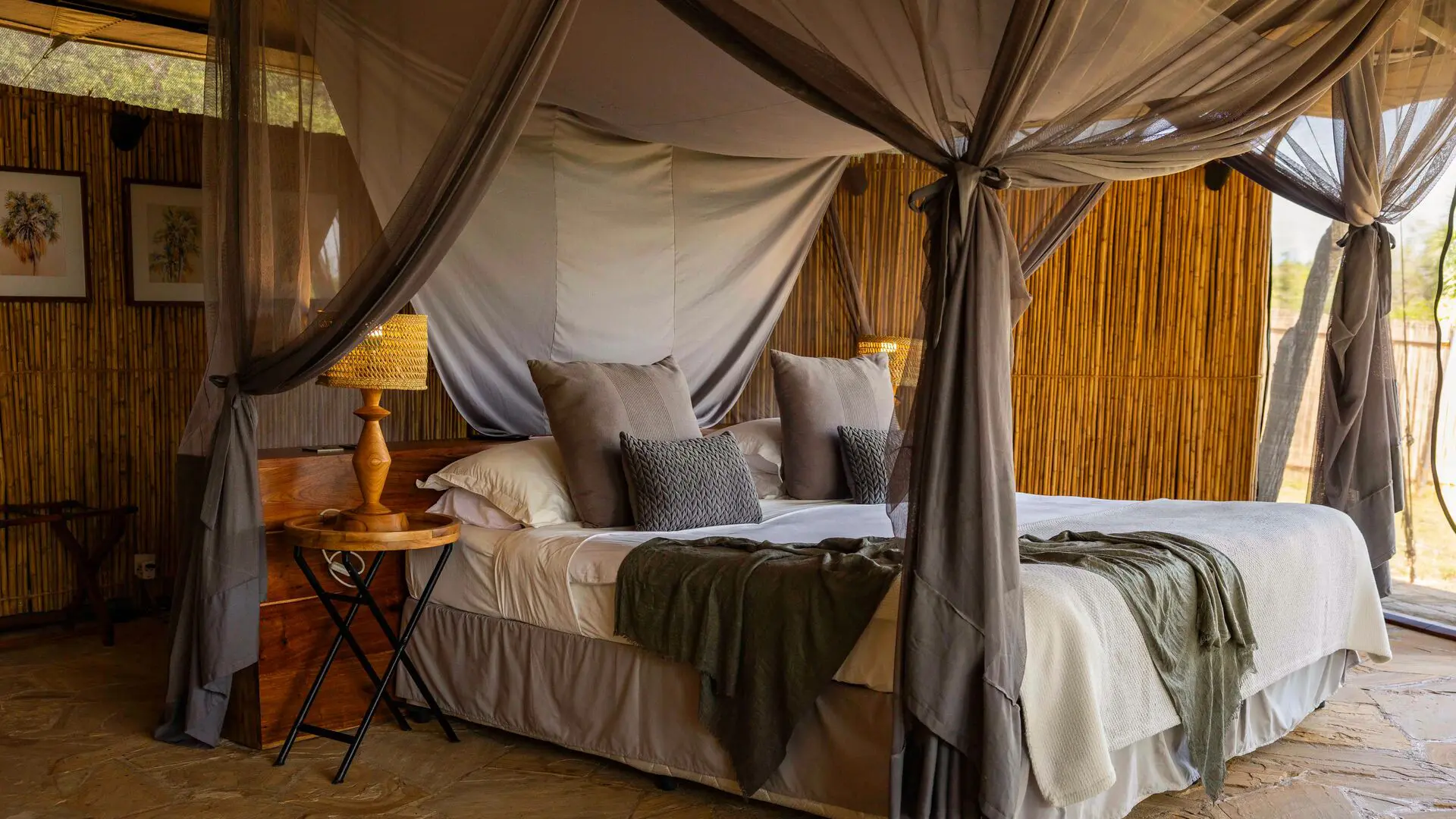
You need to prepare well for malaria, but it is nothing to worry about.
What exactly is malaria?
The World Health Organization (WHO) describes Malaria as a life-threatening disease spread to humans by some types of mosquitoes. It is preventable and curable. The infection is caused by a parasite and does not spread from person to person. Symptoms can be mild or life-threatening. Mild symptoms are fever, chills and headache. Severe symptoms include fatigue, confusion, seizures, and difficulty breathing. Infants, children under 5 years, pregnant women and girls, travellers and people with HIV or AIDS are at higher risk of severe infection.
Malaria occurs mainly in the tropical countries – including Uganda, Rwanda, Kenya and Tanzania. And it can spread quite easily here in East Africa. East African Countries have a lot of water: rivers, swamps, lakes. These create perfect breeding conditions for mosquitoes. After all, mosquitoes lay their eggs in water.
We have a lot of water: rivers, swamps, lakes. Those are ideal conditions for mosquitoes to breed.
How is malaria transmitted?
As you probably know, malaria is spread through mosquito bites. But there is no such thing as a “malaria mosquito.” A mosquito that carries malaria looks just like any other mosquito. So, you cannot tell which mosquito are infected and which are not.
Any mosquito can carry the virus. A mosquito becomes infected after biting someone who already has malaria. If that same mosquito bites you afterwards, there is a chance that you will get it too. So, the mosquito transmits malaria from person to person.
There is no such thing as a malaria mosquito. Every mosquito can carry the virus.
Prepare yourself well
The good news is that you can do a lot to protect yourself against malaria. With the right preparation and a few simple precautions, the risk becomes very small.
Prophylaxis Options
There are three main antimalarial medicines commonly used for travel in East Africa. All require a prescription and personal advice from your doctor, as the best option depends on your medical history, other medication, and the length of your trip.
- Atovaquone-proguanil (Malarone): a daily tablet started one or two days before entering a malaria area and continued for a few days after leaving. It is popular for shorter trips.
- Doxycycline: also taken daily. You start one or two days before travel and continue for four weeks after your trip. It can make your skin more sensitive to the sun, so good sun protection is important.
- Mefloquine (Lariam): a weekly tablet that must usually be started two or three weeks before travel.
The CDC provides a useful comparison of these medications for travelers. Still, it is always best to speak with your doctor to decide which option suits you best.
Mosquito Prevention
Medication alone is not enough. You should also protect yourself against mosquito bites. Use insect repellent after sunset. Wear long sleeves and long trousers in the evenings. Sleep under a mosquito net or in a screened or air-conditioned room whenever possible.
The good thing is that accommodation providers in East Africa a are very used to dealing with mosquitoes. Mosquito nets are available almost everywhere. At most accommodations, they spray your room before you go to sleep. They check for mosquitoes and close your mosquito net in advance.
With all these precautions in place, the chance of getting malaria during your trip is very low.
Elevation Considerations
Mosquitoes struggle to spread malaria at higher elevations, especially above 2,000 to 2,500 meters. This means places like the Ngorongoro Crater rim, the upper slopes of Mount Kilimanjaro, the Rwenzori Mountains and Bwindi Impenetrable Forest are generally considered lower-risk areas.
However, most trips in East Africa involve moving between different altitudes. You may spend one night high in the mountains and the next at lower elevation where mosquitoes are more common. Because of this, antimalarial medication should be considered for your entire journey, not just certain parts of it.
So, even if you spend time at high altitude, do not assume you can skip your malaria tablets.
Malaria has a long lead-up
If you do contract malaria, the chance of becoming seriously ill during your trip in Uganda, Rwanda, Kenya, or Tanzania is actually quite small. In many cases, symptoms only appear once you are back home. And that can sometimes make things more complicated.
In East Africa, malaria is very common and doctors deal with it every day. Clinics are experienced in recognizing and treating it quickly. If you develop symptoms here, you simply visit a clinic. They do a blood test to confirm whether it is malaria. Depending on the severity, you receive tablets or treatment by injection. In most cases, people recover quite quickly.
In many European and North American countries, tropical diseases are less common. Because of that, malaria is not always recognized immediately. This can delay treatment and make the illness feel much more severe.
That is why it is important to pay attention to symptoms even after returning home. If you develop fever, chills, headaches, or flu-like symptoms after traveling in East Africa, always tell your doctor that you recently visited a malaria region.
You don't have to worry.
If you take the precautions mentioned above, you run virtually no risk of getting malaria. In all the years we have been organizing trips, we have never had any issues with malaria. Of course, as a travel company, we are experts in organizing safaris and road trips, not doctors. But based on our experience, there is no reason to be overly concerned.
The chance of being bitten by an infected mosquito is already quite low. And even then, a mosquito bite does not automatically mean you will get malaria. The most important thing is to prepare well, take your precautions seriously, and listen to the advice of your doctor before traveling.
East Africa is an incredible part of the world. Millions of travelers visit every year without problems. So yes, you can absolutely travel here with peace of mind. You simply need to take a few extra precautions, just as you would for any tropical destination.
Want to read more while preparing for your trip? Feel free to explore the rest of our travel advice and blogs.
Trips to East Africa
Greenway nature tours
We are a fully licensed tour company accredited by the Uganda Tourism Board. We design and operate safaris in Uganda and East Africa. Our operations are based in Kampala, Uganda, the heart of our safari planning and coordination. Though our company was officially established in 2025, our team brings deep, hands-on knowledge of East Africa.
Destinations
Favourite Tours
Help & Info
- About us
- Travel Blog
- Travel FAQS
- Gorilla Permits Bookings
- Contact Us
- Pay Online