Want to see primates? Then Uganda is the perfect country.
If you love primates, Uganda should be at the top of your travel list. This beautiful country in East Africa is the best places in Africa to see monkeys and apes in the wild. Nowhere else offers such variety in such a small area. Many travelers come to Uganda with one clear goal. They want to see primates. And for good reason. Primates are fascinating animals. They are intelligent. They are social. And they behave in ways that often remind us of ourselves. Watching them in their natural habitat is exciting, emotional, and unforgettable. In this article, we explain why Uganda is perfect for primate safaris. You will learn which monkeys you can see, where to find them, and why guided tours make the experience even better.
Uganda is Full of Primates
Uganda has one big advantage. Its landscape is incredibly diverse. You will find low-land rainforest jungles, forest mountains, savannah grasslands, wetlands, and lakes. This variety creates perfect living conditions for many primate species.
In classic safari countries like Kenya or Tanzania, most visitors focus on the Big Five. Lions. Elephants. Buffalo. Leopards. Rhinos. Uganda offers something different. Here, forests play a major role. And forests are where primates thrive.
That is why Uganda is home to more than 20 primate species. Some are common. Some are very rare. And some can only be seen in this part of the world.
Seeing primates in Uganda feels personal. Many groups are used to humans. That means you can observe natural behavior from close by. They eat. They play. They argue. They rest. You watch them. And sometimes, they watch you back. That moment of eye contact is powerful. It creates a connection you will never forget.
The Primates You Really Should Not Miss
Every primate in Uganda is worth seeing. Still, some species stand out more than others. Below is a top selection of primates that make Ugannda truly special.
1. Chimpanzees; Our Closest Relatives
Chimpanzees share almost 99% of their DNA with humans. That fact alone makes them fascinating. But it is their behavior that really surprises people. They live in communities.
They use tools. They show emotions. They hug. They fight. They make peace. Chimpanzees cannot speak like we do. Yet they communicate clearly through sounds, gestures, and facial expressions. Chimpanzee trekking is one of the highlights of any Uganda safari adventure.
You follow them through the forest. You hear them before you see them. When you finally meet them, it feels unreal. It is loud. It is chaotic. And it is incredible. The best place to see chimpanzees is Kibale Forest National Park.

2. Mountain Gorillas; A Once-in-a-Lifetime Experience
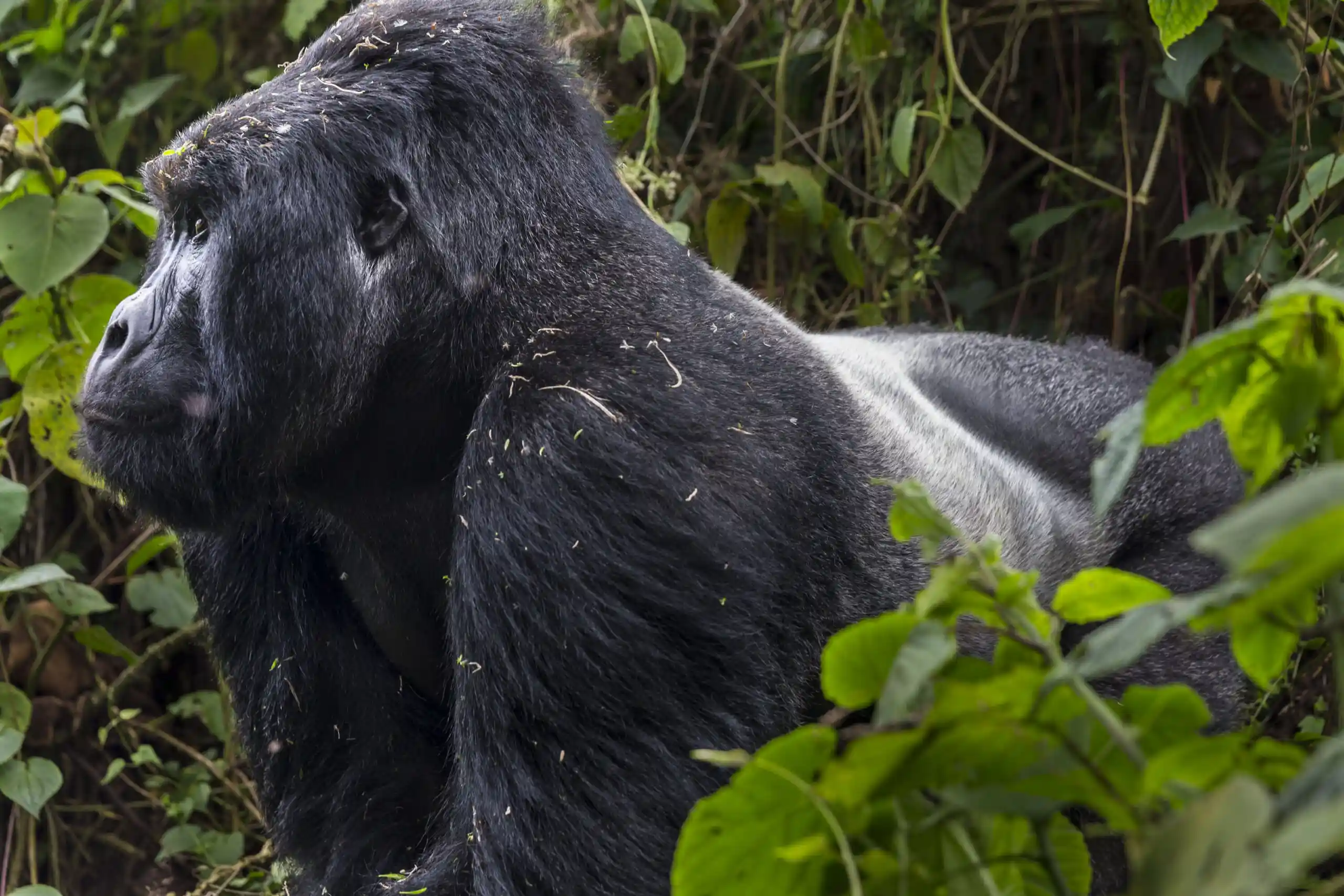
For many travelers, mountain gorillas are the main reason to visit Uganda. And once you see them, you understand why. Mountain gorillas are gentle giants. They are huge. They are powerful. They are calm. They are deeply emotional animals.
They only live in three countries. Uganda. Rwanda. And the Democratic Republic of Congo. In Uganda, you can see them in Bwindi Impenetrable Forest National Park and Mgahinga Gorilla National Park in the southern region of the country.
Gorilla trekking is well organized and strictly controlled. This protects the animals. You hike through dense forest. The trek can be tough some times. But the reward is huge. Spending one hour with a family of wild gorillas changes people. Many visitors describe it as one of the most moving moments of their life.
3. Black-and-White Colobus – The Forest Acrobat
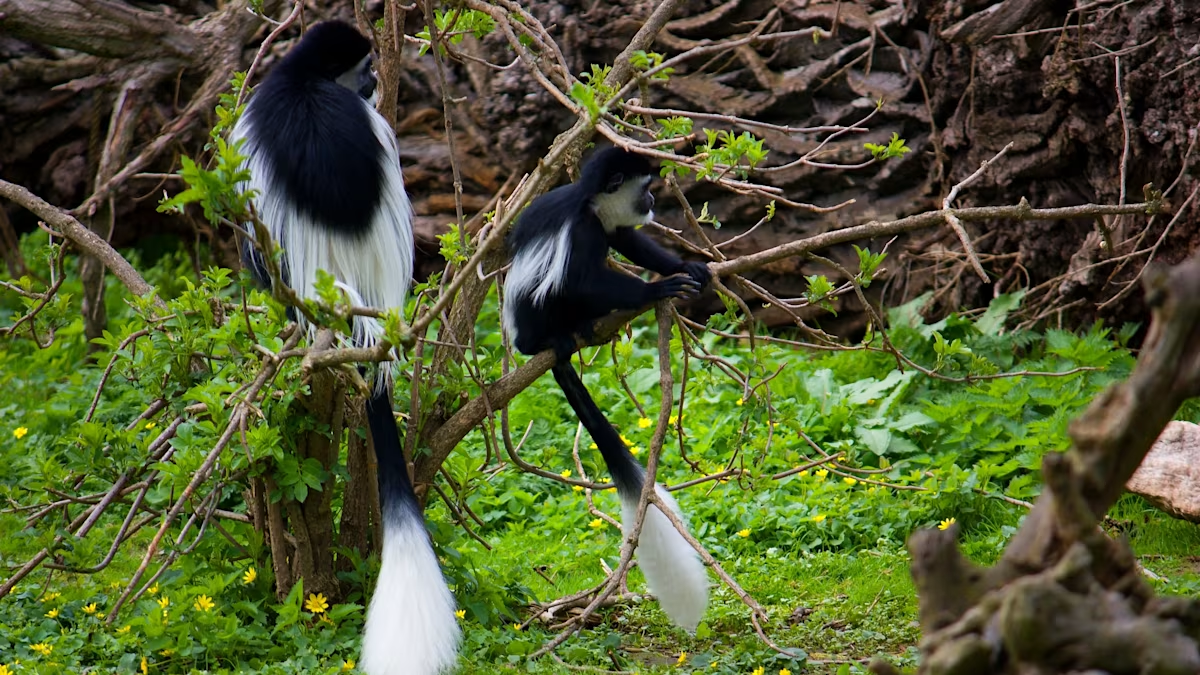
The black-and-white colobus monkey is easy to recognize. It is elegant. It is fast. And it is beautiful. The males have long white hair that flows under their arms and legs.
When they jump between trees, it looks like flying. They also have a dark face with a striking mask-like appearance. This gives them a mysterious look. Colobus monkeys are excellent climbers. You often see them high in the trees. They live in groups and are active during the day. Watching them move through the forest is pure joy. They can be found in Kibale Forest, Budongo Forest, and Queen Elizabeth National Park’s Kyambura Gorge.
4. Golden Monkeys – Small, Fast, and Rare
Golden monkeys are among the rarest primates in East Africa. They live in mountainous forest areas. You can find them in the volcanoes in Mgahinga Gorilla National Park. Golden monkeys are smaller than gorillas and chimpanzees. But they are just as entertaining.
They move quickly. They jump constantly. They are full of energy. Their golden-orange fur makes them easy to spot. Especially in green bamboo forests. A golden monkey trek usually lasts a few hours. You then spend one hour observing them. It is fun. It is active. It is very rewarding. And a great addition to gorilla trekking in Mgahinga and Bwindi.
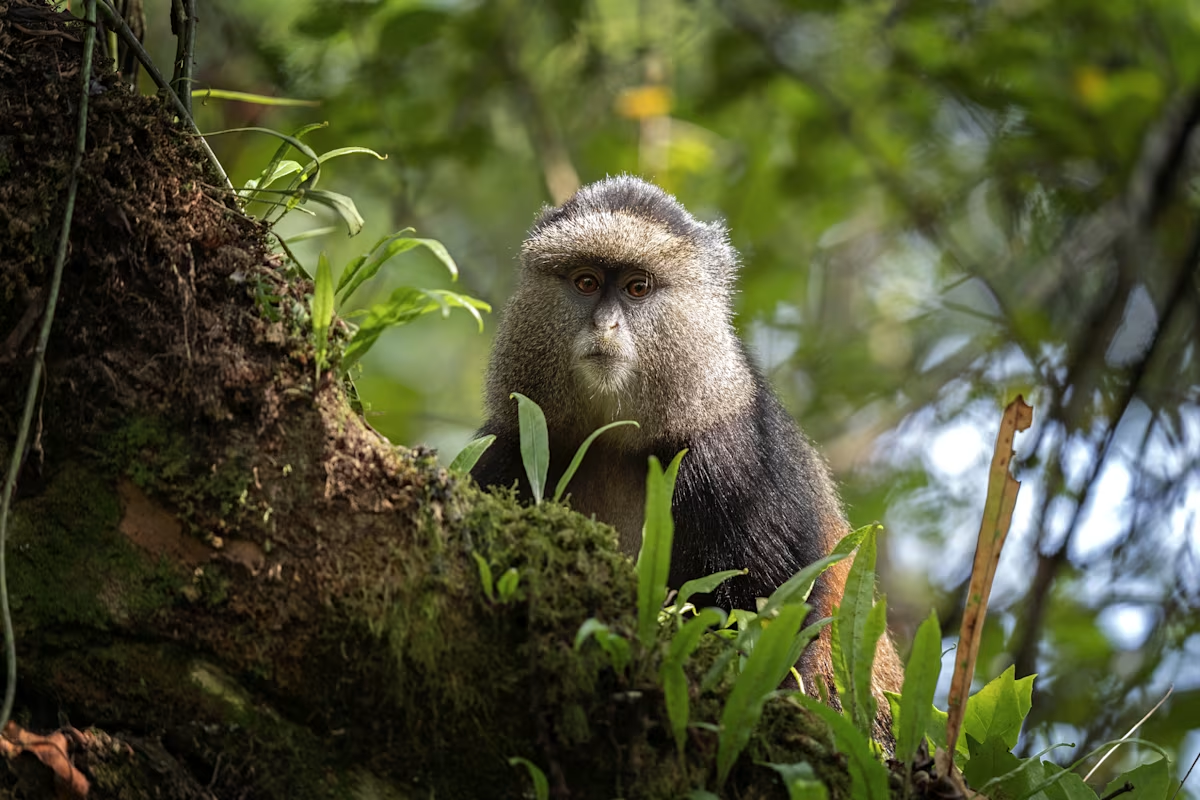
Other Monkeys You Will See in Uganda
Besides the famous species, Uganda has many other primates. Some you see deep in the forest. Others you meet along the road.
Olive Baboons
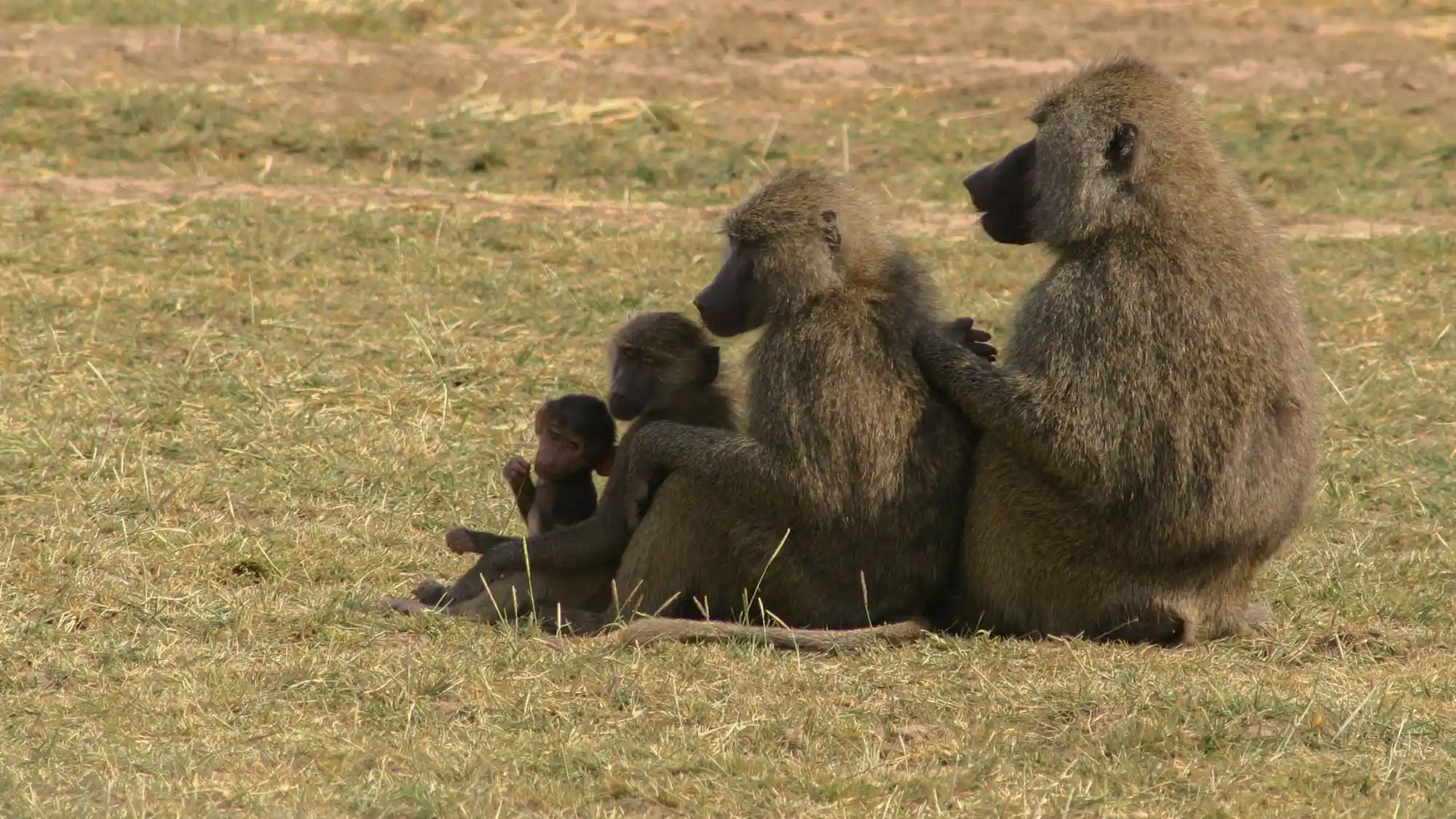
Olive baboons are very common in Uganda. You will see them in many national parks. They live in large groups. Sometimes with dozens of individuals. Baboons are confident animals. They are not shy. You might see them walking across the road. Or sitting calmly next to your car. They are smart. And sometimes a little too smart. Your guide will tell you to never leave food unattended. Baboons are excellent thieves.
Grey-Cheeked Mangabey
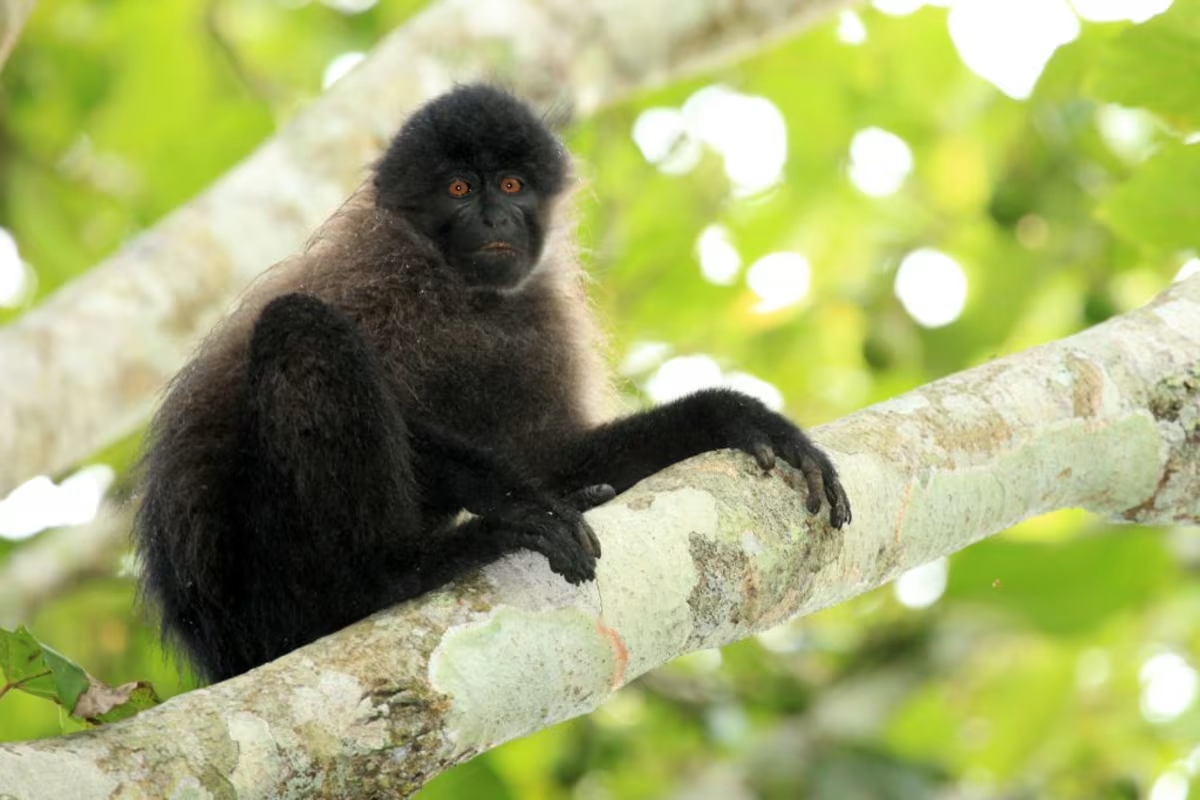
The grey-cheeked mangabey is a forest monkey with a very expressive face. Large eyes. Strong features. They live in groups and move through the forest with loud calls. You often hear them before you see them. Kibale National Park is one of the best places to spot them. They are active and curious. Photographers love them.
L’Hoest’s Monkey
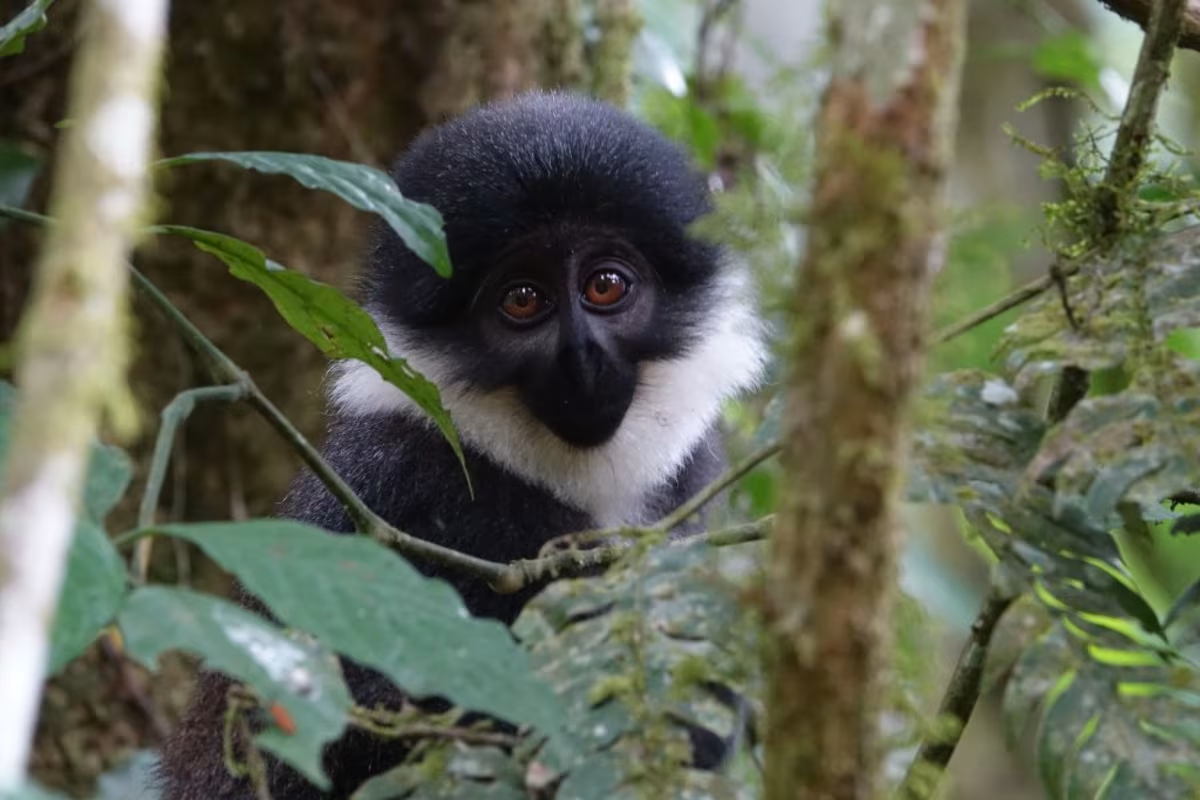
L’Hoest’s monkey is less common, but very special. It has dark fur and a long white tail. The tail ends in a black tip, which makes it easy to identify. They prefer dense forest and are often seen on the ground. This is unusual for monkeys. Seeing one feels like a lucky moment. You can find them in Kibale National Park and Bwindi Impenetrable Forest.
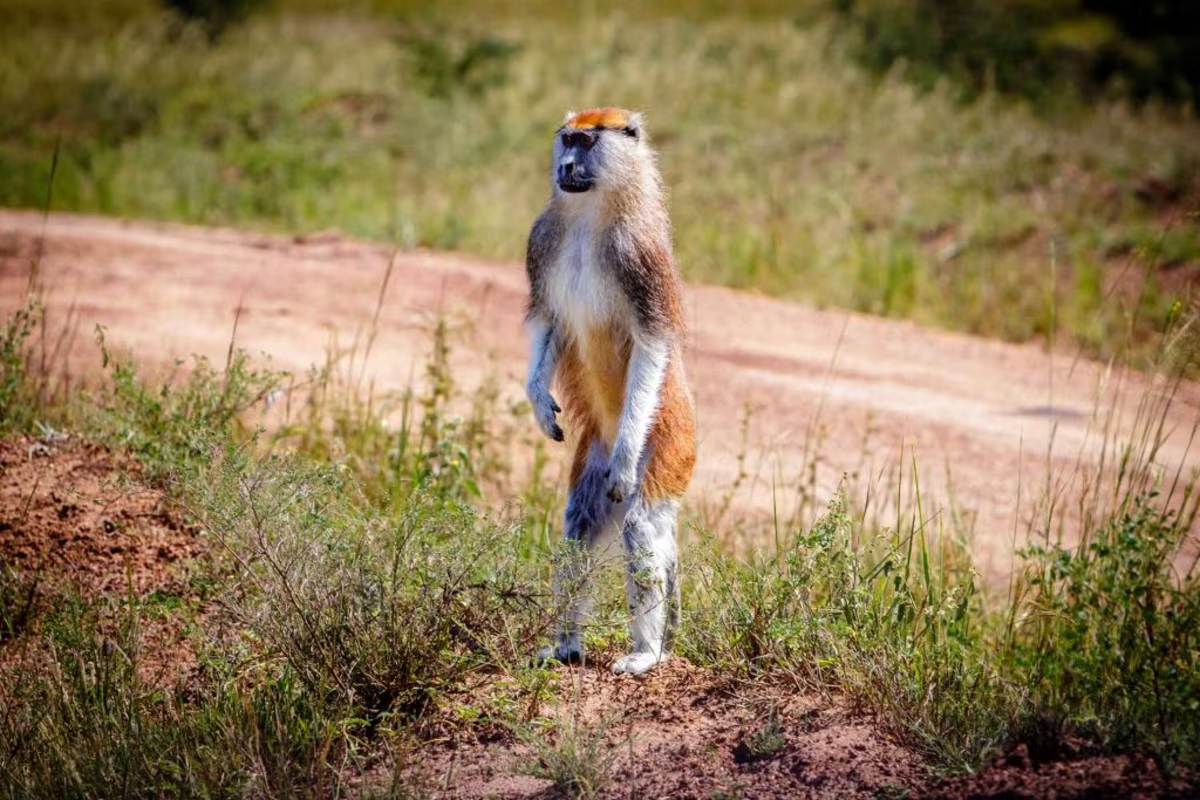
Patas Monkey
Most monkeys live in forests. But not the patas monkey. This species lives in open savannah areas. It is built for speed. Patas monkeys have long legs and slim bodies. They can run extremely fast. During a game drive in Murchison Falls National Park, you might suddenly spot one on a rock. It feels unexpected and exciting.
Red-Tailed Monkeys
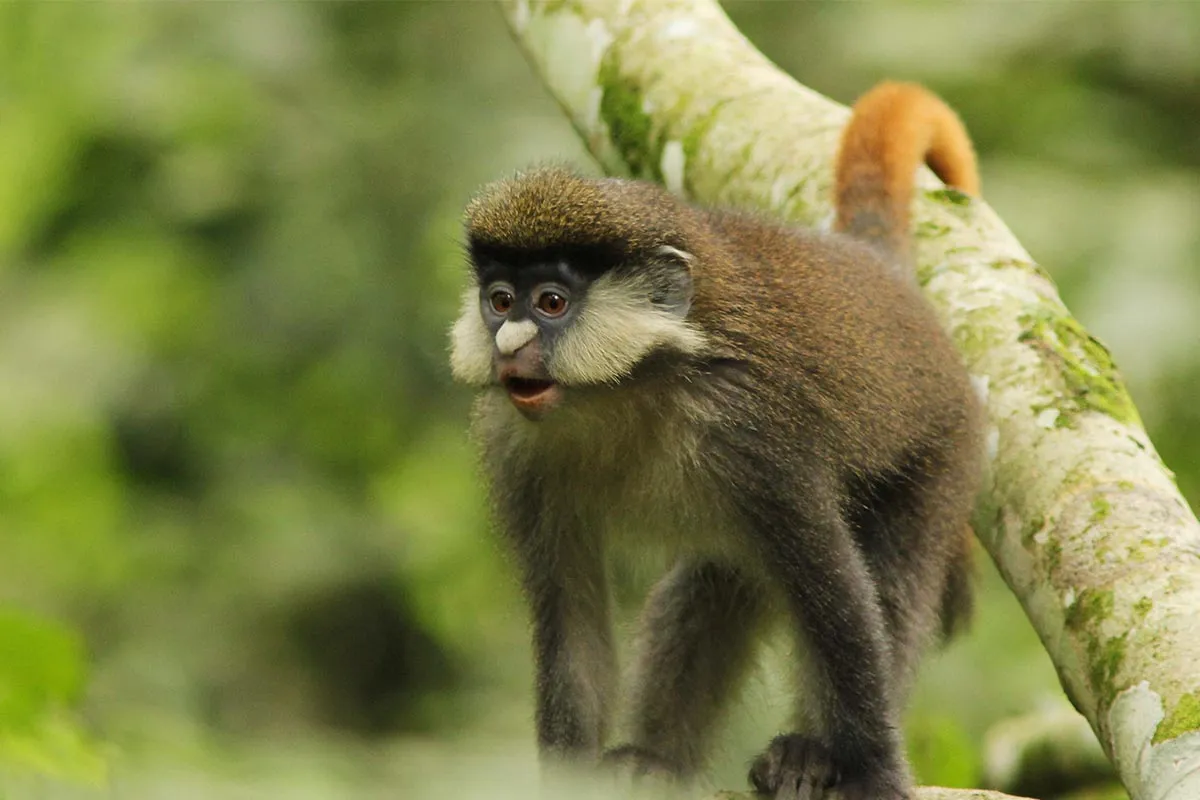
Red-tailed monkeys are some of Uganda’s most colorful forest primates. Their dark fur, white nose, and bright red tail stand out against the green canopy. Active during the day, they feed on fruits, leaves, and insects, moving quickly through trees in playful social groups. You can see them in Kibale, Kalinzu, and Budongo Forests.
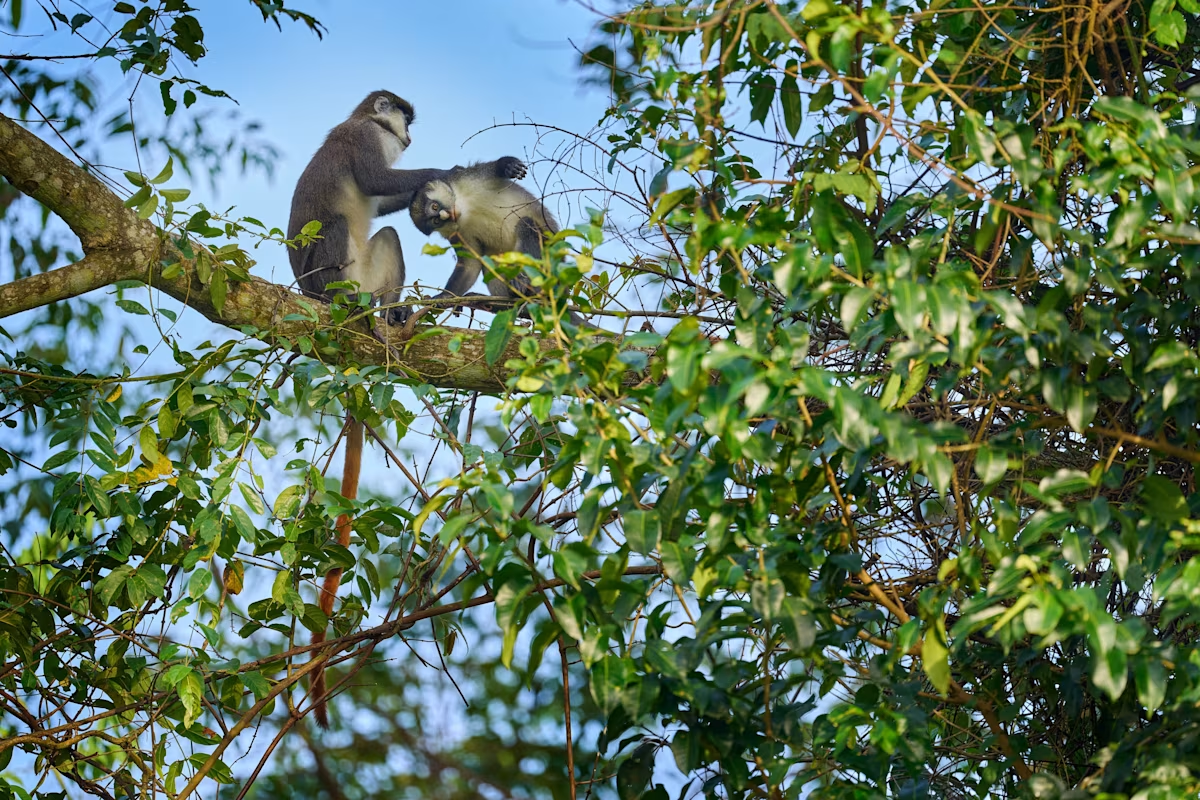
Ugandan Red Colobus Monkey
These leaf-eating monkeys are a true forest treasure. With red-brown caps, long limbs, and very long tails, they move gracefully high in the canopy. Endangered due to habitat loss and predation, sightings of Ugandan red colobus monkeys are always special. They are mainly found in Kibale Forest National Park and Budongo Forest.
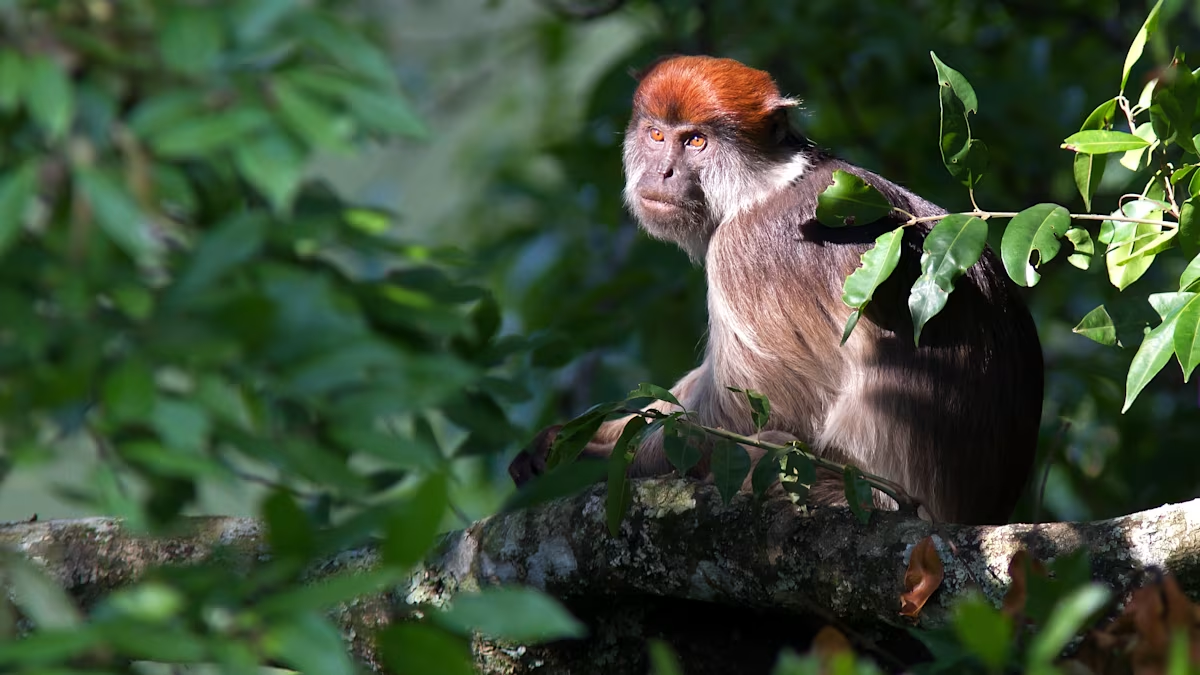
Blue Monkeys
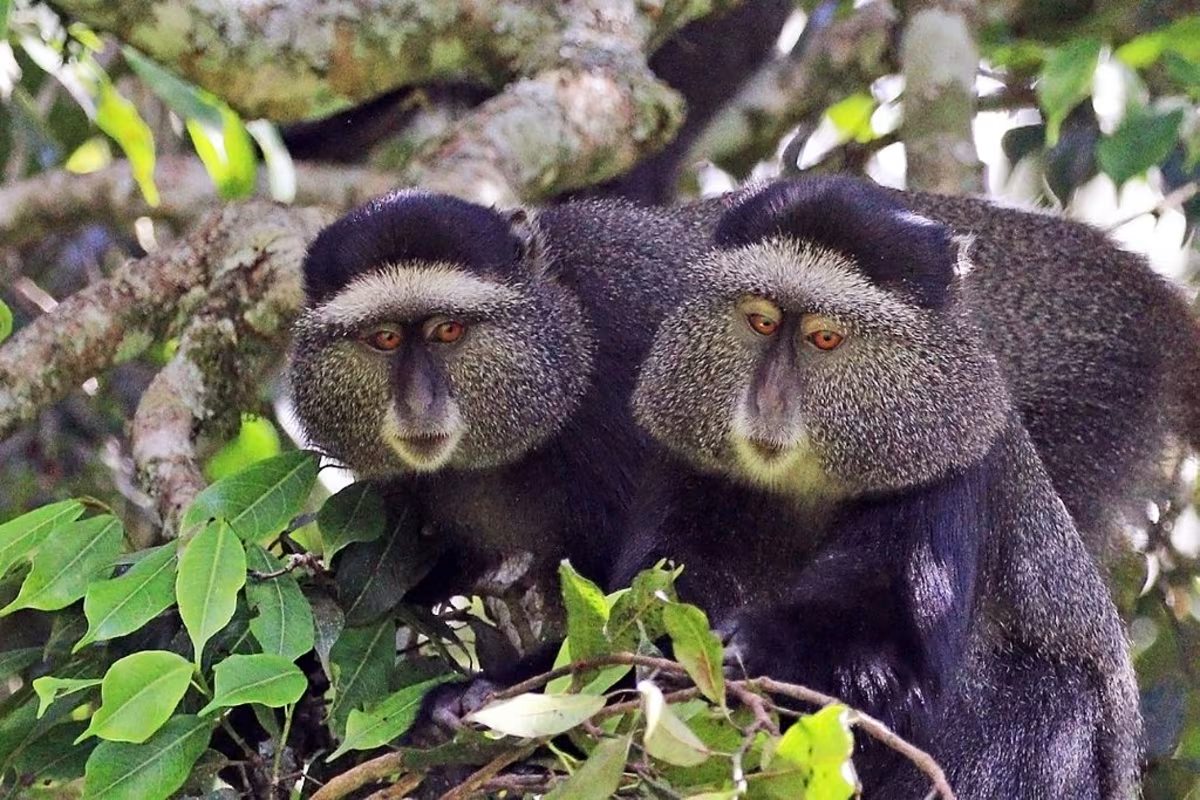
The blue monkey, also called the diademed monkey, is a graceful forest primate. Its grey-blue coat and pale forehead patch make it easy to recognize. Blue monkeys resemble golden monkeys. They live high in humid forests, feeding mainly on fruit and leaves. They live in family groups led by one male and often mix with other monkey species for safety.
Your guide will tell you everything there is to know about Primates in Uganda
Traveling with a guide in Uganda adds huge value. Guides know the animals. And they know their stories. They explain behavior. They explain diet. They explain social rules.
Some stories are surprising. Some are funny. Take the red colobus monkey, for example. They spend all day eating leaves that get them drunk.
If they eat too much, they become overconfident and attack chimpanzees. Not so clever: the chimpanzee places the red colobus monkey high on its menu. Our guides will tell you plenty more entertaining stories like this.
We can plan your trip around Primates
If you are hoping to see lots of primates during your safari in Uganda, we will take that into account. We will ensure you spend more time in certain areas and do more walks, so you actually see all the monkeys you want to spot. Curious what else Uganda has to offer besides its unique primate species? Also check out our top national parks in Uganda.
Our Best primate Safaris In Uganda
Greenway nature tours
We are a fully licensed tour company accredited by the Uganda Tourism Board. We design and operate safaris in Uganda and East Africa. Our operations are based in Kampala, Uganda, the heart of our safari planning and coordination. Though our company was officially established in 2025, our team brings deep, hands-on knowledge of East Africa.
Destinations
Favourite Tours
Help & Info
- About us
- Travel Blog
- Travel FAQS
- Gorilla Permits Bookings
- Contact Us
- Pay Online