Looking for the Best Safaris in Tanzania? Go South!
When people think about a safari in Tanzania, they usually picture the famous north. They think about the Great Wildebeest Migration in the Serengeti, the unbelievable landscape of the Ngorongoro Crater, and stories of huge herds of animals crossing rivers filled with crocodiles. These places are world-famous, and they are exciting to visit.
But are they really the best safari experiences Tanzania has to offer?
If you are looking for something quieter, more exclusive, and less crowded, then the answer might surprise you. The best safaris in Tanzania may actually be found in the south.
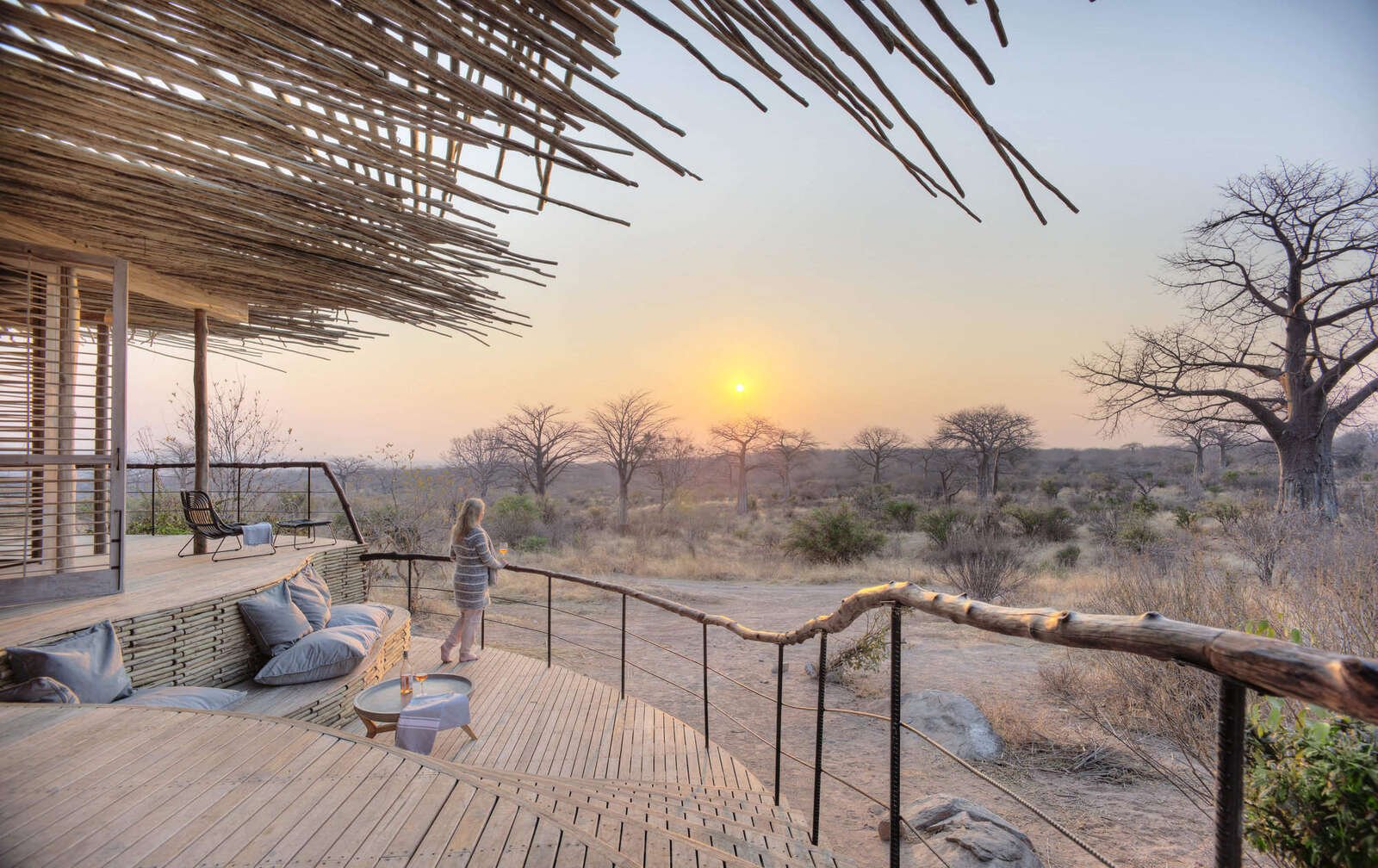
Southern Tanzania is wild, vast, peaceful, and full of amazing wildlife. It gives you a chance to enjoy nature without being surrounded by dozens of other safari vehicles. It feels more personal, more adventurous, and more authentic.
Let’s explore why the southern part of Tanzania is a great choice for travelers who want a truly special safari experience.
The South: An Alternative to the Busy North
The northern safari circuit— Lake Manyara, Serengeti, Tarangire, and Ngorongoro Crater—is popular for a reason. Documentaries have made the Great Migration famous. Everyone has seen pictures of wildebeest leaping into rivers. Tourists love the “Big Five,” and the Ngorongoro Crater is often described as a natural wonder of the world.
But popularity also brings huge crowds.
During peak season, the famous river crossings in the Serengeti can attract more than 100 safari vehicles at once. Drivers squeeze into every available space along the riverbanks, and engines constantly run as people fight for the best viewing spot. Sometimes, the number of cars becomes almost as memorable as the animals.
If seeing the Great Migration is your dream, then the crowds are something you simply accept. It is an unforgettable experience, and many people feel it is worth sharing with hundreds of others.
But if you are looking for something quieter and more private, the southern parks offer a very different kind of safari—one where nature feels bigger, calmer, and more untouched.
Massive, Wild, and Almost Empty
One of the biggest differences between the north and the south is space.
Southern Tanzania is home to two of the country’s largest protected areas:
- Ruaha National Park
- Nyerere National Park (formerly the Selous Game Reserve)
When combined, these parks are almost twice the size of the Serengeti, Ngorongoro Conservation Area, and Tarangire together. Imagine that—twice the land, but with a tiny fraction of the people.
There are very few lodges in Ruaha and Nyerere. In fact, compared to the north, the south has only one-sixth the number of safari properties. This means travelers enjoy much more space, far fewer cars, and a feeling of true wilderness.
To give you an idea:
- In the north, there are about 91 km² of land per lodge.
- In the south, each lodge has about 1,180 km² of land to explore.
That is an enormous difference.
Of course, some lodges are larger than others, but even with that in mind, it is clear that the south offers a safari with far fewer crowds. It is not unusual to go for hours without seeing another vehicle. Many people say this is the highlight of a southern safari—the silence, the peace, and the sense of having nature all to yourself.
Amazing Wildlife With No Crowds Around
Some people worry that the south might not have as much wildlife as the north. This is not true at all. Southern Tanzania is full of animals—many species found in the north, and many that are not. Here are just some of the animals you can see in Ruaha and Nyerere:
- Large prides of lion, sometimes 20 or more together
- Lions hunting giraffe and buffalo
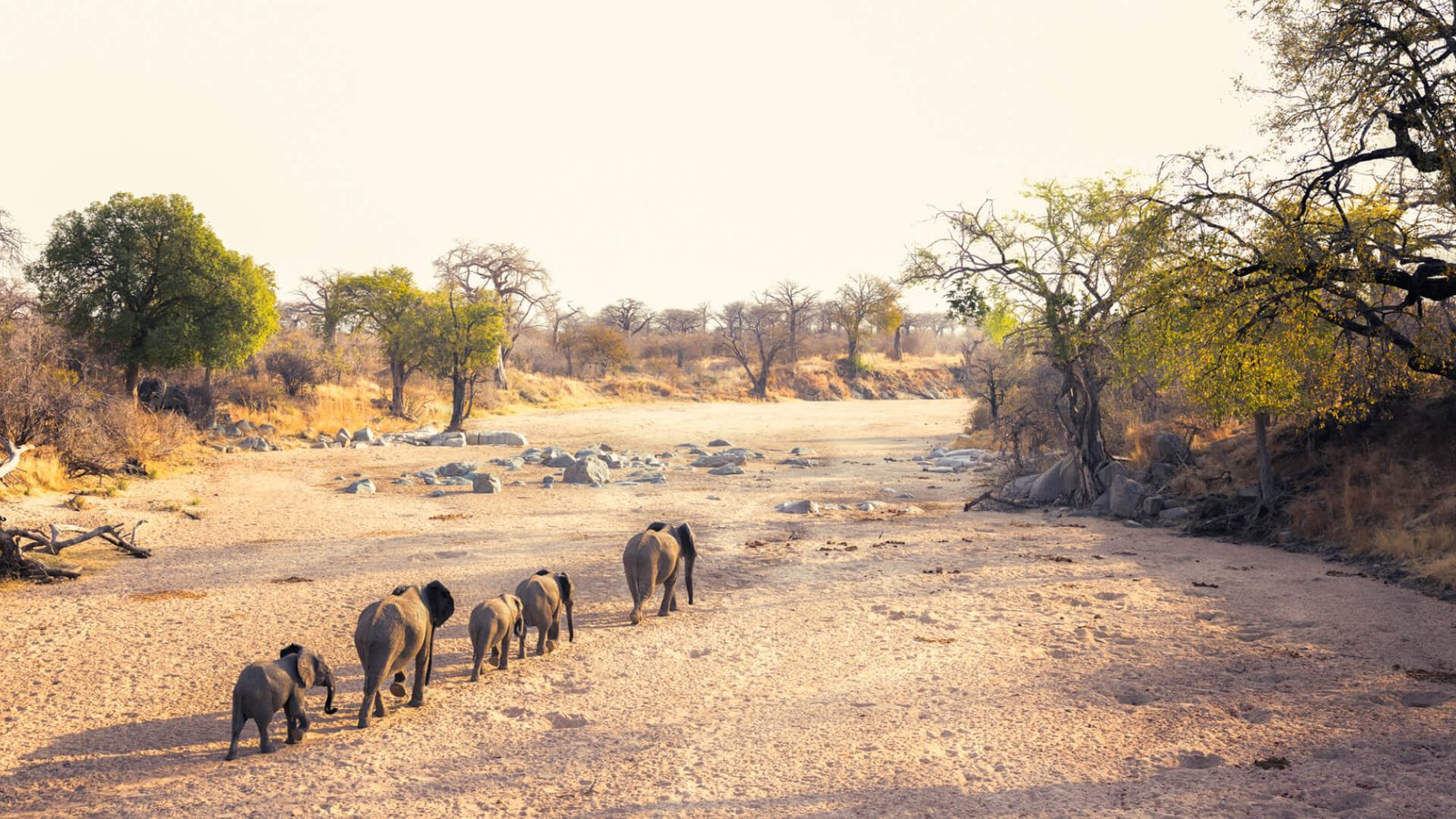
- Tanzania’s biggest population of elephants
- Enormous herds of buffalo
- Packs of African wild dog, one of Africa’s rarest and most exciting predators
- Sable and roan antelope, which are very hard to see in the north
- Hippos and crocodiles in the lakes and rivers of Nyerere
- More than 500 species of birds
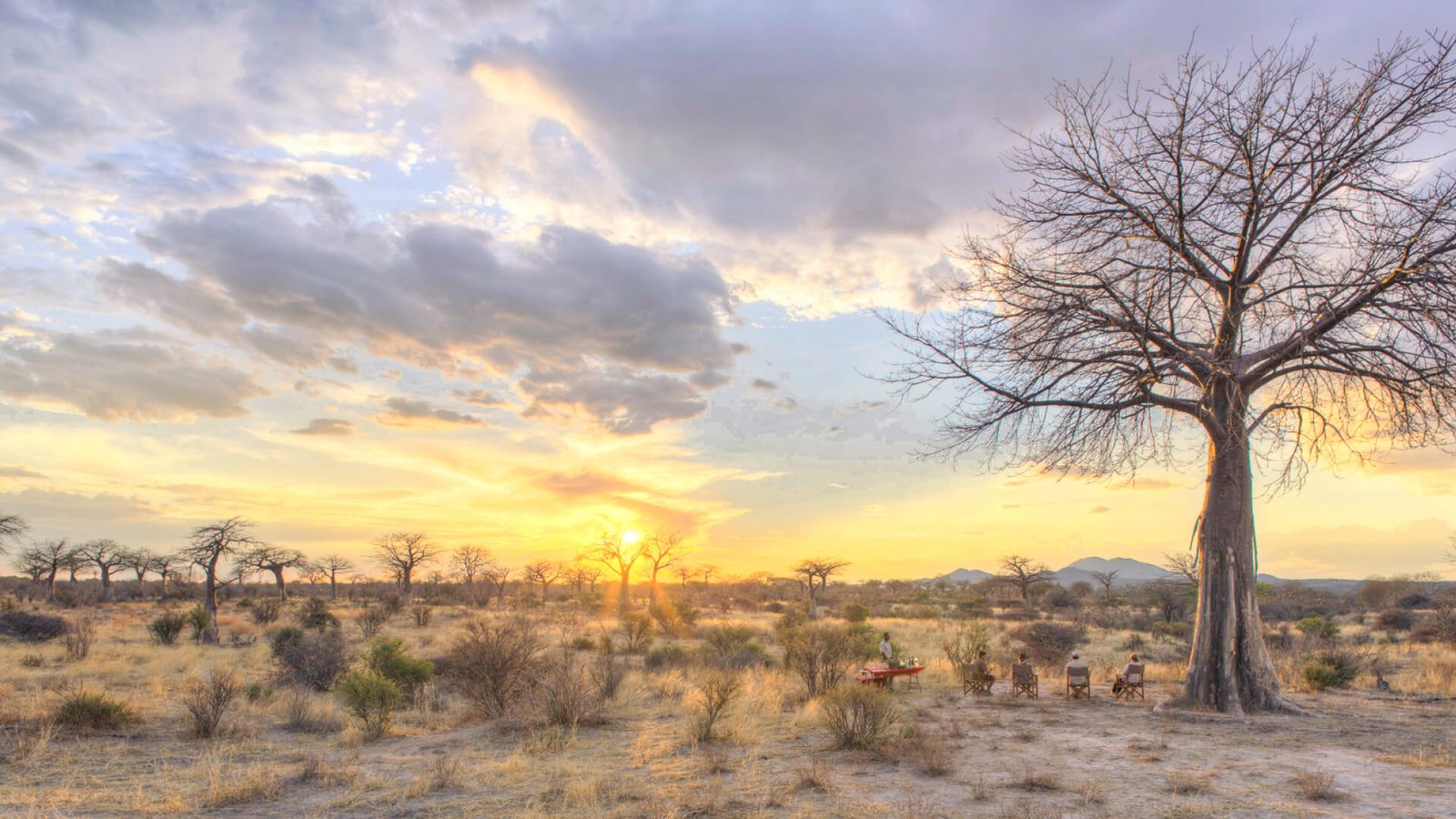
While animals may be spread out across the huge landscapes, the experience of watching them is completely different from that in the north. In southern Tanzania, you can often sit quietly with a sighting for half an hour without seeing a single other vehicle. This makes sightings feel private and special—almost like a secret moment between you and the wild.
Instead of listening to engines and people talking, you hear the sounds of birds, the wind in the grass, and the footsteps of animals.
Many travelers say that even though the migration is spectacular, the wildlife moments in the south feel more “real.”

Boating Safaris: See Nature From the Water
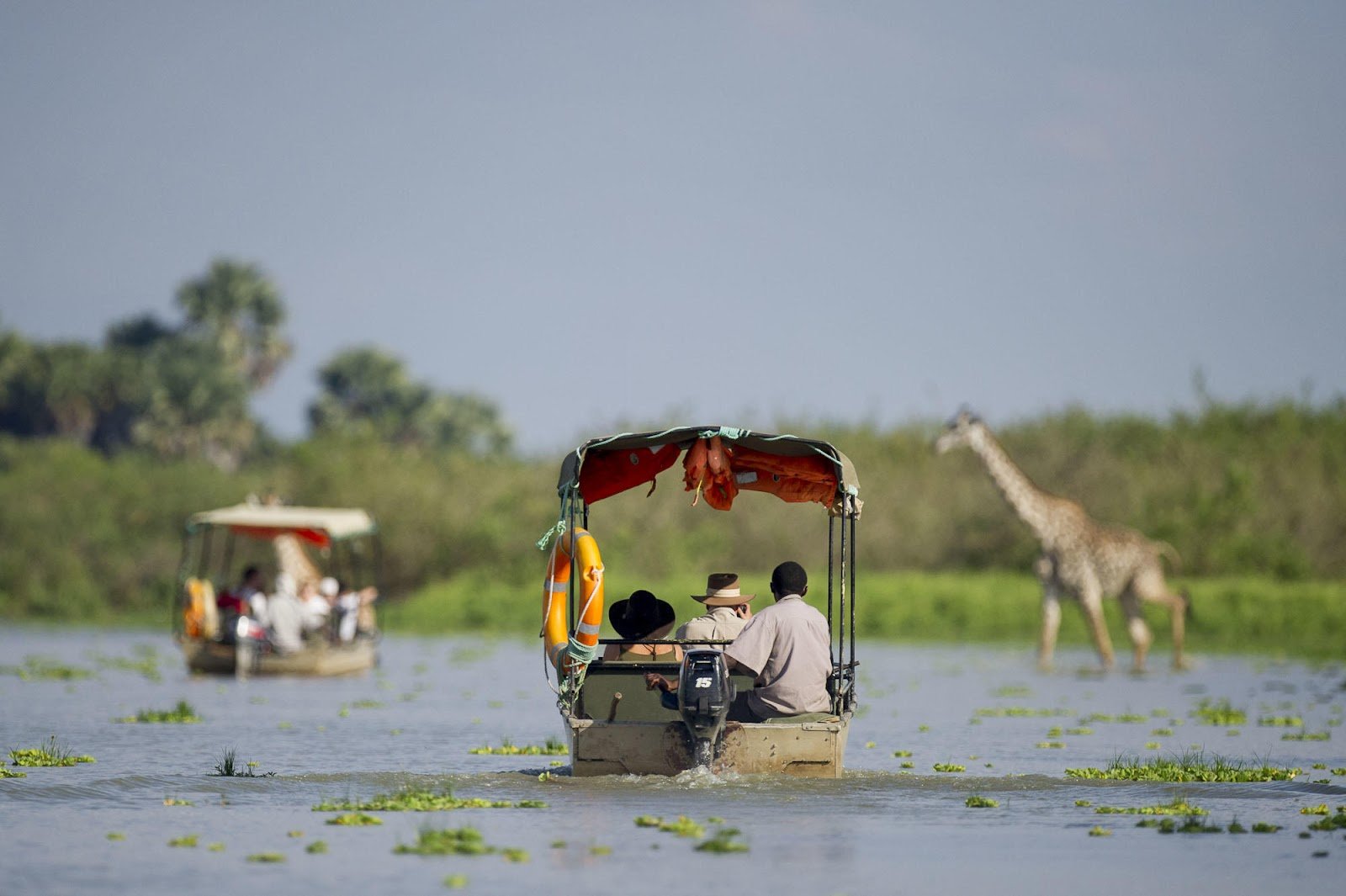
One of the most unique and exciting activities in southern Tanzania is the boating safari.
You cannot do this in the Serengeti or Ngorongoro Crater. But in Nyerere National Park, there are beautiful lakes and river systems perfect for exploring by boat.
A boat safari lets you see:
- Hippos floating in the water
- Crocodiles lying on the riverbanks
- Kingfishers, herons, storks, and dozens of other water birds
- Elephants drinking along the shore
- Beautiful sunsets reflected on the water
This is a peaceful and relaxing way to enjoy wildlife. It allows you to get close to birdlife and river animals, and it offers a fresh perspective you will never get from a vehicle.
Boat safaris are often guests’ favorite part of visiting Nyerere because they feel so different from any other type of safari.
Walking Safaris: An Adventure on Foot
If you enjoy exploring nature up close, the south is also one of the best places in Africa for walking safaris.
Walking safaris are especially good in Ruaha National Park, which has perfect conditions during the dry season from July to late October. During this time:
- The grass is short
- Vegetation is thin
- Animals gather near water sources
- Wildlife movement becomes easy to predict
This makes it safe and exciting to walk through the bush with a professional guide.
On a walking safari, you learn things you would never notice from a car. You see footprints, learn about plants, understand animal behavior, and experience the bush with all your senses. Every sound becomes meaningful, from the rustle of leaves to the distant call of a bird.
Several camps in the south specialize in walking safaris, including Jabali Ridge, Jabali Private House, Kokoko Camp, and the Usangu Expedition Camp. Many guests say a walking safari is one of the most memorable experiences of their entire trip.
A Wide Variety of Activities
One reason many travelers love the southern circuit is the range of activities it offers. In the north, most safaris are done by vehicle only. But in the south, you can enjoy:
- Day game drives
- Night game drives
- Boating safaris
- Walking safaris
- Birdwatching trips
- Visits to wetlands, lakes, and rivers
This variety makes a safari in the south feel richer and more flexible. You can explore the land, the water, and the bush in different ways. Every day brings something new.
Getting to Southern Tanzania
Most safaris to the south start from Dar es Salaam, Tanzania’s largest city. The airport there—Julius Nyerere International Airport (DAR)—is the main gateway.
Flying to Ruaha and Nyerere
The easiest way to reach the southern parks is by air. Daily flights leave from Dar es Salaam to both Ruaha and Nyerere. There are also flights from Arusha if you want to combine a northern and southern safari.
Most safari packages already include these flights, making travel simple and convenient.
Driving to the Parks
If you prefer to travel by road, here is what to expect:
- Nyerere National Park is the easiest southern park to reach. A new road has reduced the travel time from Dar es Salaam to about four hours.
- Mikumi National Park takes around six and a half hours from Dar. The road passes through many villages with strict speed limits, so the journey is slow.
- Ruaha National Park is about five hours from Mikumi, so it is often visited as part of a longer road trip.
Reaching the Remote Western Parks
If you want to visit Katavi or Mahale Mountains, you will need to take a special flight from Dar es Salaam or Arusha. These flights happen twice a week and are more expensive because the parks are extremely remote. But for travelers who love untouched wilderness, the experience is worth the cost.
Why Choose the South?
A safari in southern Tanzania is perfect for people who want:
- Excellent wildlife viewing
- Peace, quiet, and very few vehicles
- Large, wild landscapes
- A mix of activities (driving, boating, walking)
- A more natural and authentic safari experience
- An adventure away from tourist crowds
If you dream of a safari where you can sit with animals without feeling rushed or surrounded by other cars, then the south is the right choice. It gives you the chance to experience Africa in a more intimate and personal way.
Conclusion: The South Offers Tanzania’s Best Safari Experiences
The northern parks will always be legendary. The Great Migration is one of nature’s most extraordinary events, and the Serengeti and Ngorongoro Crater are truly special places.
But the south offers something different—and for many travelers, something even better.
In southern Tanzania, you get:
- Space
- Silence
- Privacy
- Adventure
- And truly wild wildlife encounters
Whether you are gliding across the waters of Nyerere, walking through the golden landscapes of Ruaha, or watching a leopard in a tree with no other vehicles around, you will feel the magic of a safari that belongs only to you.
If you want a safari that is simple, peaceful, exciting, and full of surprises, then look south. You may discover that the best safari in Tanzania is the one waiting for you in the quiet, beautiful wilderness of the southern
Tanzania Safaris
No tour found matching the keyword.
Greenway nature tours
We are a fully licensed tour company accredited by the Uganda Tourism Board. We design and operate safaris in Uganda and East Africa. Our operations are based in Kampala, Uganda, the heart of our safari planning and coordination. Though our company was officially established in 2025, our team brings deep, hands-on knowledge of East Africa.
Destinations
Favourite Tours
Help & Info
- About us
- Travel Blog
- Travel FAQS
- Gorilla Permits Bookings
- Contact Us
- Pay Online