
The Great Wildebeest Migration– Nature’s Greatest Show
The Great Wildebeest Migration is one of the most incredible wildlife events you can witness.
It is the second largest animal migration on Earth and one of the natural wonders of Africa. Every year, about 1.5 million wildebeest travel over 800km across East Africa, joined by zebras and other grazers. The journey starts in Tanzania’s Serengeti, where the herds search for fresh grass and water.
In February and March, the southern plains come alive with newborn calves near Ngorongoro. Predators are never far, so survival begins from day one. As the dry season sets in, the herds slowly move north through Serengeti National Park and Maswa Game Reserve. In April and May, some pass through the Grumeti region, while others spread across Central Serengeti.
By July, they reach the Mara River at the border of Kenya and Tanzania. This is the most dramatic part of the journey. Dust rises as thousands cross, while crocodiles wait below. August is peak crossing time, testing every animal’s strength. When the southern rains arrive in October, the herds turn south again.
By December and January, they’re back on the southern plains, ready to start the great clockwise journey all over again. Ancient, powerful, and unforgettable, it’s truly nature’s greatest show.
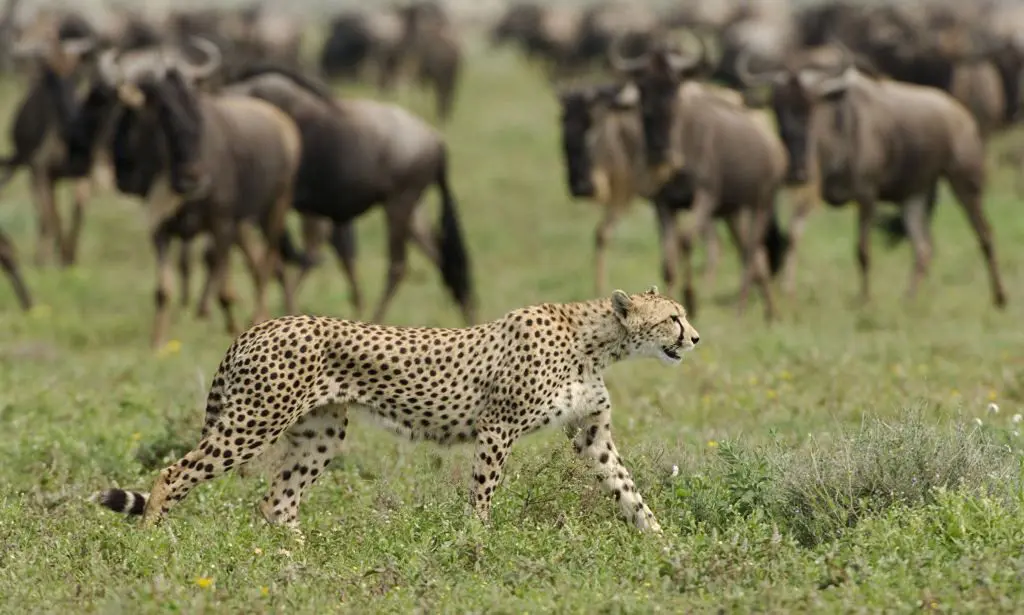
During the migration, around 250,000 wildebeest and 30,000 zebras don’t make it, falling prey to predators, drowning, hunger, thirst, or sheer exhaustion. Following the herds are safari-goers, drawn to the drama of this Greatest Show on Earth. This is no ordinary African safari.
Nature doesn’t follow a schedule, and even river crossings can be unpredictable. It’s this uncertainty that makes the experience so thrilling. Experienced travelers and guides know how to soak in the many layers of bush life while waiting for heart-pounding river crossings and predator action.
Follow the Great Wildebeest Migration
Rainfall drives the event, so tracking the migrating herds is not an exact science, but the same general pattern plays out each year.
JANUARY:
Rains arrive on the southern Serengeti plains, bringing fresh, nutrient-rich grass.
The herds move to the Ndutu area, where food is plentiful. If you want to see wildebeest in January, Naabi Hill and Lobo are the best spots. Many females are heavily pregnant now, and finding greener grass is their top priority. The fertile plains here were formed by volcanic activity in Ngorongoro.
They grow short, mineral-rich grasses that thrive during the rainy season but dry up quickly afterward. These grasses are packed with nutrients, making them perfect for calving season.
The herds instinctively seek out the best grazing to support their young. It’s a critical time full of life and movement, as the next generation prepares to take its first steps on the plains.
FEBRUARY:
Every year, about half a million wildebeest are born on the Serengeti plains.
February has the highest birthing rate, sometimes seeing up to 8,000 calves a day. The fresh, abundant grass around Lake Masek and Lake Ndutu makes this area perfect for birthing. After the calves are born, the herd stays in southeast Ndutu for a while before moving north in a clockwise route.
Calving season means wobbly babies taking their first steps—an easy target for predators, who are always on the hunt. If you want to see a newborn wildebeest, midday is the best time. This gives the calves a few hours to gain strength before nightfall.
The Serengeti also has a healthy lion population, with over 3,000 lions in the reserve. That’s impressive, considering big cats are struggling in other parts of Africa.
MARCH:
Mobile camps in the Serengeti offer a close-up view of the migration. The herds are mostly in Ndutu and the Kusini Maswa region in the southwest. With babies in tow, the herds move a little slower. Be ready for some afternoon rains—they’re common this month.
APRIL:
Visiting in April means packing your rain jacket. The herds slowly move from Ndutu, past Simba Kopjes, toward Moru. By now, the massive herds have split into smaller groups.
Simba Kopje is home to many lions, so it’s worth searching for them. Evenings bring the heaviest rain, which can make the plains slippery. Vehicles without 4×4 may struggle. While some herds continue through Central Serengeti, others head west into the Grumeti Reserve.
MAY:
May is perfect for wildlife photographers chasing action shots. The ‘long rains’ continue, keeping the plains green. As calves grow stronger, the herds cover longer distances. You’ll most likely find them between Moru and Makoma, moving steadily north.
JUNE:
By June, the rains have eased, and the herds have spread out. The front-runners have already reached the Mbalageti River, while those at the back may still be near the southern corners of the Simiti and Nyamuma Hills. The herds now often move in long lines as they make their way north.
JULY:
July marks mating season in the Serengeti. The herds are mostly in the Grumeti Reserve in the west and moving past Fort Ikoma. River crossings along the Grumeti are worth seeing, but this area is vast and less developed, so spotting crossings can be tricky.
The Grumeti River also has less water than the Mara River, so the crossings are smaller and less dramatic. The herds continue grazing north, heading toward the Maasai Mara in Kenya. This part of the migration crosses international borders and adds another layer of excitement for safari-goers.
AUGUST:
By August, the herds have reached the northern Serengeti and face their biggest challenge: the Mara River. Flowing from the Maasai Mara into the Serengeti, its murky, rushing waters are beautiful—but deadly. Thousands of wildebeest die trying to cross. Some plunge off steep banks, often spooked by lions. Others drown as panicking herds crush one another while climbing the far bank.
Every death feeds crocodiles, birds, and fish—nature at work. Amid the chaos, lions and hyenas target the stragglers and injured. Tourists gather at key spots to watch the drama unfold. There is no hierarchy here: luxury Land Rovers share the best views with backpackers crammed into pop-up minivans.
SEPTEMBER:
In September, you can catch the tail end of the Mara River crossings or see the herds spread across the vast grasslands of the Maasai Mara. The herds stretch for miles. The weather is warm, sunny, and dry, so pack a hat.
OCTOBER:
By October, most river crossings are over. The herds graze peacefully in the Maasai Mara, enjoying the fresh green grass. For the survivors, this is the reward after a long, grueling journey.
NOVEMBER:
The ‘short rains’ begin in November, signaling another move. The herds leave Kenya and head south to western Loliondo and the Lobo area in Serengeti National Park. Whether it rains or not is up to nature. Pack some warm layers, as the weather can be cooler. By now, the herds break into smaller family groups, focusing on grazing and preparing for the next stage of the journey.
DECEMBER:
By December, the herds are back on the southern plains of the Serengeti, near the Ngorongoro Conservation Area. The cycle begins again, with fresh grass, pregnant females, and new calves. The great clockwise journey starts all over, ancient and unstoppable.
River Crossings
When most people talk about seeing the Great Migration, they mean the river crossings.
Watching wildebeest hurl themselves into the water, one after another, in a blur of panic, sends a rush of adrenaline through even the most seasoned safari-goer.
These crossings are the scenes we’ve all seen on Planet Earth: wildebeest, zebras, and a few antelope species fighting through turbulent, crocodile-filled waters.
Lions wait in the riverine shrubs, ready to ambush the unlucky. For those with basic cameras or limited time, it can be hard to capture the drama of thundering hooves and desperate escapes. Sometimes, the best strategy is to put the camera down and simply watch.
Avoiding the Tourists
Dodging crowds can be a sport in the Serengeti and Maasai Mara.
If you prefer quiet moments over packed viewpoints, skip the Mara River crossings and focus on the vast herds in other areas during the green season.
From late March to May, the rains bring fewer visitors as herds move west. The open plains offer stunning views of massive herds and predator hunts. Following a pride of lions can be equally rewarding—you witness their struggles defending territory, protecting cubs, and nursing battle wounds from tough hunts.
Private conservancies bordering the Maasai Mara are another way to avoid crowds. They’re close enough for day trips to see the herds but quieter back at camp. Many allow activities not permitted in the parks, like night drives and bush walks.
Top Tips for Witnessing the Migration
- Decide what excites you most: river crossings, endless herds, or calving. Predator action is always present.
- Choose a lodge with easy access to the herds—you don’t want to spend hours in dusty traffic.
- For privacy and exclusive encounters, stay in a private conservancy or visit during the “secret season.”
The Closing Curtain
The wildebeest is often overlooked on safari, but during the migration, they take center stage. With a bit of planning, you can claim front-row seats to one of nature’s most spectacular shows.

Safaris By Type
Top Safari Parks
Help & Info
- About us
- Travel Blog
- Travel FAQS
- Gorilla Permits Bookings
- Contact Us
- Pay Online