
One of the most special birds in Uganda: the shoebill
Uganda is famous for mountain gorillas, chimpanzees, tree-climbing lions and lush landscapes. But hidden in its wetlands lives a bird that feels almost unreal. This bird is the shoebill stork (Balaeniceps rex). The shoebill is one of the rarest and most fascinating birds on Earth. Seeing one in the wild is a dream for many bird lovers. For some travelers, it becomes the highlight of their entire Uganda safari. The shoebill looks ancient. It looks powerful. You can spot them in several places in Uganda.
An imposing appearance
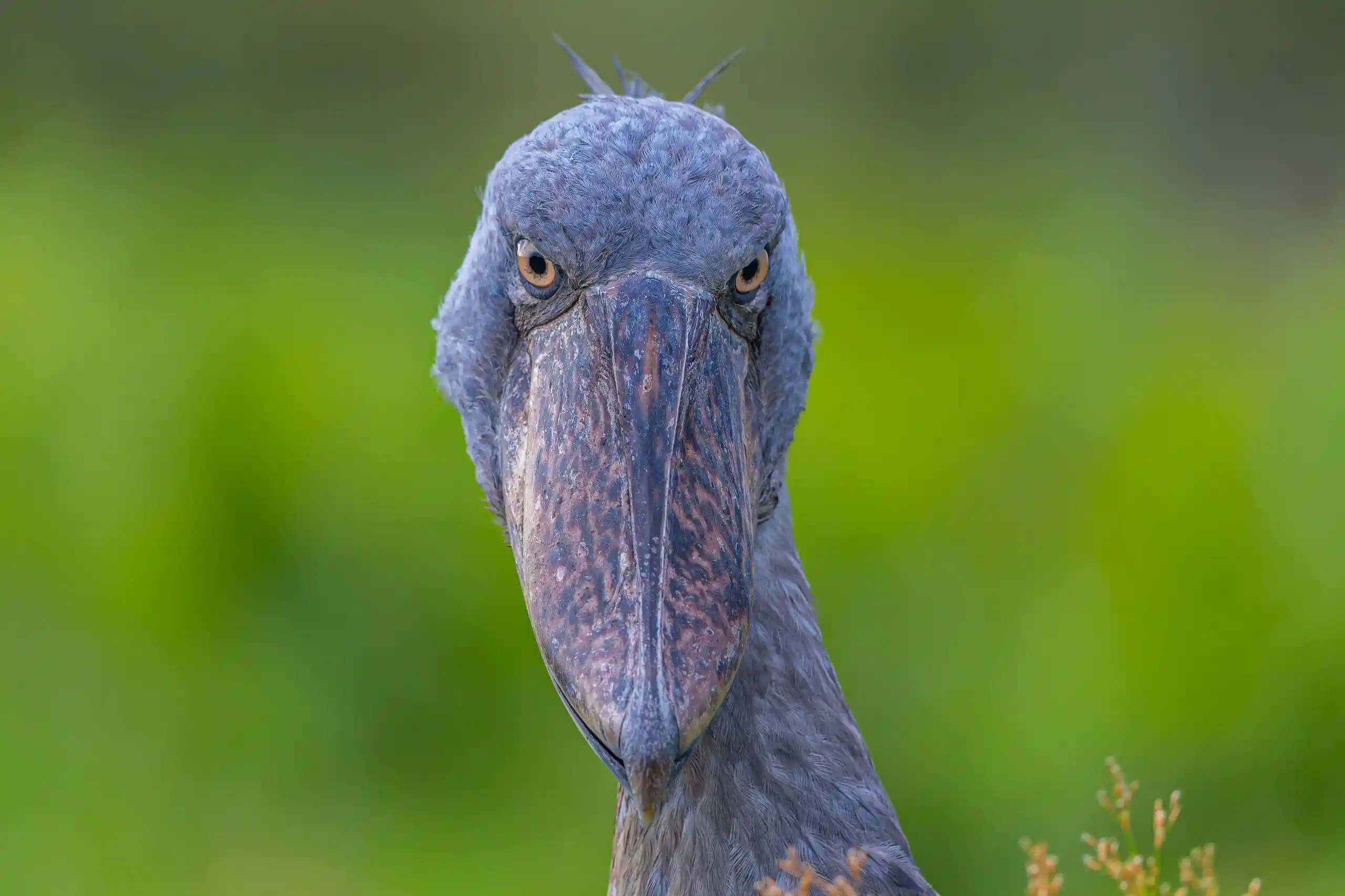
The shoebill looks like a bird from another age. Many people describe it as prehistoric, and it is easy to see why. It is related to the stork. This shows in its long legs and long neck.
But the head is what truly captures attention. The head looks similar to a duck’s, but far larger and heavier. Its shoe-like bill is enormous. It can grow up to 24 cm long and 20 cm wide. Seeing it up close feels almost unreal.
This powerful bill is perfectly designed for hunting. The shoebill’s favorite prey is the marbled lungfish. It also feeds on tilapia, catfish, and bichir. Amphibians, water snakes, baby crocodiles, rodents, and small water birds are also on the menu.
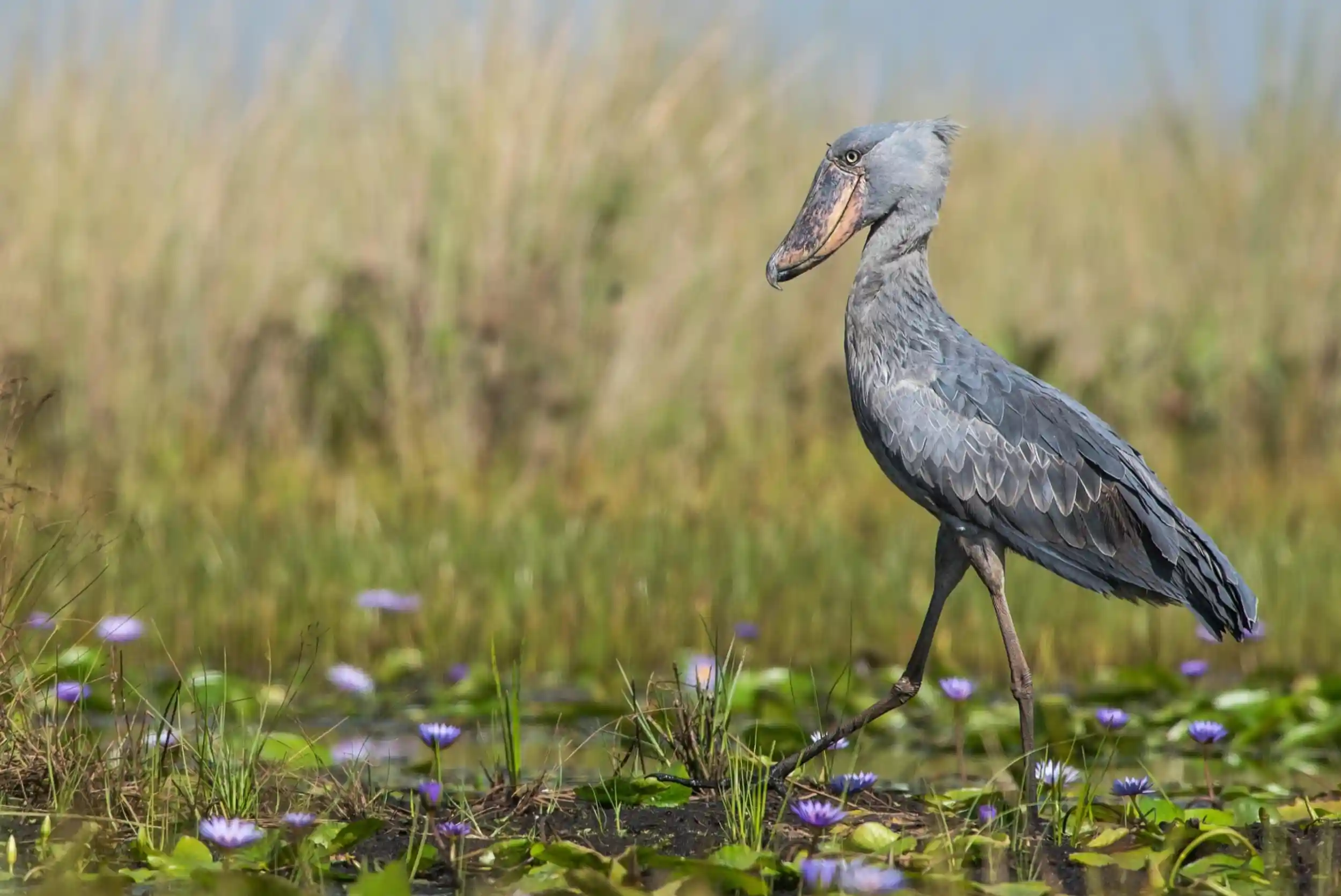
Shoebills are masters of patience. They can stand still for hours. They wait in shallow water, tall grass, or hidden corners of the swamp.
When you approach one by boat, it often does not move. It stands tall and silent. For a moment, you may wonder if it is real, or if someone has placed a statue among the reeds.
Then, at the perfect moment, everything changes.
The shoebill pounces forward, all five feet of it, with its massive bill wide open. It engulfs its target along with water, mud, and vegetation. Clamping down on its prey, the bird swings its head back and forth, tipping out anything it does not want to eat. When only the fish or crocodile remains, the shoebill delivers a quick decapitation with the sharp edges of its bill and swallows. Around 60 percent of these attacks are successful.
Breeding and Life Cycle
The shoebill’s breeding season follows the water levels. Eggs are laid as the rainy season ends and water levels drop. Chicks grow during the dry months.
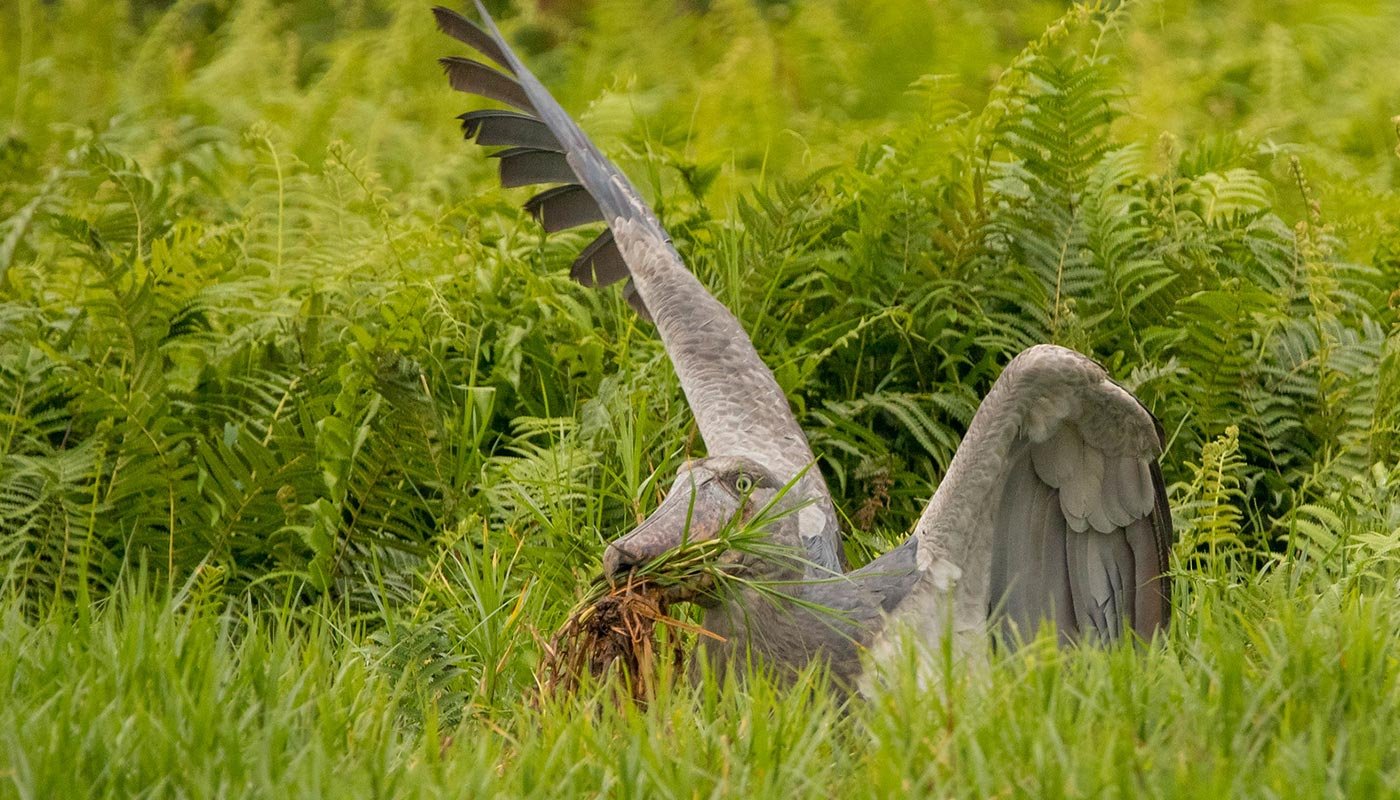
Shoebills nest alone. Each nest is a large mound of grass, sometimes up to three meters wide. It is built on floating vegetation or small islands, often hidden in papyrus.
Most clutches contain two eggs. Incubation lasts about 30 days. Fledging happens after roughly 100 days. In most cases, only one chick survives. Shoebills grow slowly. They reach breeding age at three to four years old. In the wild, they may live up to 50 years.
Conservation Status
The shoebill is listed as Vulnerable on the IUCN Red List. It is believed that fewer than 6,000 birds remain in the wild. The species faces many threats. Wetlands are destroyed by human activity. Pollution affects rivers and swamps. Climate change alters water levels.
In some areas, shoebills are hunted or captured due to cultural beliefs. In certain traditions, the bird is seen as a bad omen. Yet for most travelers, seeing a shoebill feels like pure luck. Meeting this rare bird in the wild is a moment few ever forget.
Mabamba Swamp – the best place to spot the shoebill
The shoebill is a bird of the swamps. And the best place to see it in Uganda is Mabamba Swamp, near Entebbe. Shoebills also live in other parts of the country, including Murchison Falls National Park and Ziwa Rhino Sanctuary. But these areas are vast. The wetlands are spread out. Access by boat is limited. This makes sightings less predictable.
Mabamba Swamp offers a very different experience. The channels are narrow and easy to explore. Local guides visit the swamp almost every day. They know where the shoebills feed and rest. Seeing a shoebill is never guaranteed. It is a wild bird and moves freely. But in Mabamba Swamp, the chances are extremely high. For many visitors, it feels as close to certain as wildlife viewing can be.
Into the swamp with a fishing boat
The shoebill trek is a special experience on its own. You board a small boat with a local fisherman, together with your guide.
The boat moves slowly across shallow water and narrow channels. Tall papyrus grass surrounds you. Water lilies float on the surface. The swamp feels calm and alive at the same time. Along the way, you spot other birds. Kingfishers flash past in bright colors. Herons and egrets stand quietly in the reeds. Your guide explains the wetland and its wildlife as you go.
Once the shoebill is found, the fisherman carefully moves the boat closer. You usually stay about 30 to 40 meters away. This keeps the bird calm and undisturbed. Good binoculars are therefore essential. If you are lucky, you may see the shoebill hunt. It strikes fast and eats fish or small reptiles. The power of its beak is impressive. You spend around one hour near the shoebill. There is plenty of time to watch, photograph, and admire this rare bird.
Best Time to See Shoebills
Shoebills can be seen all year in Uganda. However, some seasons are better. Dry months make boat travel easier. Birds are easier to spot. Photography conditions are better. Early mornings are best. The light is soft. The birds are active. A good guide makes all the difference. They know the swamp. They know the bird’s habits.
Want to learn more before your Uganda safari trip? Explore our other travel blogs for travel tips and wildlife stories.
Our Best Safaris In Uganda

Safaris By Type
Top Safari Parks
Help & Info
- About us
- Travel Blog
- Travel FAQS
- Gorilla Permits Bookings
- Contact Us
- Pay Online