Visit the tree-climbing lions in Uganda
In Uganda, we have endless wildlife. Gorillas, golden monkeys, chimpanzees, blue monkeys, the Big Five. But one of the most special wildlife experiences is possibly a visit to the tree-climbing lions in the southern sector of Queen Elizabeth National Park (Ishasha).
Tree climbing lions are rare
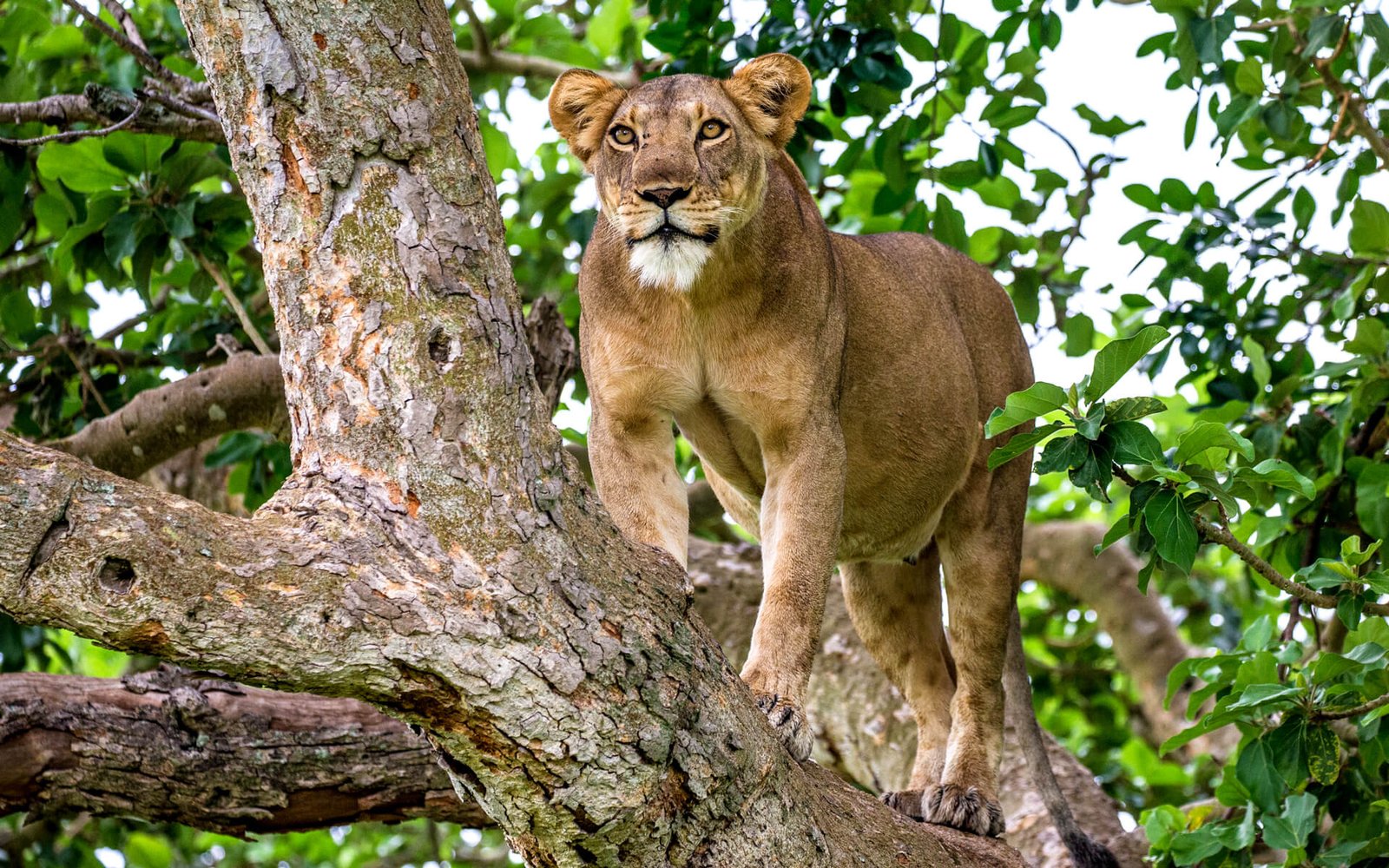
Tree-climbing lions are extremely rare in Africa. Most lions live their lives on the ground. They rest under acacia trees. They hide in tall grass. They hunt across open plains. But in the Ishasha sector, near the border of Uganda and Congo, lions behave differently. They climb trees.
In this remote part of Queen Elizabeth National Park, a pride of about 20 to 30 lions is famous for this unusual habit. Only one other small population, found in Tanzania’s Lake Manyara National Park, is known for similar behavior.
That is what makes Ishasha truly special. These lions are often seen together. They favor the large fig trees that stand across the savannah. The branches are thick and strong. They spread out wide, creating natural platforms. Perfect places to rest.
The first time you see them, you may not believe your eyes. A full-grown lion lies stretched across a branch. Its legs hang down on both sides. Its tail swings gently in the breeze. Some lions are fast asleep. Others sit upright, calmly watching the plains below.
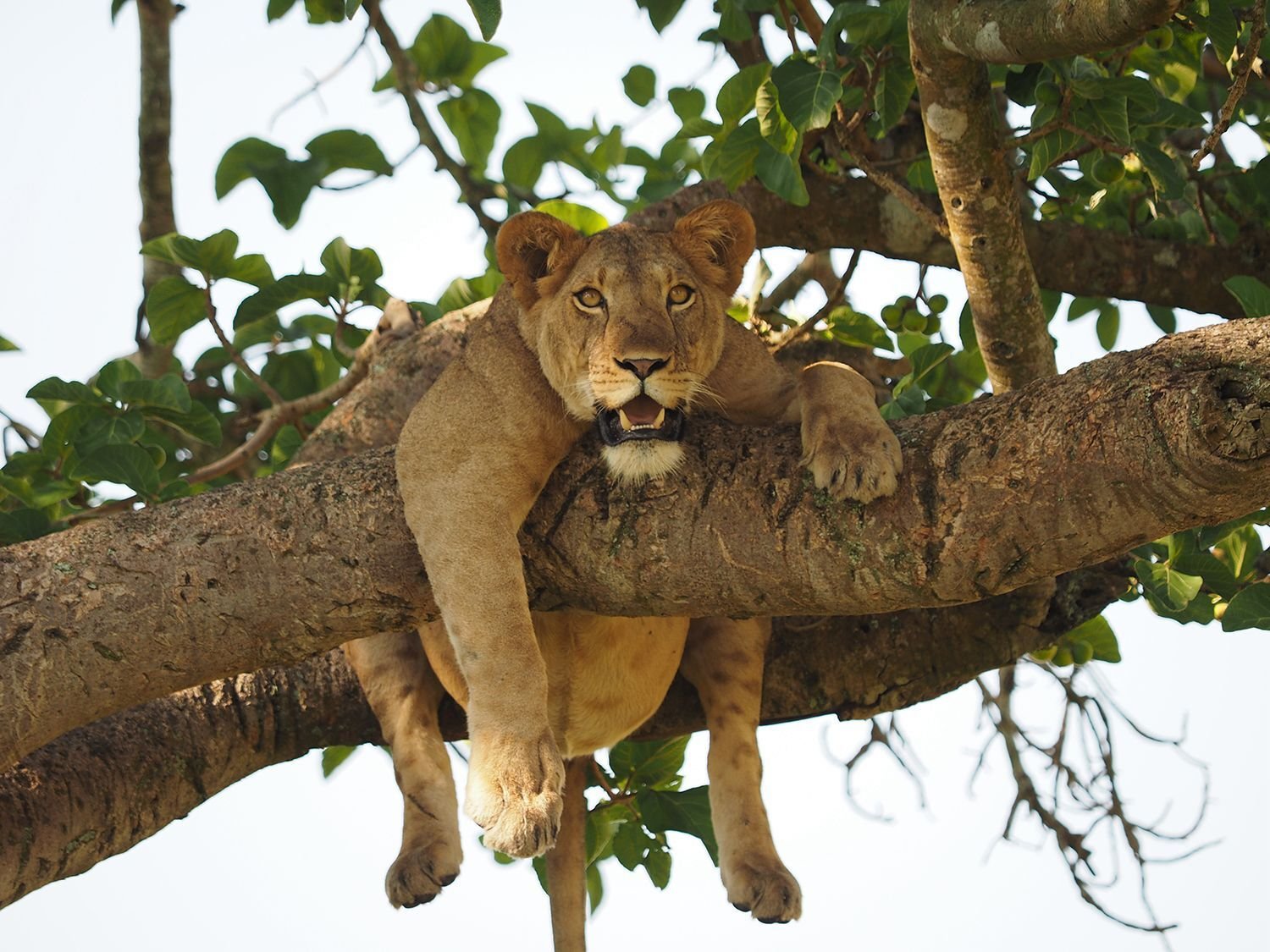
From a distance, they look like golden shapes placed carefully in the trees. Almost like decorations. Sometimes they hang so loosely over the branches that it looks as if they simply fell from the sky and landed there.
If you are used to searching for lions hidden in grass, this moment will surprise you. There is no tall vegetation blocking your view. No thick bushes hiding them.
In the trees, they are clearly visible. You see every movement. Every stretch. Every slow blink. Just lions, resting high above the ground. It is rare. It is beautiful. And it is one of the most unforgettable sights you can experience on a Uganda safari.
How can these lions climb trees?
There are different stories about why the lions of Ishasha climb. Some people think it started many years ago with a few bold lions. Others believe it was simply learned behavior. The most likely reason is adaptation. Ishasha has wide open plains covered with long grass. In this grass live many tsetse flies. These flies bite hard. Lions do not like them at all.
By climbing into the trees, the lions escape many of these insects. Higher up, there are fewer flies. There is more breeze. It is more comfortable.
But there is another important reason. The tall grass makes it hard to see prey. When lions stay on the ground, their view is blocked. They cannot easily spot antelope or buffalo moving through the plains. From a tree, everything changes.
Up high, they have a clear view. They can watch the open landscape. They can rest and observe at the same time. The tree becomes a lookout point.
Lions are not natural climbers. In fact, they are not very graceful in trees. Compared to other big cats, they are quite heavy and less agile. A leopard, for example, climbs with ease. It moves smoothly up and down trunks. Lions are stronger than they are flexible. Yet the Ishasha lions have learned to climb well. They pull their heavy bodies up slowly and carefully. Once they are on a branch, they balance with surprising confidence.
These lions are not genetically different from other lions. They share the same DNA. What makes them special is their behavior. Young cubs watch their mothers. They learn by copying what they see. Step by step, climbing becomes normal.
Over time, this habit is passed from one generation to the next. It is a powerful example of how wildlife adapts to its environment. Nature finds a way.
The tree-climbing lions have a large habitat
That is why you do not always see them. Your chances of spotting them are 50/50. Some days you find them within minutes. Other days, they seem to vanish into the landscape. They may be resting deep inside the park, far from the main tracks. They may choose quiet corners where no vehicles pass. Sometimes they wander into remote areas that are difficult to reach.
There are days when guides search for hours. They scan every fig tree. They check every open plain. And still, there is no sign. There are even days when no one sees them at all.
Then, without warning, everything changes. You drive slowly along a dusty track. The sun is warm. The air is still. You turn a corner. You look up. And there they are. That is the true beauty of safari. Nothing is staged. Nothing is forced. There are no promises. It is pure nature. And nature follows its own rhythm. The uncertainty makes the experience more exciting.
Ishasha is worth it – even if you don't see the tree-climbing lions
Ishasha sits perfectly along the safari route in western Uganda. It connects Queen Elizabeth National Park to Bwindi Impenetrable National Park, where you will see mountain gorillas.
If you are heading for gorilla trekking, Ishasha is on the way. There is no need for a long detour. No need to change your itinerary. Stopping here feels natural. It breaks up the journey in the best possible way. Instead of a long drive in one day, you spend a night in the wild.
Some of our Uganda safari itineraries include an overnight stay in Ishasha for this reason. You usually arrive in the afternoon after a scenic and comfortable drive. The landscape becomes wide and open. The air feels calm. The crowds begin to disappear.
Then you head out for a game drive. The afternoon light in Ishasha is beautiful. The sun hangs low over the plains. The sky turns soft and golden. Wildlife moves slowly across the savannah. You may stop for a sundowner in the bush. The views are breathtaking.
If you are lucky, you might spot the tree-climbing lions on your very first drive. That happens sometimes. But even if you do not see them that day, there is another chance waiting. The next morning, you rise early for one more game drive before continuing to Bwindi. Morning is one of the best times for wildlife viewing. The air is cool. Animals are active.
Ishasha is often overlooked by travelers who move too quickly. Many people rush between destinations. Because of this, the area remains quiet and peaceful.
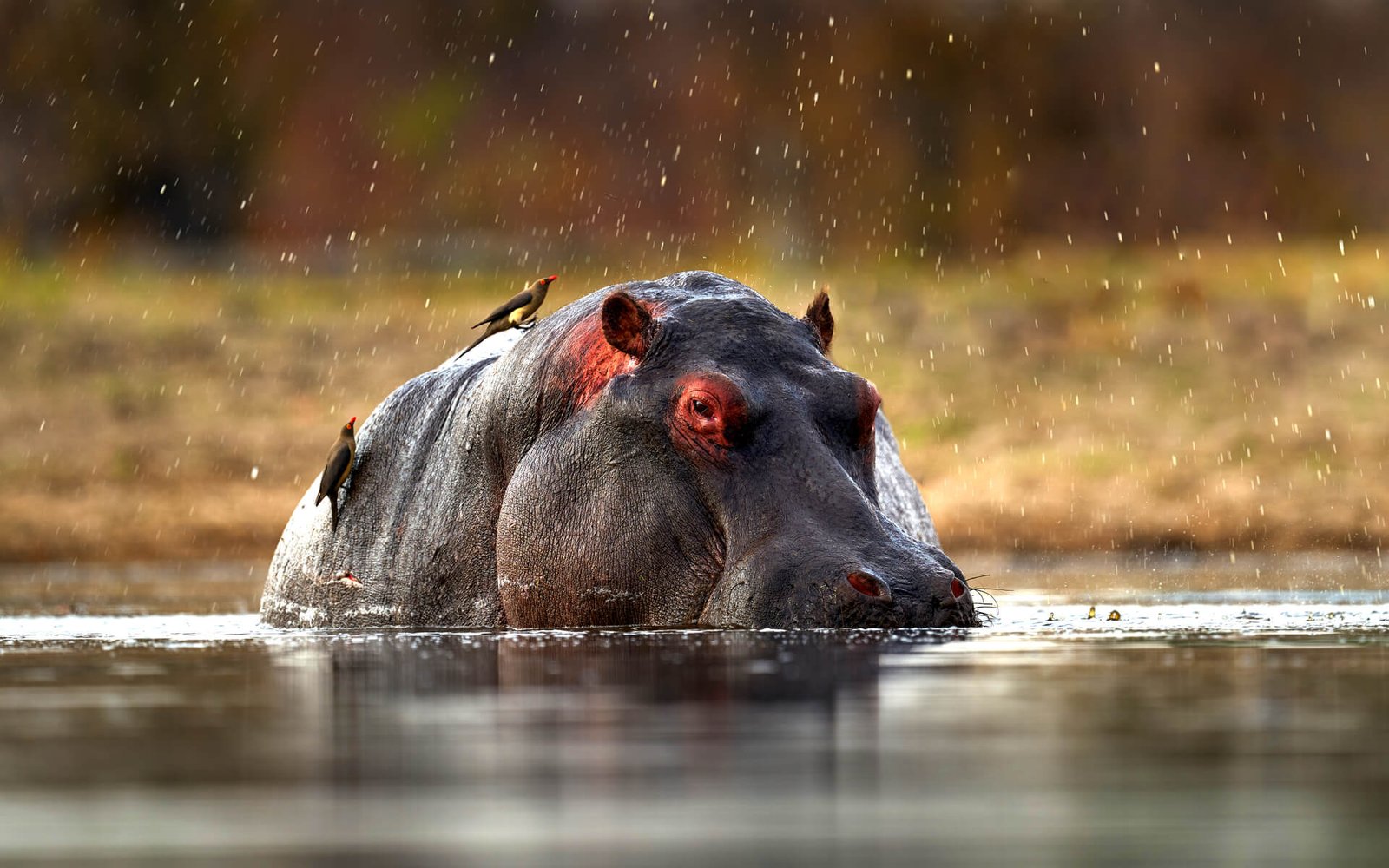
And Ishasha offers more than just lions. Elephants roam freely across the plains. Herds of antelope graze in the tall grass. Buffalo rest under scattered trees. You may even spot warthogs trotting along the tracks. The Ishasha River flows gently along the border with Congo. In its waters, hippos rest and splash. Birds gather along the banks.
Even without seeing the famous tree-climbing lions, Ishasha gives you something valuable. It gives you space to breathe. It gives you silence. It gives you real wilderness.
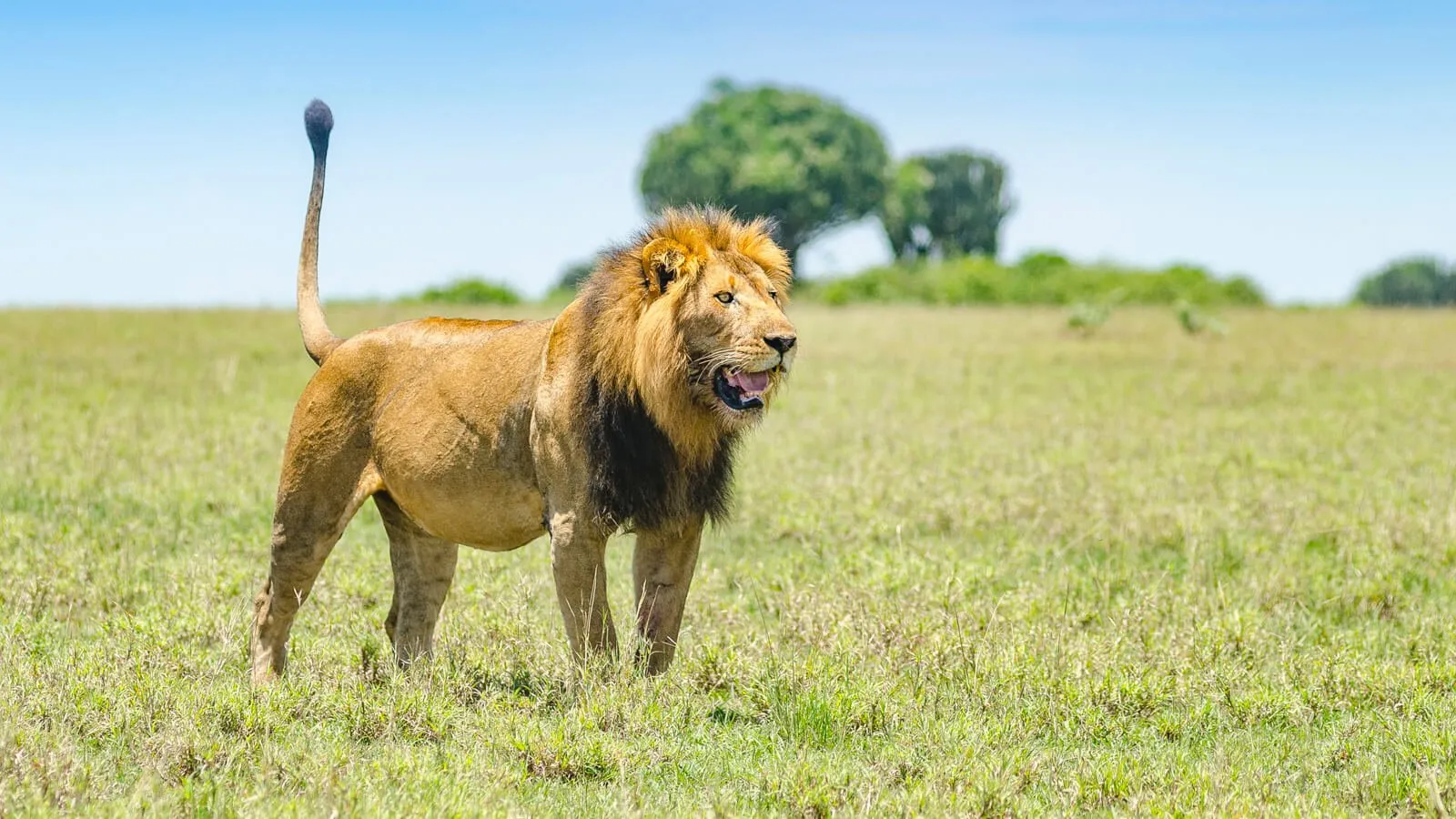
So, whether you see the tree-climbing lions or not, you will have had a wonderful stopover in a beautiful park. With the lions as the icing on the cake. Want to read more in preparation for your safari to Uganda? You can find it here.
Our Best Safaris In Uganda
Greenway nature tours
We are a fully licensed tour company accredited by the Uganda Tourism Board. We design and operate safaris in Uganda and East Africa. Our operations are based in Kampala, Uganda, the heart of our safari planning and coordination. Though our company was officially established in 2025, our team brings deep, hands-on knowledge of East Africa.
Destinations
Favourite Tours
Help & Info
- About us
- Travel Blog
- Travel FAQS
- Gorilla Permits Bookings
- Contact Us
- Pay Online